Brand Deal Examples: 5 Creators Who Landed Sponsorships and UGC Work
Would you like to read this article told by Lynnie, our fictional kid character? Jump here.
With the dropshipping module complete, ending with dropshipping vs print-on-demand, we move to the seventh online income technique, sponsorships and UGC, starting with five example characters.
Sponsorships and UGC are the seventh of Lynnaider’s ten online income techniques. Together, they are often called brand deals. In this article, we introduce five fictional creators who each landed their first brand deal in a different way.
These brand deal examples show that you do not need to be a classic influencer to work with brands. Notice how each creator offers a unique style. Also notice how each pitch shows the brand exactly what it would get.
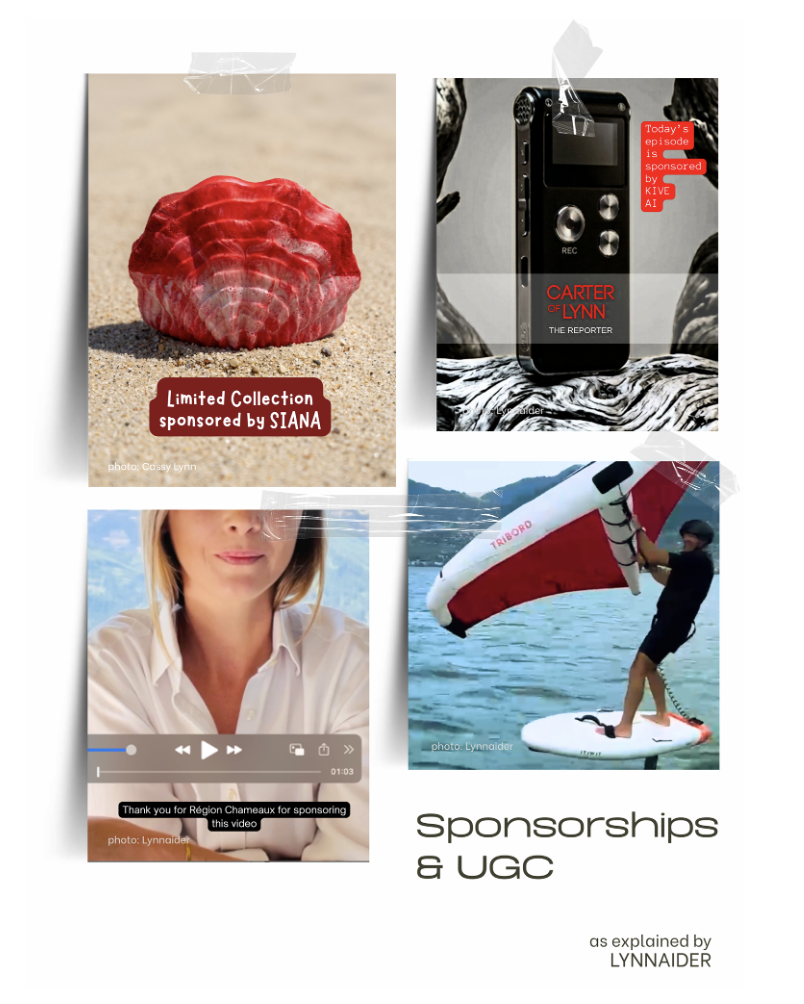
The characters in this article are invented and shown for educational purposes only. The real brands mentioned serve as illustrations and have no connection to these characters.
What the brand deal examples have in common
In a brand deal, a brand pays you to create content. In a sponsorship, you also share that content with your audience. In a UGC deal, short for user-generated content, the brand uses the content on its own channels.
All five creators pitched brands with something specific. A demo reel, a mockup, a sample video or a clear audience story. Look at each example and ask: what did they show the brand?
Five brand deal examples from different niches
Fairy the Nature Sounds Collector, the first of our brand deal examples
Fairy creates calm audio-visual experiences for overstimulated audiences. He signed up on TRIBE and targeted brands linked to relaxation, such as Bose (noise-canceling headphones) and Patagonia (outdoor gear). He also showed how he would create UGC for beauty products in his style, in nature, with birds in the background.
His standout pitch included a personalized demo reel. It layered his nature audio over the brands’ own images, so they could hear and see the result.
Jazmine the Book Summary Curator
Jazmine started pitching to brands for UGC collaborations on Aspire. She emphasized her talent for turning stories into visually appealing summaries. She targeted brands such as Barnes & Noble and Moleskine (notebooks).
Her pitch included a custom mockup showing how her visuals could improve the brands’ campaigns. The brands could picture the result immediately.
Teddy the Urban Documenter
Teddy loves adventure. In his YouTube videos, he explores abandoned buildings and explains their history. He grows his audience organically by optimizing his videos for YouTube’s recommendation engine.
He landed his first sponsorship by contacting GoPro through its own influencer program. His pitch focused on his large, engaged audience of adventure seekers and his unique storytelling.
Agnes the Head Spa Owner
Agnes lived in Japan, where she learned everything about caring for hair and scalp. She now runs her own head spa in Europe. Her guests are so happy that they agree to be filmed for her TikTok business account.
After connecting with Shiseido on Partnerize, she got her first sponsorship. Her pitches always include a video of her spa using the brand’s products, which she truly uses and loves.
Ariana the Pink Gardener
Ariana landed her first UGC deal by signing up on Collabstr and pitching to brands. She emphasized her talent for mesmerizing nature visuals centered on the color pink. She targeted brands outside gardening, such as Glossier (skincare) and Pinkberry (frozen yogurt).
Her pitch included sample content showing their products placed naturally in her vibrant, pink garden. She also uses AI, in her own creative way.
What these brand deal examples teach beginners
First, a unique style matters more than a huge audience, especially for UGC. Nature sounds, book summaries, abandoned buildings, a spa and a pink garden are all instantly recognizable. Brands look for content that stands out.
Second, every successful pitch showed rather than told. A demo reel, a mockup, a sample video or real use of the product. Brands decide faster when they can see the result.
Third, creators used platforms that connect them with brands, such as TRIBE, Aspire, Collabstr and Partnerize, or a brand’s own program. We compare these options in our article on influencer platforms.
Sponsorship or UGC in the brand deal examples
Teddy and Agnes landed sponsorships, where their audience was part of the value. Fairy, Jazmine and Ariana focused on UGC, where the content itself was the value. Many creators start with UGC and move to sponsorships as their audience grows.
We explain the difference in detail in our article on sponsorship vs UGC.
Thinking outside your niche
Ariana pitched Glossier and Pinkberry, though she is a gardener. Fairy pitched beauty products, though he records nature sounds. Their style, not their topic, made them interesting to these brands.
Ask yourself which brands could benefit from your look, sound or tone, even outside your topic. A surprising match can make your pitch memorable.
Brand deal examples you can adapt
You do not need to copy any of these characters. Write your own version in three lines. “My style is … I would pitch … and I would show them …”.
Then create one sample piece of content featuring a product you already own and love. It becomes the first item in your portfolio.
Common mistakes in brand deal pitches
The first mistake is sending the same message to every brand. The creators above each tailored their pitch with a reel, a mockup or a sample. The second mistake is pitching without a portfolio, so the brand has nothing to look at.
The third mistake is giving up too early. Most pitches get no answer, so successful creators keep pitching regularly and learn from each attempt.
Starting small and staying private
Brand deals need no shop and no stock. We recommend spending no more than about 20 dollars on your setup, using free tools for your content and your media kit, with no monthly fees before brands know you. You can grow your audience yourself, without an agency.
Brands still often prefer creators they can see, but faceless creators can succeed too, especially with UGC. If the idea of self-branding is what held you back so far, Lynnaider recaps the alternatives for you.
Your next step
The next article explains sponsorships and UGC for beginners: what they are, how they differ and how to start. The complete module is in the book on our products page. If you would like help preparing your first brand pitch, see our services page.
Frequently asked questions
Does Lynnaider show step-by-step tutorials for the 10 online business models with no or minimal setup costs?
Based on interest, these tutorials may be made. If you would like to see them, please sign up to the waitlist, so we can see that there is interest. Everyone on the list will be informed as soon as the tutorials are available.
Which brand deal example suits beginners best?
Ariana’s or Jazmine’s path: building a UGC portfolio on a creator platform, which does not require a large audience.
How many brands should I pitch?
Pitch regularly, for example a few brands each week. Most pitches get no answer, so consistency matters more than any single pitch.
What is a brand deal?
A paid collaboration with a brand. In a sponsorship, you create content and share it with your audience. In a UGC deal, you only create the content, and the brand uses it.
Are these brand deal examples real people?
They are fictional characters. They show how creators in different niches can pitch to brands.
Which platforms connect creators with brands?
Examples include TRIBE, Aspire, Collabstr, Partnerize and Upfluence. Many brands also run their own influencer programs.
What makes a pitch stand out?
A specific idea, a sample or mockup showing the brand’s product in your style, and a clear reason why your audience or content fits the brand.
Can faceless creators get brand deals?
Yes, especially UGC deals, where brands pay for the content itself. A recognizable style can matter more than your face.
Do I need a big audience for a brand deal?
For sponsorships, an engaged audience matters. For UGC, brands focus mainly on the quality of your content.
Should I only pitch brands in my niche?
Not always. Some creators pitch brands outside their niche, showing how the product could fit their unique style.
Do I need to use the brand’s products?
Ideally, yes. Pitching products you genuinely use and love makes your content more credible.
Can I start with the Sponsorships & UGC technique at no or low cost?
Yes. Lynnaider teaches setup routes for the Sponsorships & UGC technique that cost nothing, or very little (under 20 dollars), to go live, so you do not pay setup costs long before you earn. Our free AI agent, Lynnaider Compass, guides you through them step by step, in the same logic as the whole Lynnaider teaching.
Disclaimer: This article is for general informational purposes only and should not be regarded as legal, tax, or business advice. Pursuing an online business does not guarantee income; results depend on many factors including the business environment, individual effort, skills, and consistency. Some links on this site may allow Lynnaider to earn a commission at no additional cost to the reader.