
Where to Post Affiliate Links: Your Website or Social Media?
Would you like to read this article told by Lynnie, our fictional kid character? Jump here.
After explaining affiliate link tracking, this article covers where to post your affiliate links: your website or social media.
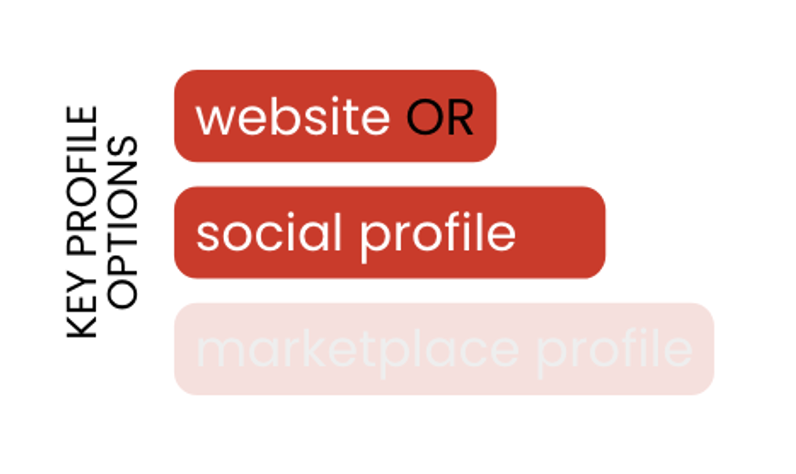
Once you have affiliate links, the next question is where to post them. Out of the three profile types available to solo entrepreneurs, you can typically use two for affiliate marketing: your own website and social media. In this article, we explain where to post affiliate links and why credibility matters more than the platform.
Where to post affiliate links: your own website
Affiliate links can be placed on your own website, for example in blog posts, reviews or resource pages. A website gives you full control and can be found through search engines. Dennis, our sneaker reviewer from the affiliate marketing examples, works this way.
Still, remember that links on a website only earn if meaningful traffic reaches it. Without consistent visibility, affiliate links do not generate income on their own. A new website with no visitors earns nothing, however good its links.
Bringing traffic to a website usually takes time and skills like SEO. It can pay off well over the long term, because good articles keep attracting visitors for months or years.
Where to post affiliate links: social media profiles
For this reason, social media profiles remain the most common and effective home base for affiliate marketing. They naturally generate recurring traffic and discovery. A link-in-bio page, video descriptions or pin links make your recommendations easy to reach.
People on social media usually do not search actively, as they do on search engines. Instead, they discover content through algorithms. That gives new creators a chance to be seen by people who have never heard of them.
Why marketplaces are not where to post affiliate links
Marketplaces generally do not allow external affiliate links. They are designed to keep users within their own buying environment. That is why, for affiliate marketing, only two of the three profile types usually work.
Why algorithmic reach matters for affiliate links
This shows how central content optimized for algorithmic reach is to affiliate marketing. We often call it “going viral,” and we explain it in our article on going viral on social media. Social platforms tend to favor frequent, ongoing activity, which increases the chance that your content is shared organically.
At the same time, visibility is never guaranteed. Posting does not equal followers, and followers do not equal reach. Even people who actively follow you may only see a part of what you publish.
Part of practicing affiliate marketing successfully is learning to increase the chance that your content reaches the audience it was made for. That includes the occasional affiliate recommendation within it.
Credibility decides where affiliate links work
Whatever platform you choose, credibility is what ultimately makes this technique work. Affiliate marketing builds on sustained involvement in a topic you care about. Much like sponsorships, affiliate income depends on trust built over time.
People come to your content for the value it provides, and they are not there for the products you promote. When recommendations appear occasionally and naturally, supporting your content rather than taking it over, they feel helpful rather than intrusive.
Done this way, affiliate marketing becomes less about selling. It becomes a thoughtful way to monetize a relationship you already have with your audience.
Where to post affiliate links: choosing your platform
If you enjoy short videos and want quick reach, start with a short-video platform and a link-in-bio page. If you prefer images and planning, Pinterest is a strong choice, as explained in our article on Pinterest visual search. If you like explaining things in depth, YouTube or a blog may suit you best.
Pinterest, YouTube and blogs have one thing in common: people search on them. Your content can keep earning for a long time after you publish it. Short-video platforms reach many people quickly, but each post fades faster.
Combining a website and social media
Many affiliates combine both profile types. They use social media to reach people and a simple website to collect their recommendations in one place. The website can also host an email signup, which helps you keep your audience even if a platform changes its rules.
An example of where to post affiliate links
Imagine a beginner runner who documents her training for her first half marathon. She posts short videos of her runs and her gear on a social media profile. Her link-in-bio page lists the shoes, watch and water bottle she uses, each with an affiliate link.
Later, she starts a simple blog with longer reviews of running shoes. Her videos bring people to the blog, and the blog slowly starts ranking on search engines. Over time, both profiles bring clicks to her affiliate links.
Starting small and staying private
A social profile and a free link-in-bio page cost nothing. We recommend spending no more than about 20 dollars on your setup, with no monthly fees before you have traffic. You can build that traffic yourself, without an agency.
Many successful affiliates never show their face. If the idea of self-branding is what held you back so far, Lynnaider recaps the alternatives for you.
Mistakes when deciding where to post affiliate links
The first mistake is building a website and waiting for visitors. Without a plan to bring traffic, the links stay unclicked. Start where your audience already is, and add a website once you have one.
The second mistake is spreading yourself across too many platforms at once. Choose one platform and post there regularly for a few months. Consistency on one platform usually beats occasional posts on five.
The third mistake is hiding links where nobody looks. Place them where the viewer needs them: in the description of a review, next to a comparison, or at the top of your link-in-bio page.
Your next step
The next article explains how to choose affiliate programs: general retailers like Amazon, programs with longer cookie durations, and brands you already trust. The complete module, with all ten online income techniques, is in the book on our products page. If you would like help deciding where to post affiliate links, see our services page.
Frequently asked questions
Can I post affiliate links in Pinterest pins?
Yes, Pinterest allows affiliate links in pins in many cases. Check both Pinterest’s current rules and your affiliate program’s terms, and disclose the link clearly.
Where should beginners post affiliate links?
On social media profiles, in most cases, because they generate recurring traffic and discovery. A website also works, but only if you bring meaningful traffic to it.
Can I post affiliate links on a marketplace like Etsy or Amazon?
Generally no. Marketplaces usually do not allow external affiliate links, because they want users to stay and buy within their own platform.
Does Lynnaider show step-by-step tutorials for the 10 online business models with no or minimal setup costs?
Based on interest, these tutorials may be made. If you would like to see them, please sign up to the waitlist, so we can see that there is interest. Everyone on the list will be informed as soon as the tutorials are available.
Do affiliate links on my website earn on their own?
No. Links only earn if people visit your site. Without consistent visibility, they generate no income.
Why is social media good for affiliate marketing?
Because people discover content there through algorithms, without searching. Regular posting increases the chance that your content is shown to new people.
Do all my followers see my posts?
No. Even people who follow you may only see a fraction of what you publish. Posting regularly and creating engaging content improves your chances.
How often should I include affiliate links in my content?
Occasionally and naturally. When recommendations support your content rather than take it over, they feel helpful rather than intrusive.
What makes affiliate marketing work in the long run?
Credibility. People come to your content for its value, and they trust your recommendations because of your sustained involvement in your topic.
Do I need a website for affiliate marketing?
No. Many affiliates work entirely through a social media profile with a link-in-bio page. A website can be added later, for example to rank in search engines.
Is there a low-cost way to set up the Affiliate Marketing technique?
Yes. Lynnaider teaches setup routes for the Affiliate Marketing technique that cost nothing, or very little (under 20 dollars), to go live, so you do not pay setup costs long before you earn. Our free AI agent, Lynnaider Compass, guides you through them step by step, in the same logic as the whole Lynnaider teaching.
Disclaimer: This article is for general informational purposes only and should not be regarded as legal, tax, or business advice. Pursuing an online business does not guarantee income; results depend on many factors including the business environment, individual effort, skills, and consistency. Some links on this site may allow Lynnaider to earn a commission at no additional cost to the reader.