How to Go Viral on Social Media: What Algorithms Actually Reward
Would you like to read this article told by Lynnie, our fictional kid character? Jump here.
This is method number two in our list of the fourteen traffic methods, following search engine optimization.
“Go viral” is one of the most repeated pieces of online business advice. It is also one of the most misunderstood. In this article, traffic method number two, we explain how to go viral in an honest way: what it actually means, what social media algorithms reward, which platforms help new creators, and why it is never guaranteed.
Method 2: how to go viral, an organic and free method
“Going viral” is technically an outcome rather than a method. The method is optimizing your content for algorithmic reach, through short-form video, strong hooks, a regular posting rhythm and similar techniques. Algorithmic reach simply means being shown to people by the platform’s recommendation system.
Going viral means a piece of content spreads far beyond your existing audience. The platform’s algorithm begins actively pushing it to people who do not follow you yet. It also shows it more often to people who follow you but do not usually see your content.
Important: random posting is not a strategy
Posting randomly on social media is not a traffic strategy. It will not bring significant visitors to your business, if any. Occasional posts are not wasted, because someone visiting your profile can learn what you offer.
Working to optimize your content for algorithmic reach is a very different effort. It requires planning, regular posting and close attention to what works.
How to go viral: what algorithms reward
Content gets pushed by algorithms when people do not simply scroll past it. They watch it fully, share it, save it or comment on it. These signals tell the platform that the content is worth showing to a wider audience.
Watch time, shares and comments are the core signals on most platforms. On Instagram, saves have become particularly powerful. When deciding whether to push your content to a wider audience, three measurements have been at the top for a while now: watch time, likes per reach and sends per reach.
How to go viral: what these signals mean in simple words
- Watch time: how long people keep watching your video. A video watched to the end tells the platform it is interesting.
- Likes per reach: the share of people who saw your post and liked it.
- Sends per reach: the share of people who sent your post to someone else, a strong sign that it is valuable or fun.
Which platforms help you go viral as a new creator?
The platforms with the strongest recommendation engines for new creators are Instagram, TikTok and YouTube. They regularly show content from accounts people do not follow yet. Facebook’s organic reach for new or small accounts is significantly weaker and should not be relied on in the same way.
What content you need to go viral
Going viral requires very regular content that is optimized for algorithmic reach, as summarized in the figure you see here. The content most likely to trigger a wider push is funny, educational, deeply relatable or genuinely surprising.
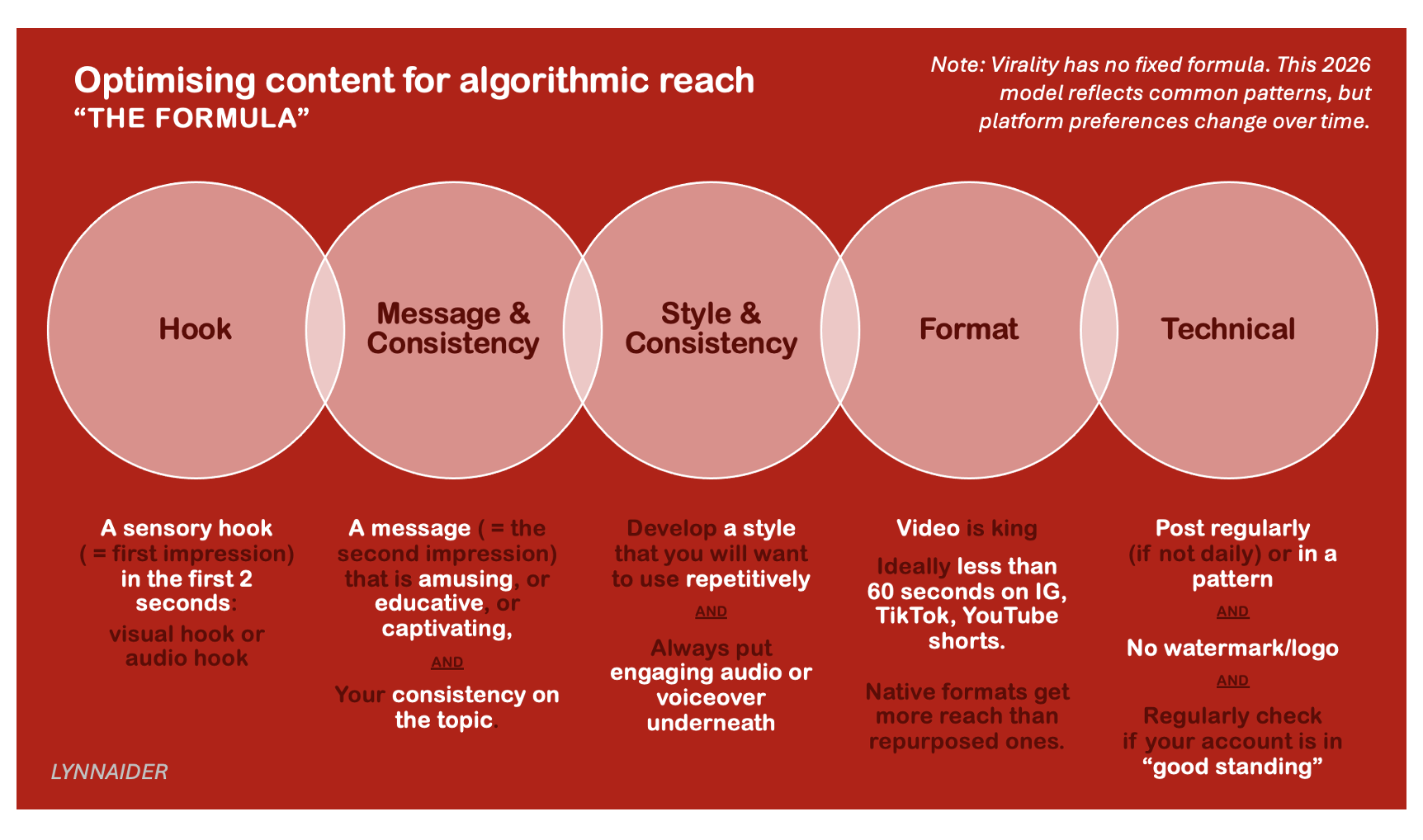
Examples of content that tends to travel
A short video showing a satisfying process, such as packing an order or making a product, often keeps people watching. A clear tip that solves a common problem gets saved. A funny, relatable moment from your niche gets sent to friends. Each of these can work without showing your face.
Beginner’s tip for going viral
Pick one platform and study what already performs well in your niche. Look at which videos get many views, which hooks grab attention in the first seconds and how long the best posts are. Spreading yourself across several platforms too early may lower the quality of your presence on all of them.
Important: be honest with yourself about the effort
Posting like a content creator can be overwhelming for many people. Do not underestimate the work and stress that come with trying to optimize for algorithmic reach. Going viral is not at all easy, and for many people it may never happen.
That is why we never recommend building your whole business on the hope of a viral post. Combine social media with steadier methods such as SEO, Pinterest or marketplace optimization.
A simple weekly plan for beginners who want to go viral
Choose one platform and one content format, for example short videos on Instagram. Post three to five times per week for at least two months. For every video, focus on the first two seconds, because that is when people decide to keep watching or scroll away.
After each week, look at which videos had the highest watch time and the most shares and saves. Make more of what worked, and change what did not. This steady learning loop matters more than any single post.
Protect your energy while you try
Set a limit on how much time you spend creating and reading comments each day. Optimizing for reach can quickly take over your evenings and weekends. A sustainable rhythm that you can keep for months beats an intense burst that leaves you exhausted.
Key numbers to watch when trying to go viral
| Metric | What it means |
|---|---|
| Reach | How many accounts your content reached. Shows the scale of distribution and whether the algorithm is pushing it further. |
| Engagement rate | Interactions (likes, comments, shares, saves) divided by reach. Tells you whether the content resonated with the people who saw it. |
| Save and share rates | Signals of useful or shareable content that people want to pass on or come back to, not only react to once. |
How to go viral without showing your face
Many viral accounts never show their owner. They use product videos, hands at work, screen recordings, illustrations, text posts or voiceovers. If the idea of self-branding is what held you back so far, Lynnaider recaps the alternatives for you.
Going viral on a small budget
Going viral costs no ad money. You can film with a phone and edit with free tools such as CapCut or Instagram’s Edits app. You did not need to spend more than about 20 dollars on your setup, and this method can stay free. It is a skill you learn by practicing, without an agency.
Your next step
Social media reach matters most for affiliate marketing, sponsorships and audience monetization among the ten online income techniques. The next article covers method number three: marketplace optimization. The complete Lesson T5 is in the book on our products page. If you would like help planning your social media approach, see our services page.
Frequently asked questions
What does going viral mean?
It means a piece of content spreads far beyond your existing audience because the platform’s algorithm starts pushing it to people who do not follow you yet, and more often to people who already follow you.
Can I get step-by-step guidance from Lynnaider to set up one of the 10 online business models without spending much?
Step-by-step tutorials with free or minimal-cost setups may be made based on interest. Please add your name to the waitlist, and we will inform everyone who signed up as soon as they become available.
Is going viral a method?
Technically it is an outcome. The method is optimizing your content for algorithmic reach, through things like short-form video, strong hooks and a regular posting rhythm.
What do algorithms look at?
Watch time, shares and comments are core signals on most platforms, and saves have become especially powerful on Instagram. Watch time, likes per reach and sends per reach have been among the top measurements for a while.
Which platforms help new creators most?
Instagram, TikTok and YouTube have the strongest recommendation engines for new creators. Organic reach on Facebook is much weaker for new or small accounts.
Will occasional posting help my business?
Occasional posts are not wasted, because visitors to your profile can see what you offer. But random posting will not bring significant traffic. Optimizing for algorithmic reach is a different, much more demanding effort.
Can I go viral without showing my face?
Yes. Funny, educational, relatable or surprising content can work without a face, for example through product shots, process videos, text-based posts or voiceovers.
Is going viral guaranteed if I post every day?
No. Going viral is not easy, and for many people it may never happen. Plan your business so that it does not depend on a single viral post.
Is there a low-cost way to start an online business with Lynnaider?
Lynnaider teaches setup routes for each of the ten online income techniques that cost nothing, or very little (under 20 dollars), to go live, so you do not pay setup costs long before you earn. Our free AI agent, Lynnaider Compass, guides you through them step by step, in the same logic as the whole Lynnaider teaching.
Disclaimer: This article is for general informational purposes only and should not be regarded as legal, tax, or business advice. Pursuing an online business does not guarantee income; results depend on many factors including the business environment, individual effort, skills, and consistency. Some links on this site may allow Lynnaider to earn a commission at no additional cost to the reader.