Dropshipping Responsibilities: Why You Need a Website and Act as the Seller
Would you like to read this article told by Lynnie, our fictional kid character? Jump here.
After explaining how dropshipping works, this article covers your only profile option and your responsibilities as the seller.
In dropshipping, you never touch the product, yet you carry the full responsibility for the sale. That surprises many beginners. In this article, we explain why your own website is the only key profile for dropshipping, and what your dropshipping responsibilities are as the seller of record.
Why dropshipping responsibilities start with your own website
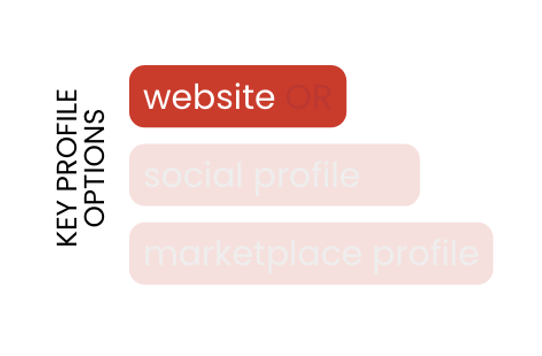
Out of Lynnaider’s three profile types, dropshipping has only one key option: your own website. You need an e-commerce website whose back-end functions connect you to your dropshipping partners. Only a website you set up can technically enable this kind of sale.
You cannot integrate this logistics setup into a marketplace profile or a social store. Many people do try dropshipping through marketplace profiles. However, marketplaces usually do not allow it, or at least do not recommend it.
Dropshipping responsibilities compared with print-on-demand
Some print-on-demand marketplaces take on the seller’s role for you. Dropshipping never does. It always makes you the seller of record.
Your dropshipping responsibilities as the seller of record
Being the seller of record means that, when you sell via dropshipping:
- You are legally responsible for the sale.
- You are the party the customer contracts with.
- You must follow the consumer protection rules in the customer’s country, especially since you usually use paid ads to reach customers there.
- You are responsible for delivery outcomes and refunds.
The supplier stays in the background. For your customer, the supplier does not exist. Every promise on your website is your promise.
Dropshipping responsibilities when selling internationally
If you sell to customers in other countries, tax and consumer law obligations apply fully to you, not to the original supplier. Each country may have its own rules on returns, product information and taxes. Our article on selling internationally online gives you a high-level checklist.
Ads make it easy to reach people far away. That convenience comes with the obligation to respect their local rules. Target only countries whose rules you understand and whose delivery times you know.
Why dropshipping needs structure and transparency
This is another reason why dropshipping needs structure, clear legal texts and very high transparency. Customers should know who they are buying from, how long delivery takes and how returns work. Hiding information leads to complaints, refunds and a damaged reputation.
Your dropshipping responsibilities in practice
| Responsibility | What it means for you |
|---|---|
| The sale | Your business name, contact details and terms are on the website |
| Product information | Descriptions are accurate and match what the supplier really sends |
| Delivery | Realistic delivery times are stated, and you follow up on delays |
| Returns and refunds | Your policy follows the customer’s local rules, and you honor it |
| Taxes | You check and meet the tax rules for the countries you sell to |
How to prepare for your dropshipping responsibilities
Before your first ad, write down the countries you want to sell to. Check their basic consumer rules, such as withdrawal periods for online purchases. Then check your supplier’s delivery times and return process for each country.
Prepare your legal pages with these facts, not with generic templates. Our article on dropshipping setup explains which documents you need. We also advise having them checked by a legal professional.
Common mistakes with dropshipping responsibilities
The first mistake is thinking the supplier is responsible because they ship. Your customer will always come to you. The second is advertising in many countries at once without knowing their rules.
The third mistake is a refund policy that you cannot actually honor because your supplier does not accept returns. Agree on returns with your supplier first, then write your policy.
An example of dropshipping responsibilities
Imagine a store owner selling a foldable laptop stand as a posture aid for people working from the sofa. A customer in another country receives a damaged stand. The customer writes to the store owner, not the supplier.
The store owner apologizes, sends a replacement within the time required by the customer’s local rules and then claims the cost from the supplier, as their agreement allows. The customer leaves a positive review because the problem was solved quickly.
A checklist of dropshipping responsibilities before launch
- Your business name and contact details are visible on your website.
- Product descriptions match what the supplier actually sends.
- Delivery times per country are realistic and clearly stated.
- Your returns and refund policy matches the customer’s local rules and your supplier agreement.
- You know the tax rules for the countries you target.
- You have tested the product and the full delivery experience yourself.
Being transparent about your role
Being the seller of record does not mean pretending to be the manufacturer. You can be open that you select, test and present products from trusted suppliers. Many customers appreciate that honesty.
What matters is that the customer knows who they are buying from, what they will receive and when. Clear information builds trust and reduces complaints.
When something goes wrong
Even with good preparation, problems happen: a delayed parcel, a wrong size or a damaged item. Answer quickly, apologize, and offer a clear solution, such as a replacement or a refund. Then settle the matter with your supplier in the background.
Keep a record of every problem and how it was solved. If one supplier causes repeated issues, it is time to find another.
Starting small and staying private
Dropshipping usually involves paid advertising, so it needs more budget than most techniques. Still, keep your setup itself lean: we recommend no more than about 20 dollars at the start, free plans where possible, and no monthly fees before you have tested your product and your idea. Test with small ad budgets first, and learn to run your own ads without an agency.
Your store and your product story can be the face of your business. If the idea of self-branding is what held you back so far, Lynnaider recaps the alternatives for you.
Your next step
The next article lists the setup dropshipping needs: all five setup types are always required. The complete module, alongside the other online income techniques, is in the book on our products page. If you would like help preparing for your dropshipping responsibilities, see our services page.
Frequently asked questions
Can I hold the supplier responsible for problems?
Towards your customer, you remain responsible. Between you and your supplier, your agreement decides who pays for damaged or lost items.
Do I need to register a business for dropshipping?
In many countries, yes, since you sell goods to customers. Rules differ, so check locally or ask an accountant before you start.
Are there step-by-step Lynnaider tutorials for starting each of the 10 online business models with a minimal-cost setup?
Not yet, but they might be made if enough people ask for them. Sign up to the waitlist so we can see the interest, and you will be among the first to hear when they are available.
Which profile do I need for dropshipping?
Your own e-commerce website. Only a website can connect to dropshipping suppliers in the back end and technically enable the sale.
Can I dropship on a marketplace?
Some people do, but marketplaces usually do not allow it or do not recommend it. Lynnaider does not teach this route.
Can I dropship through a social store?
No. A social store cannot integrate the logistics needed for dropshipping.
What does seller of record mean?
You are the business legally responsible for the sale and the party the customer contracts with.
Which consumer rules apply to dropshippers?
The consumer protection rules in the customer’s country, especially since you usually use paid ads to reach customers there.
Who is responsible for refunds in dropshipping?
You are, as the seller of record, together with delivery outcomes.
Do tax obligations apply to me or the supplier?
For your sales, tax and consumer law obligations apply fully to you, not the original supplier. Check the rules for each country you sell to.
Why does dropshipping need high transparency?
Because you are fully responsible for the sale. Clear legal texts and honest information protect your customers and you.
Where can I get step-by-step help to set up the Ethical Dropshipping technique on a small budget?
Yes. Lynnaider teaches setup routes for the Ethical Dropshipping technique that cost nothing, or very little (under 20 dollars), to go live, so you do not pay setup costs long before you earn. Our free AI agent, Lynnaider Compass, guides you through them step by step, in the same logic as the whole Lynnaider teaching.
Disclaimer: This article is for general informational purposes only and should not be regarded as legal, tax, or business advice. Pursuing an online business does not guarantee income; results depend on many factors including the business environment, individual effort, skills, and consistency. Some links on this site may allow Lynnaider to earn a commission at no additional cost to the reader.