
Print-on-Demand Platforms: Marketplace or Your Own Website?
Would you like to read this article told by Lynnie, our fictional kid character? Jump here.
Now that you know how print-on-demand works, here are the two profile options: a marketplace or your own website.
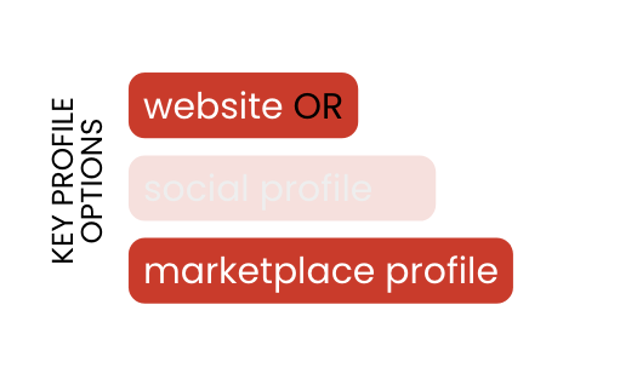
Choosing your profile is one of the most important decisions in print-on-demand. Only two of Lynnaider’s three profile types are available here: a marketplace profile or your own website. In this article, we compare print on demand platforms and what each choice means for you.
Print on demand platforms with their own marketplace
The first path is a profile on a platform that lets you create your co-designed product and list it directly in its own marketplace. Examples include Amazon Merch on Demand, Redbubble and TeePublic. Adam and Jack, from our print on demand examples, use this route.
Here, the platform handles the listing. It also manages tax collection and invoicing, and takes responsibility for shipping the physical product. That makes it the simpler starting point for most beginners.
Open and closed print on demand platforms
If you choose a marketplace, pay attention to whether it is open or closed. In open marketplaces, customers can usually buy without creating an account. That reduces friction a lot, especially when you send traffic from social media or content platforms.
Closed ecosystems such as Amazon require customers to log in or create an account before buying. That can discourage some buyers. On the other hand, Amazon carries significant trust among large populations, and that trust also transfers to your brand.
Amazon Merch on Demand
Amazon Merch on Demand does not exist in every country where Amazon operates. Sellers must apply and go through a review before being accepted, which typically takes a few weeks or months. As of 2025, it supported key marketplaces including the United States, the United Kingdom, Germany, France, Italy, Spain and Japan.
Designs uploaded by approved sellers then appear and sell in those regions on Amazon’s own marketplace. Check the current list of countries before you apply.
Print on demand platforms connected to your own website
The second option is to use your own website as your key profile and connect it to a print partner in the background. These partners usually offer a broader range of blank products, often at more competitive production costs. Lyra and Lila, from our examples, sell this way.
Common partners include Printful, Printify and Gelato. You integrate them into the back end of your own website, run on Shopify for example. The partner prints and ships, while your store handles the sale.
You become the seller of record
With your own website, the situation changes fundamentally. You are the seller of record, not the print partner. Even though you never touch the product, you are the business selling to the customer.
As a result, you are responsible for pricing, communication, customer service and compliance. That includes tax obligations and legally required documents, such as the privacy policy and terms and conditions with refund and withdrawal rules. It also includes clear information about delivery and returns, which may vary by the market you target.
From a legal and tax point of view, this route works much like running your own online shop, only with outsourced production.
Why social stores are not a key profile here
Social store profiles do not usually support direct print-on-demand sales. They can still be an effective entry point, linking people to your website or marketplace store. You cannot choose a social store as your key profile for print-on-demand, though.
Print on demand platforms: a quick comparison
| Marketplace (Redbubble, TeePublic, Amazon Merch) | Own website with a partner (Printful, Printify, Gelato) | |
|---|---|---|
| Seller of record | The platform | You |
| Taxes and invoicing | Handled by the platform | Your responsibility |
| Customer service | The platform | You |
| Product range and costs | Narrower, set by the platform | Broader, often lower costs |
| Brand control | Limited | Full |
How to choose between print on demand platforms
If you are starting out, a marketplace is usually the easier choice. It removes most legal, tax and service responsibilities. Choose an open marketplace if you plan to send traffic from social media.
If you want to build a recognizable brand with a wider product range, your own website with a print partner is the stronger long-term option. Just be ready to take on the responsibilities of a seller.
An example of choosing print on demand platforms
Imagine a graphic designer who creates retro travel posters. She starts on an open marketplace, where she can test which cities sell best without handling taxes or customer service. After a year, she has a loyal following.
She then opens her own website with a print partner connected in the background. She adds framed prints and tote bags, which her marketplace did not offer, and takes on the seller’s responsibilities.
Mistakes when choosing print on demand platforms
The first mistake is sending social media traffic to a closed marketplace, where buyers must first create an account. Many will leave before buying. If most of your traffic comes from social media, an open marketplace or your own website often converts better.
The second mistake is choosing your own website without being ready for the seller’s responsibilities, like taxes and customer service. The third is ignoring which countries a platform delivers to, which matters for your ads.
Starting small and staying private
Print-on-demand needs no stock, so you can start with very little money. We recommend spending no more than about 20 dollars on your setup, using free design tools and free plans, with no monthly fees before anyone knows your designs. You can learn to bring the traffic yourself, without an agency.
Your designs can be the face of your business. If the idea of self-branding is what held you back so far, Lynnaider recaps the alternatives for you.
Your next step
The next article lists the setup print-on-demand needs: two of the five setup types are always required. The complete module, alongside the other online income techniques, is in the book on our products page. If you would like help choosing between print on demand platforms, see our services page.
Frequently asked questions
Do I need a business registration for my own print-on-demand website?
Often yes, since you are the seller of record and responsible for taxes. Rules differ by country, so check locally or ask an accountant.
Can I use several print-on-demand platforms at once?
Yes. Many sellers upload the same designs to more than one marketplace, as long as they own the designs and follow each platform’s rules.
Which print-on-demand platforms have their own marketplace?
Examples include Amazon Merch on Demand, Redbubble and TeePublic. They list your products and handle taxes, invoicing and shipping.
Which print-on-demand suppliers connect to my website?
Printful, Printify and Gelato are common examples. They connect to stores such as Shopify in the background.
What is an open marketplace?
A marketplace where customers can usually buy without creating an account, which reduces friction when you send traffic from social media.
Can I get step-by-step guidance from Lynnaider to set up one of the 10 online business models without spending much?
Step-by-step tutorials with free or minimal-cost setups may be made based on interest. Please add your name to the waitlist, and we will inform everyone who signed up as soon as they become available.
What is a closed marketplace?
A marketplace such as Amazon where customers must log in or create an account before buying. That can discourage some buyers, but it brings high trust.
Is Amazon Merch on Demand available everywhere?
No. As of 2025, it supported key marketplaces including the United States, United Kingdom, Germany, France, Italy, Spain and Japan, and sellers must apply and be accepted.
Who is the seller of record with my own website?
You are. That makes you responsible for pricing, customer service, taxes, legal pages, refunds and delivery transparency.
Can I use a social store for print-on-demand?
Not as your key profile. A social profile can link people to your website or marketplace store, though.
Which print-on-demand option suits beginners?
A marketplace is usually easier, because the platform takes on most responsibilities. A website suits sellers ready to run something closer to their own online shop.
Where can I get step-by-step help to set up the Print-on-Demand technique on a small budget?
Yes. Lynnaider teaches setup routes for the Print-on-Demand technique that cost nothing, or very little (under 20 dollars), to go live, so you do not pay setup costs long before you earn. Our free AI agent, Lynnaider Compass, guides you through them step by step, in the same logic as the whole Lynnaider teaching.
Disclaimer: This article is for general informational purposes only and should not be regarded as legal, tax, or business advice. Pursuing an online business does not guarantee income; results depend on many factors including the business environment, individual effort, skills, and consistency. Some links on this site may allow Lynnaider to earn a commission at no additional cost to the reader.