
Where to Sell Products Online: Shopify, Social Store, Etsy or Amazon FBA
Would you like to read this article told by Lynnie, our fictional kid character? Jump here.
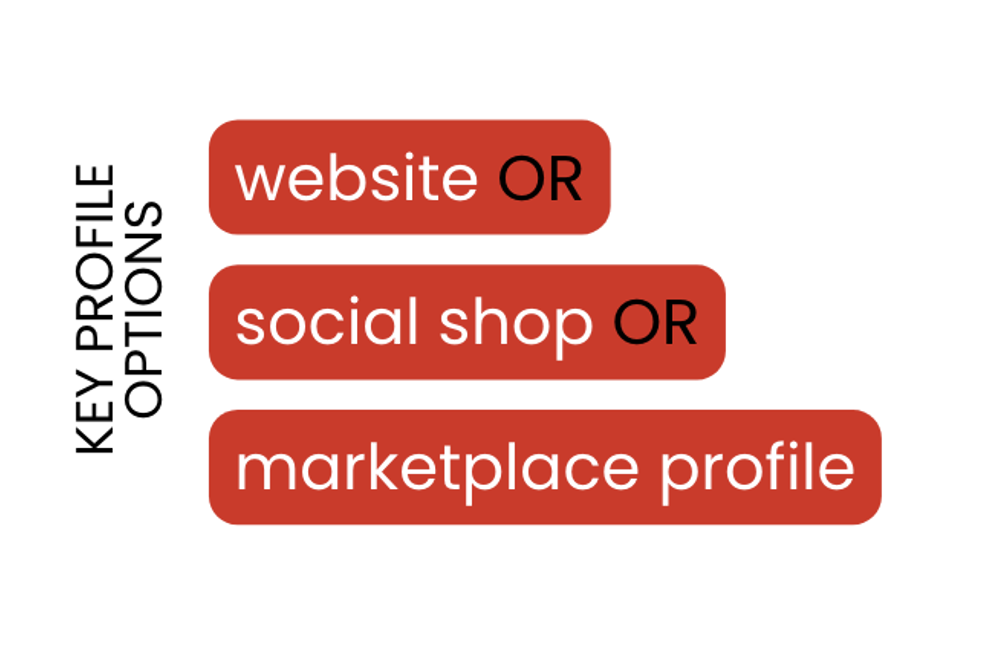
Now that you know how an online shop works, here are the profile options: your own website, a social store or a marketplace.
Once you know how your online shop will work, the next question is where to sell your products online. In Lynnaider’s teaching, there are three profile types: a marketplace, your own website, or social media with a social store. For an own online shop, all three are possible.
In this article, we compare the options for each route, with their costs, advantages and responsibilities. If the profile types are new to you, our article on online business setup for beginners introduces them.
Where to sell products online in Route A
Route A is the direct route: you sell to customers yourself and ship from your own stock. Here, you have three main profile options. Each one suits a different stage and budget.
Option 1: where to sell products online with your own website
The first option is setting up your own e-commerce website, through a platform such as Shopify. This gives you full control over your store, branding, pricing and customer experience. The cost of running the website is your responsibility.
Building and running a Shopify store usually requires an upfront investment in tools and design, and most often in advertising to bring traffic. Still, it is worth seeing this option as a long-term “north star.” It offers the most control and room to grow.
Option 2: a social store with payment links
A simpler and often free alternative is a social store. You sell directly through your social media profiles and add your own payment links from a provider like Stripe. It is less automated, but very quick to start.
Carter, our cube crafter, sells exactly this way on Instagram. For a beginner testing a first product, a social store is often the easiest answer to where to sell products online.
Why your own website and a social store have something in common
Both of these options let you build a direct relationship with your customers. You also keep higher profit margins, since you do not share revenue with a marketplace. In return, you take on more responsibility, including logistics, shipping and customer service.
Option 3: a marketplace profile such as Etsy
You can also sell through a marketplace profile, such as Etsy. Marketplaces usually take a percentage of each sale. They also charge listing fees that renew every few months per product, and often a one-time setup fee.
In return, marketplaces can bring organic visibility. Buyers are already active on the platform, and the marketplace’s algorithm recommends products based on relevance, category fit and performance. You start with access to people who are already shopping.
Can your own website be found without a marketplace?
Yes. Experts in search engine optimization and generative engine optimization will point out that a well-optimized website can also be found organically. People can discover it through Google, and increasingly through AI-powered tools like ChatGPT.
This generally takes more technical knowledge, such as keyword research, a clear site structure and ongoing improvements. It also takes time. Our article on SEO for beginners explains the basics in simple words.
Where to sell products online in Route B
Route B means working with a fulfillment partner. Here, the most common marketplace profile is Fulfillment by Amazon, or FBA, which operates across many markets, especially in Europe and the Americas. You send your stock to Amazon’s warehouses, and Amazon handles storage, shipping and much of the customer service.
The pros and cons of Amazon FBA
Amazon FBA has qualification requirements. Your stock must be shipped to Amazon’s warehouses, which can be expensive, especially when moving it from your country to another. Amazon charges fees and keeps part of your margin for its services.
On the other hand, Amazon is a highly trusted partner with strong consumer confidence. It greatly simplifies operations, especially when you enter new markets.
Check where your fulfillment partner delivers
Always verify which countries your fulfillment partner serves. Your traffic and advertising should match the regions where your products can actually be delivered. There is little value in targeting customers your partner cannot reach.
Why your own website suits stock in several countries
Route B often means holding stock in several locations. Social stores are generally less suitable here, because many free solutions do not track inventory across regions. Your own website, for example on Shopify, lets you set up several fulfillment locations.
Orders can then be routed automatically. International customers are served from stock abroad and local customers from local stock, based on cost, speed and sustainability. As in Route A, your own website does not come with built-in marketplace discovery, so your visibility depends on your content, PR, advertising, SEO and GEO.
Where to sell products online: a quick comparison
| Profile | Cost to start | Built-in visibility | Control |
|---|---|---|---|
| Social store with payment links | Often free | Through your social reach only | Medium |
| Marketplace such as Etsy | Low, with fees per sale and per listing | Yes, buyers already search there | Lower |
| Own website such as Shopify | Monthly costs, plus design and ads | No, you bring all traffic | Highest |
| Amazon FBA (Route B) | Fees plus shipping stock to warehouses | Yes, high consumer trust | Lower |
How to choose where to sell your products online
If you are just starting and want to test a product, a social store or a marketplace is usually the easiest choice. Choose a social store if you already enjoy creating content. Choose a marketplace if you would rather rely on buyers who are already searching.
Once you have regular sales and traffic, consider your own website as your long-term home. If shipping becomes too much work, look at a fulfillment partner. Many successful makers end up using two profiles at once.
Starting on a small budget
You do not need a paid website on day one. A social store with free payment links, or a single marketplace listing, keeps your setup costs to about 20 dollars or less, with no monthly fees before you have traffic. You can bring that traffic yourself, without an agency.
None of these profiles requires showing your face. If the idea of self-branding is what held you back so far, Lynnaider recaps the alternatives for you.
Your next step
The next article lists the additional setup your online shop needs, from your offer to legal policies, payments and shipping. The complete module, alongside the other online income techniques, is in the book on our products page. If you would like help choosing where to sell your products online, see our services page.
Frequently asked questions
Where should a beginner sell products online?
Many beginners start with a free social store using payment links, or with a marketplace like Etsy. Your own website, for example on Shopify, is a strong long-term goal once you have traffic.
What is a social store?
A shop that runs directly through your social media profiles, often with payment links from a provider like Stripe. It is simple and often free, but less automated.
Is Shopify better than Etsy?
They serve different needs. Shopify gives you full control and higher margins, but you must bring all the traffic. Etsy takes fees but gives you access to buyers already searching on the platform.
What fees do marketplaces charge?
Usually a percentage of each sale, listing fees that renew every few months per product, and sometimes a one-time setup fee. Check the current fees before you start.
What is Amazon FBA?
Fulfillment by Amazon. You send stock to Amazon’s warehouses, and Amazon stores, packs and ships your orders and handles much of the customer service, in exchange for fees.
Can a social store handle stock in several countries?
Usually not. Many free social store solutions do not track inventory across regions, which is why a website like Shopify suits stock in several locations better.
Can my own website be found without ads?
Yes, through search engines and AI tools, but this takes skills such as keyword research and site structure, and it takes time.
Why check which countries my fulfillment partner serves?
Because your traffic and ads should target only places where your products can actually be delivered. Targeting other regions wastes money.
Is there a low-cost way to set up the Own Online Shop technique?
Yes. Lynnaider teaches setup routes for the Own Online Shop technique that cost nothing, or very little (under 20 dollars), to go live, so you do not pay setup costs long before you earn. Our free AI agent, Lynnaider Compass, guides you through them step by step, in the same logic as the whole Lynnaider teaching.
Will Lynnaider publish step-by-step tutorials for setting up the 10 online business models for free or at a very low cost?
They may be created depending on how much interest there is. Please join the waitlist to show that you are interested, and we will let you know as soon as they are ready.
Disclaimer: This article is for general informational purposes only and should not be regarded as legal, tax, or business advice. Pursuing an online business does not guarantee income; results depend on many factors including the business environment, individual effort, skills, and consistency. Some links on this site may allow Lynnaider to earn a commission at no additional cost to the reader.