Protecting Yourself Online as an Entrepreneur: Footprint, Comparison, Judgment and Algorithms
Would you like to read this article told by Lynnie, our fictional kid character? Jump here.
In the previous article we introduced the two sides of online safety. Here is the first side in detail: protecting yourself.
Protecting yourself online is one of the most important skills a new entrepreneur can learn. It is also one of the least discussed. In this article we cover four topics: your digital footprint, the influence of comparison, how to handle judgment, and why algorithms show each person a different internet.
Protecting yourself online: your digital footprint
Everything you post on the internet may leave a footprint in one way or another. Once online, it may stay there indefinitely.35 Some posts and messages can be deleted, but that does not mean the platform has not already recorded them, or that nobody took a screenshot.
This is perhaps the simplest way to describe the permanent nature of the internet. It is also one of the reasons Lynnaider wants to help people begin their online activity without immediately putting themselves in the spotlight.
Staying private is about future regrets
We do not suggest hiding your identity in the hope that your actions cannot be traced. Anything published online, even anonymously, can be linked back to you by authorities if it involves illegal conduct. Our approach aims to protect you from future regrets that can come from posting as a beginner, before you fully know what you want to represent.
Whatever you share, with or without your face, make sure it is considerate of others. Make sure it is something you will likely be proud to look back on in the years to come.
We do not want you to feel pressured to create something perfect, in fact almost the opposite. What matters most is that what you publish is authentic and inspiring, even if your main goal is simply to sell a product. You can absolutely tell your story and use your face if that feels authentic, but online entrepreneurship does not always require your personal story at the center.
Protecting yourself online from the pull of comparison
We pay attention to how our own self-view changes during our online journeys. We try to notice whether those changes come from comparison. We decided to do this consciously, because people’s minds compare what they see online with their own lives without noticing, especially on social media, which is such an intense and constant source of impressions.36
It helps to remind yourself from time to time, or to ask someone close to you to remind you, that social media often shows a concentrated and brighter version of people’s lives. The ordinary days rarely get posted.
Let a trusted person watch over you
Be open to the observations of a trusted person, because comparison is often an uncontrollable part of going online. The volume of impressions you receive online does not exist in the physical world. Suddenly, you see glimpses of perhaps millions of people and businesses across the globe.
Research shows that most of what you see is the positive side of those lives, which makes it easy to feel confused or inadequate, even for the most confident person. Stay grounded. Have someone supportive, a friend, a family member or a professional, who can walk alongside you if needed.
The online world is still young and developing. Think of it like a growing child: you can learn from it, but you should remain the wiser one in the relationship.
Digital literacy is part of protecting yourself online
For someone just beginning to be active online, digital literacy means building comfort and familiarity with tools that let you engage safely, effectively and responsibly.37 It means becoming confident with basic digital tasks, so that adapting to new technologies becomes easier. Mistakes are almost unavoidable, and at times the amount of information will feel overwhelming.
In those moments, ask for help, both with the technical side you do not understand yet and to protect your mental health. Support for both is widely available today.
Protecting yourself online from judgment
Perhaps the most important danger of being online is that you will not always be able to avoid judgment. Whatever you do, however pure your intentions, some people will feel the need to criticize what you do or how you do it.38 Some will even criticize the fact that you choose not to show your face.
These are people’s opinions, and they are entitled to have them. Whether to voice criticism toward others is a moral question each person answers for themselves. Unfortunately, some people believe they should, and some do not care if they hurt you in the process.
Prepare your support in advance
We say this bluntly so the message is clear. Some people know they are sensitive to judgment, while others who believe they are not discover that criticism affects them more than expected. This is why we strongly encourage you not to skip this section.
Keep on your phone the number of someone you can call if a comment causes you anxiety. It is simply better to have that support ready, whether it is a trusted friend, a family member or professional help.
Protecting yourself online with algorithm awareness
You can learn about algorithms from a technical point of view in our article on going viral on social media. We also include them here under safety, because they shape your experience in ways many people do not notice. To put it simply: everyone experiences the web differently.
You may ask how that can be, if the same information is out there for everyone. In countries without restrictions on information, the same content is generally accessible. But what each person sees first is very different, depending on what the systems, called algorithms, prioritize for them.
How algorithms decide what you see
Algorithms are sets of rules and data. They use what they know about a person online, for example that they browse travel sites or live in a certain city. They then match that information with what seems most relevant, such as posts or ads most likely to interest them.39
This means not everyone sees the same things you do, and you might not see what others see. Do not assume your online experience is the same as everyone else’s. And remember that your favorite pair of shoes appearing “everywhere” online is not an accident.
Your next step
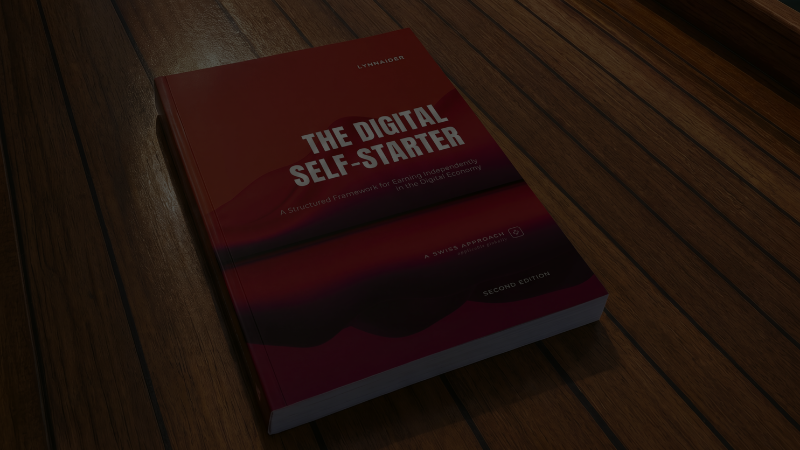
The next article turns to the other side of safety: protecting others, including the rules on misleading advertising and fact-checking. If the idea of self-branding is what held you back so far, Lynnaider recaps the alternatives for you throughout the book, available on our products page. If you would like a supportive person alongside you as you start, see our services page.
Frequently asked questions
What is a digital footprint?
It is the trace left by everything you post or do online. Even deleted posts may already have been recorded by a platform or captured in a screenshot, so it is wise to assume that what you publish can stay online for a long time.
Does staying faceless mean I can post anything without consequences?
No. Anything published online, even anonymously, can be linked back to you by authorities if it involves illegal conduct. Staying private is meant to protect you from future regrets, not to hide wrongdoing.
Why do I feel worse about my progress after scrolling social media?
Your mind naturally compares what it sees with your own life, and social media mostly shows the brightest moments of other people’s lives. Reminding yourself of this, or asking someone close to remind you, helps keep perspective.
How should I prepare for negative comments?
Expect that some people will criticize what you do, however good your intentions are. Keep the number of someone you can call, a friend, family member or professional, in case a comment causes you anxiety.
Does everyone see the same things online?
No. Algorithms use what they know about each person to decide what to show first. Two people searching the same topic can see very different results, ads and posts.
What is digital literacy for a beginner?
It means building comfort and familiarity with digital tools so you can use them safely and responsibly. Mistakes are normal while you learn, and asking for help is part of the process.
Are there step-by-step Lynnaider tutorials for starting each of the 10 online business models with a minimal-cost setup?
Not yet, but they might be made if enough people ask for them. Sign up to the waitlist so we can see the interest, and you will be among the first to hear when they are available.
Is there a low-cost way to start an online business with Lynnaider?
Lynnaider teaches setup routes for each of the ten online income techniques that cost nothing, or very little (under 20 dollars), to go live, so you do not pay setup costs long before you earn. Our free AI agent, Lynnaider Compass, guides you through them step by step, in the same logic as the whole Lynnaider teaching.
References
35. Mayer-Schonberger V. Delete: The Virtue of Forgetting in the Digital Age. Princeton: Princeton University Press; 2009.
36. Tian J, et al. The impact of upward social comparison on social media: associations with self-esteem and appearance anxiety. Behav Sci (Basel). 2024;15(1):8.
37. Kobilsek A. Untangling digital safety, literacy, and wellbeing in school activities: a systematic literature review. Education and Information Technologies. 2025;30.
38. Evangelou SM, Michanetzi EL, Xenos M. Exploring the impact of negative online feedback on well-being. Computers in Human Behavior Reports. 2024;100457.
39. BBC Bitesize. What is an algorithm? BBC; 2023.
Disclaimer: This article is for general informational purposes only and should not be regarded as legal, tax, or business advice. Pursuing an online business does not guarantee income; results depend on many factors including the business environment, individual effort, skills, and consistency. Some links on this site may allow Lynnaider to earn a commission at no additional cost to the reader.