
Sharing Economy Examples: 5 People Earning From What They Already Own
Would you like to read this article told by Lynnie, our fictional kid character? Jump here.
With the agentic AI module complete, ending with online course vs AI agent vs coaching, we move to the ninth online income technique, the sharing economy, starting with five example characters.
The sharing economy is the ninth of Lynnaider’s ten online income techniques. It is the one that starts closest to home: with what you already own. In this article, we introduce five people who earn by sharing or reselling their belongings.
These sharing economy examples show that you do not need to create anything new. Notice how each person adds something extra, such as care, styling or advice.
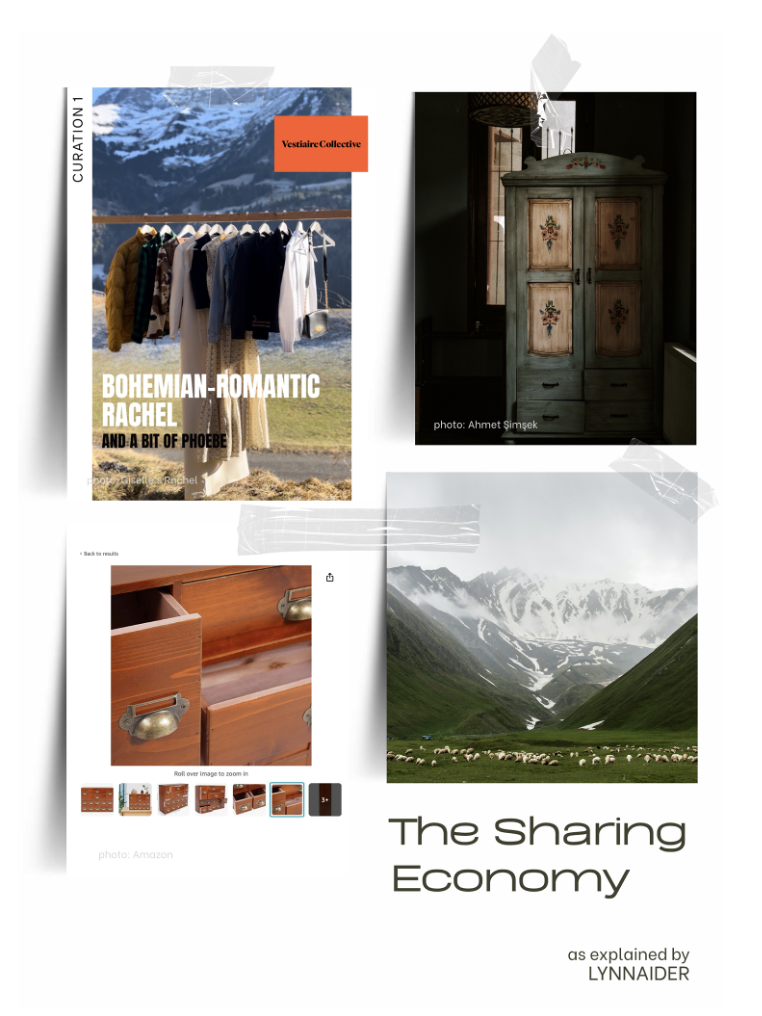
The characters in this article are invented and shown for educational purposes only. The real platforms mentioned serve as illustrations and have no connection to these characters.
What the sharing economy examples have in common
The sharing economy means sharing or reselling your physical property or assets online. You can rent them out, lend them for a fee or sell them on. All five characters use marketplaces to reach people who need what they own.
Look at each example with three questions in mind. What do they offer? Where do they offer it? What extra do they add?
Five sharing economy examples
Silvie the Home Office Employee, the first of our sharing economy examples
Silvie works from home most days and realized her car was barely used. She now shares her sedan on a car-sharing platform like Turo. She keeps it clean and stocked with thoughtful touches, such as a phone holder and charging cables.
This relatively passive income covers her car’s maintenance and insurance. Car ownership no longer worries her.
Ben the Power-Tool Owner
Ben noticed that homeowners in his neighborhood had become quite brave about fixing up their homes, inside and out. They asked him for favors less often. So he decided to rent his power tools to them and to anyone in the city, listing them on a rental site like Sharely.
His offer is especially popular in spring, when people start refreshing their homes.
Claire the Closet Curator
Claire discovered a talent for finding and styling quirky, one-of-a-kind pieces while browsing online. Her take on the sharing economy is reselling these eclectic finds on Vinted. She appeals to buyers looking for affordable, standout wardrobe additions.
Instead of focusing on high-end items, she writes storytelling-style descriptions for each piece. That is what sets her apart.
Evan the Furniture Flipper
Evan enjoys finding gently used furniture on Facebook Marketplace and upgrading it with a bit of DIY flair, a natural skill from his work as a carpenter. He then relists the pieces on Facebook Marketplace at the higher price the upgrade allows. He posts polished photos of items styled in real rooms, adds measurements and writes honest, appealing descriptions.
By focusing on local buyers and replying quickly, he finds new homes for his furniture efficiently. He reinvests the money in his next project. He also creates social media content optimized for algorithmic reach, which leads viewers directly to his marketplace profile.
Vicky the Photographer
Vicky realized she could rent out her powerful DSLR camera on equipment rental platforms like FatLlama when she is not using it. She keeps her equipment in top condition, provides basic instructions for beginners and offers add-ons such as memory cards.
She promotes her rentals on the marketplace and organically in local photographer groups. As it picks up, she plans to expand into freelancing and digital products, offering guidance to people learning photography.
What these sharing economy examples teach beginners
First, each person started with something they already had: a car, tools, an eye for style, carpentry skills or a camera. No big investment was needed. Second, each added care or value, such as cleanliness, timing, storytelling, upgrades or instructions.
Third, marketplaces do most of the work of finding customers. Some, like Evan and Vicky, add their own content or community posts on top.
Sharing or reselling in the sharing economy examples
Silvie, Ben and Vicky share: they rent their items and get them back. Claire and Evan resell: ownership moves to the buyer. Both belong to the sharing economy in Lynnaider’s teaching, since both give existing items more use.
We explain the difference in our article on the sharing economy for beginners.
Common mistakes in the sharing economy
The first mistake is poor photos. In marketplaces, photos decide whether people click. The second is slow replies, since renters and buyers often choose whoever answers first.
The third mistake is renting items in poor condition. Bad reviews quickly reduce your visibility on the platform.
Sharing economy examples you can adapt
Look around your home. Which items do you use rarely, and which could others use? Which skills could make an item more valuable before reselling it?
Write your own version in three lines. “I could share or resell … on … and I would add …”.
How the sharing economy examples price their offers
Each character checks what similar items cost on their platform before setting a price. Silvie compares car-sharing prices in her area, and Ben looks at what other tool owners charge per day. Claire and Evan price their resold items above plain second-hand prices, because their styling and upgrades add value.
Starting slightly below comparable listings can help win the first reviews. Once good reviews come in, prices can rise.
Starting with what you have
Make a list of everything you own that sits unused most of the week. Next to each item, note whether people in your area might rent or buy it. Pick the one or two items with the most demand and the easiest handover.
Test with one listing first. You will learn quickly how the platform works, what renters ask and how much time each rental really takes.
Starting small and staying private
The sharing economy needs almost no starting budget, because you already own what you offer. We recommend spending no more than about 20 dollars on your setup, for example on good photos or small extras, with no monthly fees. Marketplaces bring much of the traffic, and you can add your own content without an agency.
You can share and resell without building a public persona. If the idea of self-branding is what held you back so far, Lynnaider recaps the alternatives for you.
Your next step
The next article explains the sharing economy for beginners: sharing vs reselling, and why marketplaces matter so much. The complete module is in the book on our products page. If you would like help choosing what to share or resell, see our services page.
Frequently asked questions
How much can I earn in the sharing economy?
It varies widely, from pocket money to a meaningful side income, depending on what you own, demand in your area and how often it is used.
Do I need insurance to rent out my car or tools?
Check what your platform covers and what your own insurance allows. Many car-sharing platforms include insurance, but terms differ by country.
What is the sharing economy?
An online income technique where you share or resell your physical property or assets, by renting them, lending them for a fee, or reselling them.
Are these sharing economy examples real people?
They are invented characters, shown for educational purposes only.
Which platforms do sharing economy sellers use?
Examples include Turo for cars, Sharely for tools, Vinted for clothes, Facebook Marketplace for furniture and FatLlama for equipment, depending on the country.
Is renting out my car passive income?
Relatively, but you still need to keep it clean, coordinate handovers and maintain it.
Can I add value to items I resell?
Yes. Styling, storytelling descriptions or small upgrades like furniture refreshes can justify higher prices.
Do I need my own website for the sharing economy?
Usually not. Marketplaces bring buyers and renters, handle payments and build trust.
Can the sharing economy lead to other income techniques?
Yes. A camera owner might later offer photography lessons as a freelancer or sell digital guides.
When is demand highest for rentals?
It depends on the item. Tools are popular in spring, cameras before holidays and events, cars during travel seasons.
Are there step-by-step Lynnaider tutorials for starting each of the 10 online business models with a minimal-cost setup?
Not yet, but they might be made if enough people ask for them. Sign up to the waitlist so we can see the interest, and you will be among the first to hear when they are available.
Is there a low-cost way to set up the Sharing Economy technique?
Yes. Lynnaider teaches setup routes for the Sharing Economy technique that cost nothing, or very little (under 20 dollars), to go live, so you do not pay setup costs long before you earn. Our free AI agent, Lynnaider Compass, guides you through them step by step, in the same logic as the whole Lynnaider teaching.
Disclaimer: This article is for general informational purposes only and should not be regarded as legal, tax, or business advice. Pursuing an online business does not guarantee income; results depend on many factors including the business environment, individual effort, skills, and consistency. Some links on this site may allow Lynnaider to earn a commission at no additional cost to the reader.