
Sharing Economy Platforms: Why Marketplaces Are Your Key Profile
Would you like to read this article told by Lynnie, our fictional kid character? Jump here.
After explaining how the sharing economy works, this article covers the key profile: marketplaces.
In the sharing economy, where you list your items matters as much as the items themselves. In this article, we explain why sharing economy platforms, meaning marketplaces, are your key profile, when a website can help, and how to build a profile people trust.
Why sharing economy platforms are essential
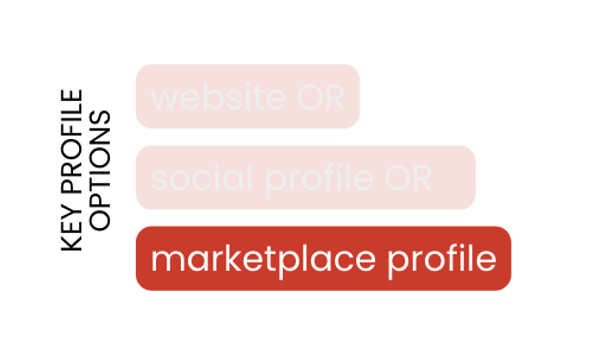
As in other income techniques, marketplaces play a central role in the sharing economy. Here, though, they are often essential rather than optional. They provide built-in discovery, payment processing, dispute resolution and trust tools such as reviews and identity verification.
Building your own platform for rentals or resales would greatly increase complexity and marketing costs. That is especially true when your assets are tied to a specific location. For this reason, Lynnaider strongly recommends prioritizing marketplace profiles for this technique.
When your own website can help
You can still add visibility with your own website or social store, for example to rent out a property or simply to support discovery. This is a legitimate practice for properties such as apartments or houses that you fully own and that are not attached to any brand.
The limits of promoting branded items
It is important to understand the limits. Simply owning a product does not give you the right to spend advertising money behind its resale or sharing. Doing so would usually count as acting on behalf of the original brand, which is rarely allowed without explicit authorization.
Marketplaces, by contrast, work within ecosystems where promotion, visibility boosts and even paid placements are contractually allowed. This built-in permission is another reason marketplaces remain the main and most reliable channel for this technique.
Examples of sharing economy platforms
- Rooms and homes: Airbnb and similar accommodation platforms.
- Cars: car-sharing platforms such as Turo.
- Tools and equipment: rental platforms such as Sharely or FatLlama.
- Clothes: Vinted or Vestiaire Collective.
- Furniture and general items: Facebook Marketplace or eBay.
Availability differs by country, so check which platforms are popular where you live.
How to build a trusted profile on sharing economy platforms
To create an attractive profile, present yourself as a reliable, skilled and approachable owner. A few elements make a big difference.
Profile picture on sharing economy platforms
Use a clear and professional profile picture. It does not have to be your face. Keep in mind, though, that on sharing platforms, people tend to trust profiles with a face more, especially since they may meet you in person.
Bio
Write a short but engaging bio that highlights your expertise or ownership. Mention the tools or properties you offer and why they are well cared for.
Photos and descriptions
Always emphasize the quality and usability of your assets, with clear, high-quality photos. Describe condition, size and included extras honestly.
Extra support
Mention any extra help you can give, such as instructions or advice for first-time users. This builds trust and encourages renters to choose you.
Sharing economy platforms vs your own website
| Marketplace profile | Own website or social store | |
|---|---|---|
| Discovery | Built in | You bring all traffic |
| Payments and disputes | Handled by the platform | Your responsibility |
| Trust tools | Reviews, verification | You build them yourself |
| Promotion of branded items | Allowed within the platform’s rules | Rarely allowed without brand authorization |
| Best for | Almost all items | Supporting visibility, fully owned unbranded property |
Common mistakes on sharing economy platforms
The first mistake is an empty or anonymous profile with no bio. People hesitate to rent from someone they know nothing about. The second is joining many platforms with weak listings, instead of one with a strong listing.
The third mistake is running your own ads for branded items you resell, which can break brand rules.
An example of a trusted sharing profile
Imagine a keen cyclist who rents out two road bikes. Her profile shows a friendly photo, a short bio about her years of cycling, and clear photos of each bike. She mentions that she adjusts the saddle height at handover and includes a repair kit.
Her first renters leave enthusiastic reviews about her helpfulness, and bookings follow.
Choosing between sharing economy platforms
Compare platforms on fees, local popularity, insurance and payout speed. A platform with lower fees but few local users may bring fewer bookings than a slightly more expensive, popular one. Ask friends or local groups which platforms they use.
Start with one platform and learn it well. Add a second only when the first runs smoothly.
How sharing economy platforms build trust
Most platforms show ratings for both owners and renters, verify identities and hold payments until the rental or delivery is complete. Some offer insurance or damage protection. These features make it safer to deal with strangers.
Use them fully. Complete your verification, ask renters to do the same, and only accept bookings that follow the platform’s process.
Your profile on sharing economy platforms over time
Your profile grows stronger with every good review. Keep it updated with new items, a current photo and any new extras you offer. Mention milestones, such as the number of happy renters.
A strong, active profile also helps the platform’s algorithm show your listings more often.
Starting small and staying private
The sharing economy needs almost no starting budget, because you already own what you offer. We recommend spending no more than about 20 dollars on your setup, for example on good photos or small extras, with no monthly fees. Marketplaces bring much of the traffic, and you can add your own content without an agency.
You can share and resell without building a public persona. If the idea of self-branding is what held you back so far, Lynnaider recaps the alternatives for you.
Your next step
The next article lists the setup the sharing economy needs: only two of the five setup types are always required. The complete module, alongside the other online income techniques, is in the book on our products page. If you would like help choosing sharing economy platforms, see our services page.
Frequently asked questions
Does responding quickly affect my ranking?
On many platforms, yes. Fast response times and high acceptance rates often improve your visibility.
Should I accept payments outside the platform?
No. Paying outside the platform usually removes its protection and may break its rules.
Do sharing economy platforms charge fees?
Most take a percentage of each rental or sale, sometimes from both sides. Check the fees before setting your price.
Can I list the same item on two platforms?
Yes, but keep calendars synchronized to avoid double bookings.
Why are marketplaces essential in the sharing economy?
They provide discovery, payment processing, dispute resolution and trust through reviews and identity checks, which would be very hard to build yourself.
Can I use my own website for rentals?
For property you fully own and that is not tied to any brand, such as an apartment, a website can help. For most items, marketplaces are the better choice.
Can I advertise branded items I resell?
Generally not on your own. Advertising branded products outside a marketplace could be seen as acting for the brand without permission. Marketplaces allow promotion within their rules.
Can I get step-by-step guidance from Lynnaider to set up one of the 10 online business models without spending much?
Step-by-step tutorials with free or minimal-cost setups may be made based on interest. Please add your name to the waitlist, and we will inform everyone who signed up as soon as they become available.
Should I show my face on a sharing platform?
It is not required, but profiles with a face often earn more trust, especially when renters meet you in person.
What should my sharing profile include?
A clear profile picture, a short bio highlighting your items or expertise, high-quality photos and any extra help you offer.
Which sharing economy platforms exist?
Examples include Airbnb for rooms, Turo for cars, FatLlama for equipment, Sharely for tools, and Vinted, eBay or Facebook Marketplace for reselling.
Do marketplaces allow paid promotion?
Many do, through visibility boosts or marketplace ads, within their own terms.
How do I build trust as a new renter?
Complete your profile, verify your identity if offered, describe items honestly and reply quickly. Your first reviews matter most.
Can I start with the Sharing Economy technique at no or low cost?
Yes. Lynnaider teaches setup routes for the Sharing Economy technique that cost nothing, or very little (under 20 dollars), to go live, so you do not pay setup costs long before you earn. Our free AI agent, Lynnaider Compass, guides you through them step by step, in the same logic as the whole Lynnaider teaching.
Disclaimer: This article is for general informational purposes only and should not be regarded as legal, tax, or business advice. Pursuing an online business does not guarantee income; results depend on many factors including the business environment, individual effort, skills, and consistency. Some links on this site may allow Lynnaider to earn a commission at no additional cost to the reader.