
Where to Sell Digital Products: Website, Social Store or Marketplace
Would you like to read this article told by Lynnie, our fictional kid character? Jump here.
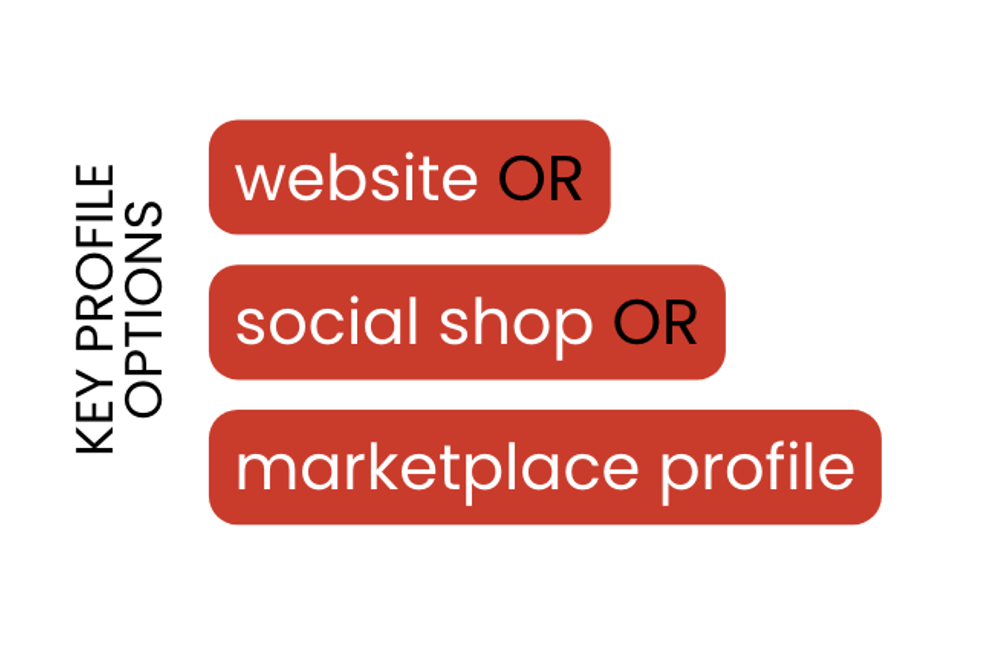
After explaining how selling digital products works, here are the three profile options for selling digital products.
Once your digital product is ready, the question is where to sell it. In digital product sales, all three of Lynnaider’s profile types are possible: your own website, a social store or a marketplace. In this article, we explain where to sell digital products and which option suits which stage.
You only need one of the three to enable sales technically. Remember, though, that a profile means nothing if no one notices it. Whichever you choose, you still need to bring traffic to it.
How to choose where to sell digital products
Each option comes with a different set of trade-offs. The right starting point depends on three questions. How much traffic can you already bring? How much control do you want over pricing and branding? How much operational responsibility are you ready to take on?
Where to sell digital products: your own website
Setting up your own website, through platforms such as Shopify in standalone mode, gives you full control. You decide the store’s look, your branding, your prices and the customer’s experience from the first click to the download. You also decide whether to offer bundles or discounts, and how you communicate after the sale.
Since you do not share revenue with a marketplace, your margins are usually higher. The trade-off is that all responsibilities are yours.
Where to sell digital products: what your website needs
- A clear privacy policy.
- Terms of sale.
- A refund or no-refund policy written specifically for digital goods.
- A reliable delivery system that sends the file or access link automatically after purchase.
A standalone website also has no built-in audience. Every visitor must come through your own efforts, whether social media, SEO, paid ads or email.
Where to sell digital products: a social store
A social store, built with link-in-bio tools such as Stan Store or similar platforms, sits between a marketplace and a full website in effort and responsibility. You connect a storefront directly to your social profile. Followers can browse and buy without ever leaving a familiar environment.
For digital products, this setup works especially well, because there is nothing physical to ship. Delivery happens automatically by download link or access email as soon as payment is confirmed. Mo, from our digital product examples, sells her animation files this way.
Costs and limits of a social store
Social stores usually charge a small transaction fee or a flat monthly subscription, rather than a percentage of every sale. That can make them cost-effective as your sales grow. At the very start, prefer a free plan, so you pay no monthly fee before you have sales.
The limitation is that customization and branding are more restricted. Your storefront also depends entirely on the social platform staying accessible.
Where to sell digital products: a marketplace
A marketplace profile is often the most accessible start for beginners. Examples include Etsy or Gumroad for digital downloads, Shutterstock or Adobe Stock for photography, and MyMiniFactory for 3D designs. The infrastructure, the trust and, importantly, an existing audience are already in place.
Buyers come to these platforms actively looking for products. The marketplace’s algorithm recommends your listing to people searching in your category. You can make early sales before building your own following.
What a marketplace handles for you
Marketplaces usually take a percentage of each sale, sometimes plus a listing fee per product, in exchange for visibility. A major practical advantage is that the marketplace often acts as the seller of record. It handles payment processing, manages the legal framework of the transaction and takes on much of the responsibility for delivery and disputes.
The limits of a marketplace
You have little control over how your product is presented. Your pricing is limited by what buyers on that platform expect. You also do not receive your buyers’ contact details, so you cannot follow up or add them to your email list unless they opt in elsewhere.
Where to sell digital products: a quick comparison
| Profile | Built-in audience | Control | Your responsibilities |
|---|---|---|---|
| Marketplace (Etsy, Gumroad, Shutterstock) | Yes | Low | Low: the platform handles much of it |
| Social store (link-in-bio) | Your followers | Medium | Medium: legal pages, questions |
| Own website (Shopify) | No | Full | High: legal pages, delivery, payments |
A simple path for beginners
If you have no audience yet, start on a marketplace to learn what sells. If you already have followers, a social store lets you sell to them directly. Once you have regular sales and traffic, a website gives you full control and higher margins.
Many creators end up combining two options. A marketplace brings new buyers, while a social store or website serves their loyal audience.
An example of where to sell digital products
Imagine a calligrapher who creates printable quotes. She starts on Etsy, where people search for wall art and find her listings. After a few months, she builds an audience on Pinterest and adds a link-in-bio store for her followers.
Her Etsy shop brings new buyers, and her social store earns more per sale from loyal fans. A year later, she plans her own website.
Mistakes when choosing where to sell digital products
The first mistake is building a website first, with no plan for visitors. Without traffic, a beautiful store earns nothing. The second is paying a monthly subscription before your first sale, when free plans exist.
The third mistake is staying only on a marketplace forever, without ever collecting email addresses. Over time, try to invite buyers to your own newsletter, so you can reach them directly.
Starting small and staying private
Selling digital products can start with almost no money. We recommend spending no more than about 20 dollars on your setup, using free tools or small one-time fees, with no monthly fees before anyone knows your product. You can bring the traffic yourself, without an agency.
Digital products also work very well without showing your face. If the idea of self-branding is what held you back so far, Lynnaider recaps the alternatives for you.
Your next step
The next article lists the setup digital product sales needs: only one of the five setup types is always required. The complete module, alongside the other online income techniques, is in the book on our products page. If you would like help deciding where to sell digital products, see our services page.
Frequently asked questions
Where should beginners sell digital products?
A marketplace is often the most accessible start, because buyers are already there. A social store suits creators with an audience, and a website suits those ready for full control.
Which marketplaces sell digital products?
Etsy and Gumroad for downloads, Shutterstock and Adobe Stock for photography, and MyMiniFactory for 3D designs, among others.
What is a social store for digital products?
A storefront connected to your social profile through link-in-bio tools such as Stan Store. Followers buy without leaving a familiar environment.
What does selling digital products on my own website require?
A privacy policy, terms of sale, a refund or no-refund policy for digital goods, and an automatic delivery system. You also bring all the traffic yourself.
Do marketplaces take a fee on digital products?
Yes, usually a percentage of each sale and sometimes a listing fee per product, in exchange for visibility and infrastructure.
What is a seller of record?
The party legally responsible for the sale. On many marketplaces, the platform takes this role for digital products and handles payments and many consumer obligations.
Do I get my buyers’ emails on a marketplace?
Usually not. You cannot follow up directly or add them to your email list unless they opt in somewhere else.
Will Lynnaider publish step-by-step tutorials for setting up the 10 online business models for free or at a very low cost?
They may be created depending on how much interest there is. Please join the waitlist to show that you are interested, and we will let you know as soon as they are ready.
Do I need all three profiles?
No. One is enough to enable sales. What matters is that you bring traffic to it.
Can I start with the Digital Product Sales technique at no or low cost?
Yes. Lynnaider teaches setup routes for the Digital Product Sales technique that cost nothing, or very little (under 20 dollars), to go live, so you do not pay setup costs long before you earn. Our free AI agent, Lynnaider Compass, guides you through them step by step, in the same logic as the whole Lynnaider teaching.
Disclaimer: This article is for general informational purposes only and should not be regarded as legal, tax, or business advice. Pursuing an online business does not guarantee income; results depend on many factors including the business environment, individual effort, skills, and consistency. Some links on this site may allow Lynnaider to earn a commission at no additional cost to the reader.