
When Does Your Online Income Change the Equation? | Article 11
Some readers who begin building an online activity alongside their employment will eventually reach a point at which their online income is substantial enough to raise a genuine question. Does the level now justify a bigger commitment? Could this online income, at some point, replace employment altogether? These are important questions, and Lynnaider approaches them with the same honesty that has been applied to every earlier stage. The threshold at which online income actually justifies leaving employment is almost always higher than it first appears. Reaching that threshold in a way that holds up requires much more than one strong month.
Why the Online Income Threshold Sits Higher Than It Looks
A salary is more than a number on a payslip. In many countries it includes pension contributions, health coverage, paid holidays, sick leave, and small line items like professional development budgets. Beyond those benefits it also carries the quiet structural certainty of a deposit that lands on the same day every month, regardless of what else has shifted in the world. Online income does not automatically include any of these. Pricing them properly into a comparison is easy to forget when the surplus from one particular month feels large in relative terms.
A useful mental exercise is to think in years, not in months. Consider what the year looks like if the strongest month you have just had is followed by a much quieter one. Consider the season when the platform algorithm shifts, or the season when a favourite piece of content stops performing, or the moment a supplier changes their terms. Salaries continue through those variations. Online income does not, unless it has become substantial, consistent, and diversified across many months in a row. Both of those adjectives matter, and neither of them is captured by a single strong average.
What the Decision to Leave Employment for Online Income Actually Involves
If and when the moment does arrive at which your online income can genuinely support a bigger commitment, the decision deserves careful thought. Ideally with input from someone who knows your full financial picture. A partner, a trusted advisor, a mentor, sometimes an accountant or a therapist. This is not a decision to make from inside a strong month, and it is not one to make from inside the emotional pull of an online conversation that celebrates such transitions loudly.
Practical questions worth working through include the following. How many months of stable, above-salary online income have there been. What does the online income look like at the fifth or tenth percentile of recent months, not the average. What fixed obligations in your life would a variable income need to cover reliably. What is your fallback if the online income drops significantly in the first six months after leaving employment. Answering these on paper, rather than in your head, tends to produce a more honest picture than any intuitive assessment.
It is also worth considering middle paths before committing to a full transition. Many people negotiate a reduction in hours at their current job before leaving it entirely, buying themselves more time for their online activity without absorbing the whole of the income risk in a single move. Others transition into a part-time consulting arrangement with the same employer, keeping benefits and predictability in place while opening space. These arrangements are less dramatic than a clean break, and they are almost always the wiser first step. They also leave real optionality if the online income turns out to be less stable than the strong months suggested.
Online Income as Confirmation, Not as the Point
Lynnaider would like to close this stretch of the journey the same way it opened, with a reminder of the three parallel purposes. Online income, when it arrives, is confirmation that you have built something real. It is meaningful and worth pursuing. But the two purposes above it, valuable self-occupation and the communities you have joined or rejoined along the way, will have been with you from the very first day, entirely independent of whether the money came. That is not a consolation prize. That, in our view, is the more reliable and more lasting part of what this journey gives you.
This framing matters especially at the threshold where a bigger commitment starts to look tempting. It is the moment at which the online income can appear to be the whole point, and the earlier purposes can quietly recede into the background. Bringing those purposes back into focus at exactly this moment is how the decision stays grounded rather than being driven by a single strong quarter.
Protecting the Person Behind the Online Income
Always remember that building an online business-oriented activity consumes energy, and you need to take care of your mental and physical wellbeing in parallel, so that you have the resources needed to keep giving to your business and to those you serve. We suggest that this deserves genuine attention rather than passing acknowledgement. It applies at every phase of the online income journey, and it applies with particular weight at the threshold where a bigger commitment is being considered, because the emotional and financial stakes are both higher than at any previous point.
Consider having someone who gets to know you well enough to accompany you along the way, so that you do not feel alone, and so that they can potentially help translate your potentials and purpose into what we would call your “geniuses.” That person can be a friend, a family member, a mentor, or a professional. The specific role matters less than the presence of someone whose perspective is not filtered through the online conversation, and who can help you see clearly at exactly the moment when clarity is hardest to hold on your own.
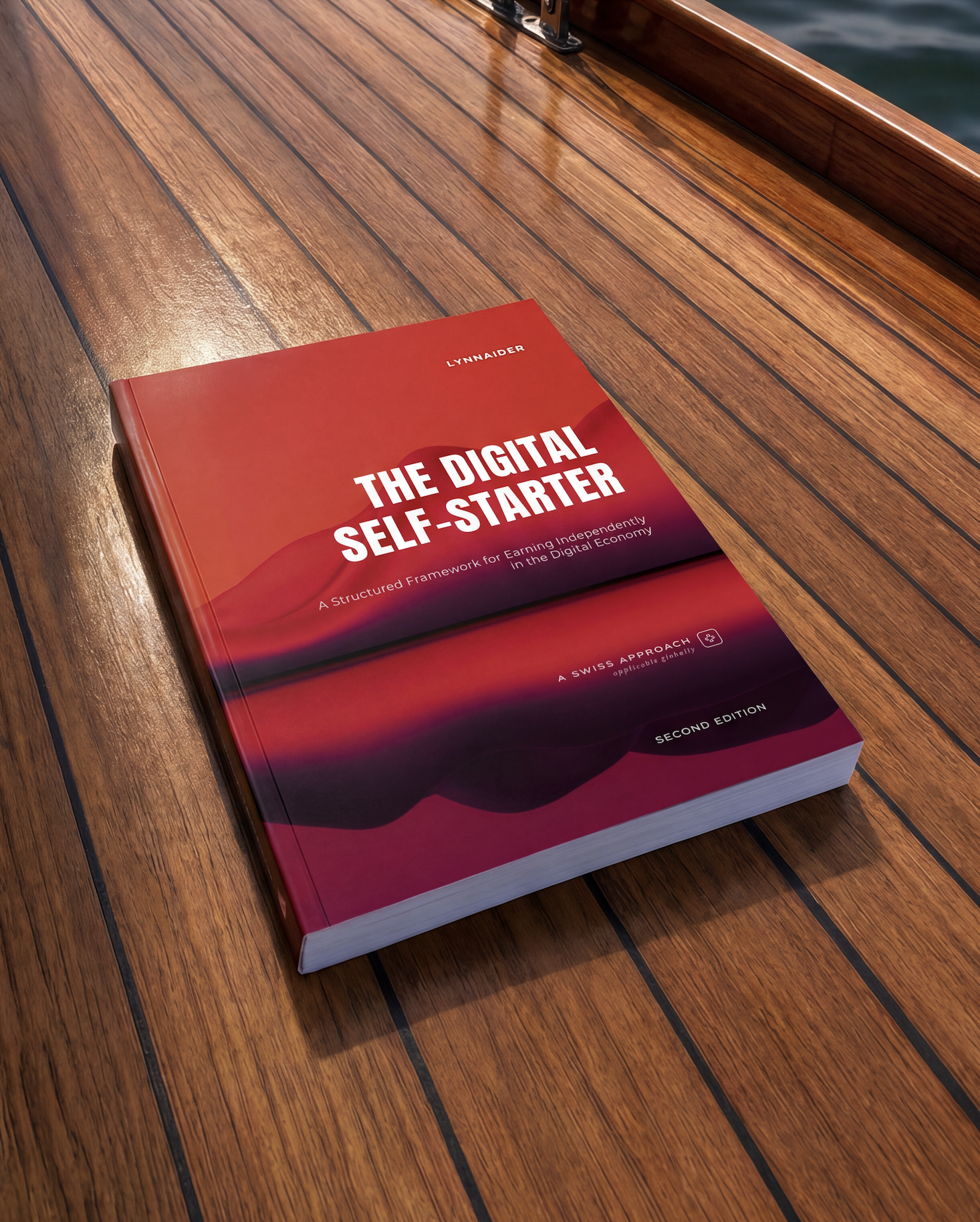
DON’T FORGET: Traffic is what gives life to any online business. Many beginners believe it’s sufficient to setup a presence online. It’s not. Every online business-oriented endeavor depends on people discovering it. Thankfully, there are several learnable ways to drive traffic. You do not need to place yourself at the centre of your content, but learning how to guide “eyeballs” consistently toward your offering is essential. Read more about this under the Traffic and Content categories of this blog.
Frequently asked questions
When does online income justify leaving employment?
Only when your online income has consistently replaced, not simply matched, the total value of your salary, including the protections and predictability that come with it. That threshold is higher than it looks on any single strong month, and reaching it requires many months in a row, not one peak.
Should I quit as soon as my online income equals my salary?
Almost never. Matching on paper is not the same as replacing in reality. Salaries include benefits, structure, and predictability that a variable online income cannot automatically supply. Waiting until online income consistently exceeds salary by a meaningful margin is a wiser threshold for most people.
How do I know if my current online income is genuinely stable?
Look at the lowest few months of the past year, not the average. Stability shows up in the floor of your online income, not its ceiling. If the floor sits comfortably above your fixed obligations across many months, you are on more solid ground than an average alone would suggest.
Who should I involve in the decision?
Someone who knows your full financial picture, and whose judgement is not filtered through the online entrepreneurship conversation. A partner, an accountant, a trusted mentor, or a therapist can each play this role. What matters is having a second perspective that stays anchored in your specific situation rather than in aspirational content.
What if I am emotionally ready to leave but the online income is not?
Wait. Emotional readiness precedes financial readiness by many months for almost everyone. Acting on emotional readiness alone tends to place financial pressure on an activity that was thriving precisely because that pressure did not exist. Let the online income catch up.
Isn’t Lynnaider’s stance overly cautious?
The stance is honest rather than cautious. Online income carries real variability that employment does not, and pretending otherwise tends to end poorly. A cautious threshold for leaving employment is what makes the eventual transition durable if it comes at all.
What if my online income never reaches the threshold?
Then you have still built something real, meaningful, and yours, alongside the security your employment provides. This is not a failure outcome. It is one of the most stable and healthy shapes an online activity can take, and it deserves to be recognised as such rather than as a stepping stone to something else.
PRIVATE TUTORING: If you are looking for personal guidance through the process of starting your online endeavour, I offer private tutoring sessions, available remotely online or in person in Geneva, Switzerland. Read more about my approach here or send me a message directly via email.
Disclaimer: This article is for general informational purposes only and should not be regarded as legal, tax, or business advice. Pursuing an online business does not guarantee income; results depend on many factors including the business environment, individual effort, skills, and consistency. Some links on this site may allow Lynnaider to earn a commission at no additional cost to the reader.