
No More Turning Away: Harnessing Digital Capabilities to Equip Unconventional Entrepreneurial Profiles for Self-Realization in Society 5.0
Research Article
M. Kohler Grof
University of Plymouth · Doctorate in Business Administration – Phase 2
Abstract
The narrative of the assertive, risk-taker, sociable profile of a prosperous entrepreneur and the subsequently advertised best practices that solidify this stereotype have become one of the most unquestioned depictions in today’s labor market. Our study suggests that the most recent advancements in technology, such as large language models in artificial intelligence (AI), are reshaping the entrepreneurial landscape in ways that it democratizes participation, inviting masses previously rejecting it not fitting their persona. The validity of the proposed conceptual model is assessed through the analysis of data obtained from surveys completed by 201 individuals from various personality spectrums. These surveys assessed perceptions of factors influencing self-realization, specifically focusing on the adoption of digital capabilities in online business models, revealing as its key findings that AI holds significant promise for individuals with atypical entrepreneurial personalities to pursue financial independence, the driver of self-realization. As concepts like Industry 5.0 and Society 5.0 become more significant, education needs to evolve to efficiently prepare individuals of all dispositions to engage with the advantages of integrating digital and physical worlds. This study contributes to the broader discourse on digital acceleration and societal prosperity. It addresses a research gap by examining a new digital entrepreneur architype and offers insights that could inform policy, education, further research and support systems aimed at fostering inclusive entrepreneurship.
Keywords: digital entrepreneurship, AI, society 5.0, industry 5.0, education, introversion, neuroticism, personality
Introduction
Digital capabilities have become an increasingly integral element of labor as a result of the rapidly evolving dynamics of the 21st century. The proliferation of the internet, advancements in artificial intelligence, and the advent of online business models built on automation have not only revolutionized the way corporations operate (McKinsey & Company, 2023) but also redefined pathways for individuals to work and earn income (Ghauri et al., 2022) By definition, labor refers to both the physical and mental work performed by humans to produce goods and services (Samuelson et al., 2010), while work may also be the product itself, especially in service industries. (Fitzsimmons et al., 2023) Schumpeter’s (1949) theory of economic development suggests that new combinations of production means, thus that of labor also, can drive social change. Today, significant shifts in labor satisfy this criterion: first, the fourth industrial revolution (Industry 4.0) has increased productivity through digital technology, which has raised concerns about traditional job security; second, retirees are re-entering the workforce with the increasing need to supplement their income; and third, the gig economy, which is characterized by freelancing and short-term contracts, is expanding (Wiklund et al., 2019), providing an alternative to traditional employment and a previously unaccounted option to many.
In the realm of digital self-employment, the necessity in entrepreneurship of possessing a confident demeanor, being highly innovative, and engaging in extensive direct interaction with multiple parties are somewhat substituted by the advancements in internet technology, artificial intelligence, and automation. These technologies can be employed to paint the first strokes on the blank canvas of a new endeavor, i.e. identifying the specialties and potential niches of an individual or utilized to replace a missing skill needed for an otherwise promising existing direction. “The nature of entrepreneurial work embodies the very process of self-actualizing one’s human potential through purposeful, authentic, and self-organized activities that can lead to a fulfilling and fully functioning life.” (Shir et al., 2018) The emergence of digital capabilities in entrepreneurship, therefore, not only offers the possibility of earning income through labor that is new to many, but also opens up a new playground for testing out various other forms of self-realization, which is the dependent variable in this present study.
Digitalization is a significant factor in influencing the welfare of nations’ populations, which has led to the development of concepts such as Industry 5.0 and Society 5.0, officially embraced by the European Union and countries like Japan as part of their future vision (European Commission, 2021; Japan.go.jp, 2020). As Chikan (2020) explains, under the principles of business economics, change can be ignited at the level of the enterprise or even of the consumer, provided that the new approach is consistent, cohesive, and significant, however, no major solution can be efficiently realized without support on the level of the government. In order to entice governments to maintain and further advance this trajectory, this study examines the relationship between digital capabilities and elements of self-actualization within societal well-being. Additionally, it investigates whether the acquisition of these capabilities could have a transformative impact on individuals with diverse personalities.
Entrepreneurship has long been heralded as a potent vehicle for achieving financial independence, a commonly acknowledged element of well-being. However, the typical entrepreneurial image often aligns more closely with extroverted characteristics, such as assertiveness, and personalities exhibiting low levels of neuroticism among others. This alignment may exclude persons who are predisposed to worry, have a high level of introversion, or possess weaker interpersonal abilities due to other factors, and therefore who may view entrepreneurial activities as unsuitable for them. This research aims to address a critical question: can digitalization democratize a broader range of income generation, making activities such as online entrepreneurship a welcomed option for individuals across the personality continuum? Through the analysis of how digital capabilities intersect with personality traits, this research seeks to illuminate the transformative potential of digitalization on re-imagined endeavors such as online entrepreneurship.
The aim of the research is consequently to investigate how digital capabilities are regarded in terms of their potential to facilitate self-realization, and whether personality plays a role in the ease of which people can enter and benefit from the digitalized world.
The study therefore is set out to:
- Explore the concepts of Industry 5.0, Society 5.0 and the contemporary evolution of entrepreneurship within.
- Examine the relationship between digital capabilities and well-being, more specifically that concerns self-realization.
- Evaluate the effect of personality traits on the indicators of successful self-realization in a digitalized world.
Industry, Society 5.0, and SDGs
Industry 4.0, with the rise of the internet, has brought numerous advantages to human productivity during the past two decades. In Industry 5.0, there is an arising need for a shift where the society’s stakeholders take a permanent seat at the table in primarily profit-driven organizations. The European Union (EU) describes “a vision of industry that aims beyond efficiency and productivity as the sole goals and reinforces the role and the contribution of industry to society” and “it places the wellbeing of the worker at the center of the production process and uses new technologies to provide prosperity beyond jobs and growth while respecting the production limits of the planet.” (European Commission, 2021) It is not a mere chronological continuation or alternative to the Industry 4.0 paradigm, but an effort aiming to exploit the impact of technology and Industry 4.0 by placing the human beings in the center of innovation. (Fortuna et al., 2022). Organizations in the EU are propelled to adapt this vision gradually. Industry 5.0 has evolved through various developmental phases: Industry 1.0 (late 18th century, sparked by the invention of steam power); Industry 2.0 (late 19th century, advancements in electrical and mechanical technologies like electricity, automobiles and telecommunications); Industry 3.0 (1980s information age, brought by computers, electronics and automation); and Industry 4.0 (around 2000, technologies such as the Internet of Things, Big Data, artificial intelligence and cloud computing). (Ziatdinov et al., 2024) As Navahandi (2019) explained, Industry 4.0 aimed to enhance industrial processes, while Industry 5.0 emphasizes integrating human intelligence and creativity, while it considers sustainability. It is premature to predict the precise impact Industry 5.0 will have on current business structures, but it is anticipated that during the process, we will eliminate boundaries between the physical and digital realms. (Aslam et al., 2020).
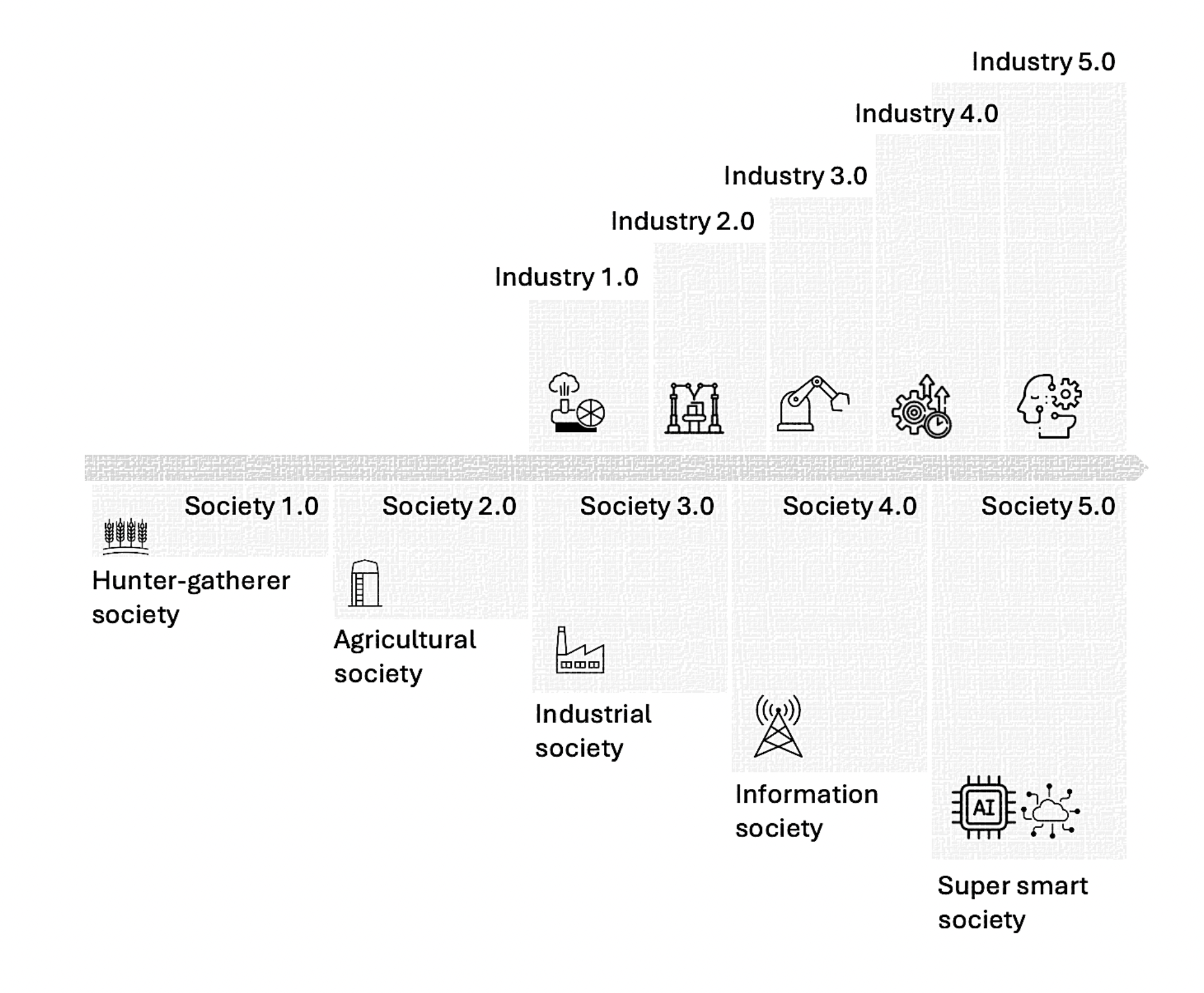
From a societal perspective, Huang et al. (2022) illustrate in Figure 1 the progression of “Industry x.o” and the simultaneous transformation of “Society x.o” over time. While Industry 5.0 focuses human-centricity within the evolution of the industry, Society 5.0, initiated by the Japanese government in 2016 imagined a lean, super-smart, human-centric society to ensure all citizens can access high-quality lives full of comfort and vitality through merging between cyberspace and physical space with 5G, Big Data, artificial intelligence, and other technologies, which are also supporting the industry. (Huang et al., 2022)
The objectives of Industry 5.0 and Society 5.0 aim to harmonize economic advancement, environmental sustainability, and societal well-being and this alignment is similarly reflected in the United Nations’ 2030 targets, as embodied in the Sustainable Development Goals (SDGs) endorsed by the 191 member countries. As demonstrated by the World Sustainability Collective (2020) in Figure 2, progress in the top economic layer – which includes Decent Work and Economic Growth, Industry, Innovation and Infrastructure, Reduced Inequalities, and Responsible Production and Consumption – relies on advancements at the biosphere and societal levels. These layers are not an order of priority but rather function as complex enablers of each other. Although the primary contribution of the present study’s conceptual model is to re-imagine a segment of the labor market and impact the economy, it fundamentally builds upon a crucial element at the societal level: the SDG of quality education.
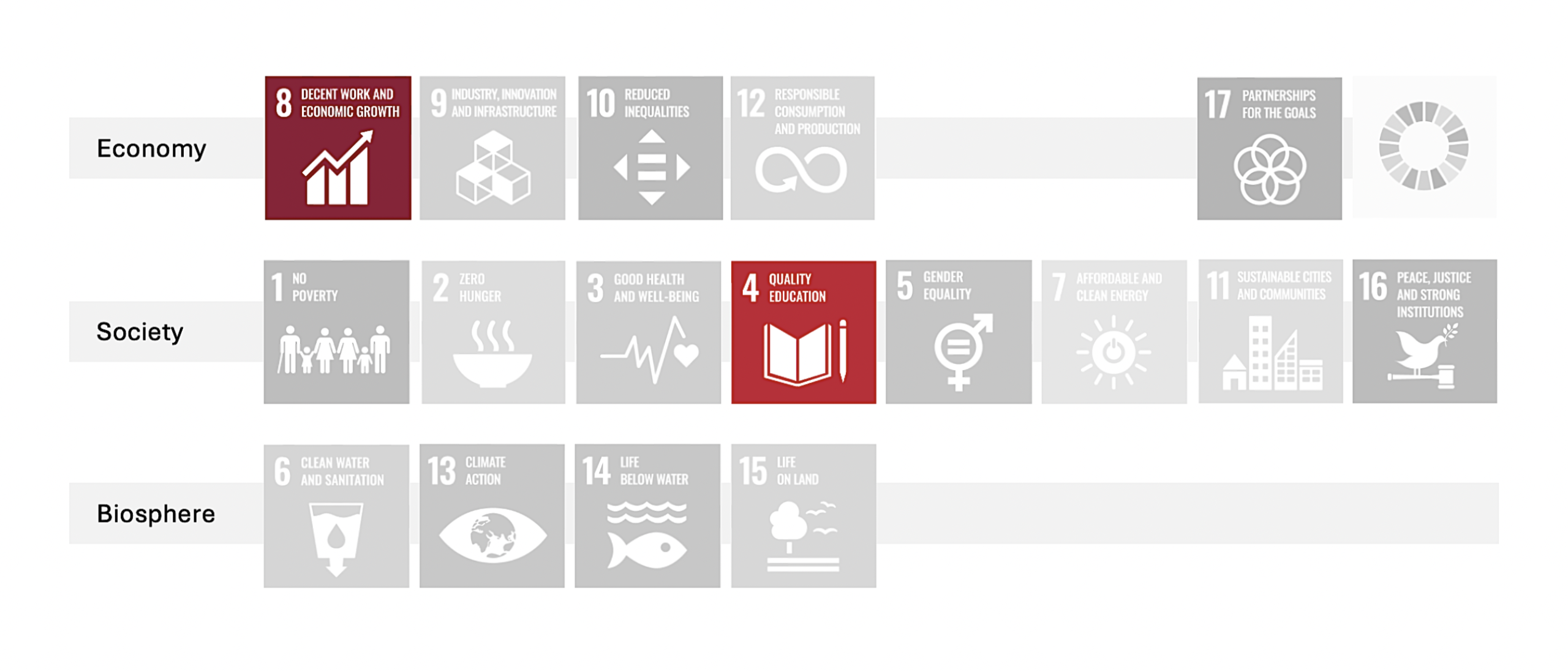
SDG no.4 is committed to “ensuring inclusive and equitable quality education and promoting lifelong learning opportunities for all.” Despite its importance, SDG no.4 faces numerous persistent challenges in the evolution of industry and society, with the digital divide emerging as a particularly pressing issue (Internet Society, 2020). The Internet Society Foundation (2020) defines the digital divide broadly as the disparity between individuals who have access to the internet and those who do not. Elaborated, the digital divide encompasses various dimensions, including affordability, quality, and relevance, and as we advance towards Society 5.0, the relevance gap is expected to widen. Hence, in areas where essential facilities are already in place, the aim is to aggressively tackle this gap primarily by means of teaching. Open-source education will be crucial in this context. Dovleac et al. (2023) demonstrated the impact of the digital divide through their econometric models, highlighting education as a key challenge for the New Society. Minina et al. (2019) emphasize the necessity for universities to recognize their dual role in both education and the generation of new knowledge. However, given that universities are not accessible to everyone, this study argues for alternative, more accessible educational establishments and practices to adopt such curricula. The present era advocates for a culture of continuous, lifelong learning, which subsequently generates opportunities for meaningful employment, as stressed in SDG no.8, and with the integration of new digital capabilities, reaching new prospects, we can explore new possibilities for what constitutes ‘decent work’. The World Economic Forum (WEF, 2020) underscores the necessity of institutionally structured yet individualized strategies to enhance the employability of young people. Employment is universally crucial, as various studies, including those by Bates (2017) on most vulnerable publics, indicate that it plays a significant role in alleviating feelings of helplessness and inactivity. By implementing personalized approaches within a formalized institutional framework, we can more effectively address the unique needs of individuals, both young and older, thereby improving their prospects in the labor market and contributing to their overall well-being.
The “Imagination Society” and the Underdog Entrepreneur
From the lenses of major corporations, leaders define Society 5.0 by its key aspects of “problem-solving, value creation, variety, decentralisation, resilience, and sustainability” (Nakanishi, 2017), often also referred to as the “Imagination society” emphasizing the integration of digital change with human creativity and values. From the perspective of the individual, it relies on the creativity and stimulation of imagination, which in corporations falls into the responsibility of the employer. For everyone, but especially for those who are not yet or no longer employed, and for those who wish to be self-employed as an increasingly valid and accessible alternative to waged labor, it is the educators’ duty to stimulate the creativity and digital creativity of all individuals, to ensure no one is left behind. The societal impact of technology encompasses all facets of life, including the obvious areas such as healthcare, transportation, and energy, as well as less prioritized aspects such as leisure (Deguchi et al., 2020). Capitalizing on leisure, despite frequently being dismissed and consequently undervalued as a catalyst for entrepreneurial activity, could offer a natural route to self-realization, particularly to first-time venturers, due to its tangible and more readily imaginable nature.
Today, technology such as AI still majorly calculates its probability based on input generated by human knowledge and the generation of innovations remains – for now – a domain where humans excel (Scuotto et al. 2023). The concept of the Imagination Society underscores the imperative of self-realization, prompting evoking established psychological frameworks, particularly those of Carl Jung. Jung’s concept of individuation underscores the centrality of human capital in intellectual and innovative endeavors. While AI and other advanced technologies can significantly augment human cognitive abilities and creativity, the foundational role remains with humans (Wright, 2020). Wright suggests that AI and other advanced technologies should support individuals in reconnecting with their humanity through the process of individuation, which involves the differentiation of an individual from others, fostering a unique, authentic sense of self within societal contexts. Yet, there is a scarcity of studies that specifically address the individual entrepreneurial model (Gershon, 2017) as a viable avenue for autonomous pursuit of decent work. This research aims to address this gap by exploring how digitalization is creating new opportunities in this self-centric form.
There exists a distinct contrast between wage-based employment and entrepreneurial, freelance, or occasional work, as delineated by Gershon (2017). In traditional employment, time is often viewed as a commodity to be traded for wages, whereas in the latter forms of work, individuals regard their own selves as business. Though it comes with more uncertainty in terms of regular income, entrepreneurship may offer greater autonomy and authority compared to a stable salary, allowing individuals to find more fulfillment in their inherent abilities and talents while engaging in purposeful self-directed endeavors. (Shir, 2015) When work is viewed as entrepreneurship, workers can envision themselves as individuals who take risks instead of just being laborers. (Boellstroff, 2018) This mindset allows them to mobilize themselves, to the extent that studies in the use of digital technologies even imply the ability to transform the nature of uncertainty (Nambisan et al., 2017). There are already DIY laboratories and similar platforms where individuals transform their hobbies into viable businesses, as evidenced by Vessal (2021).
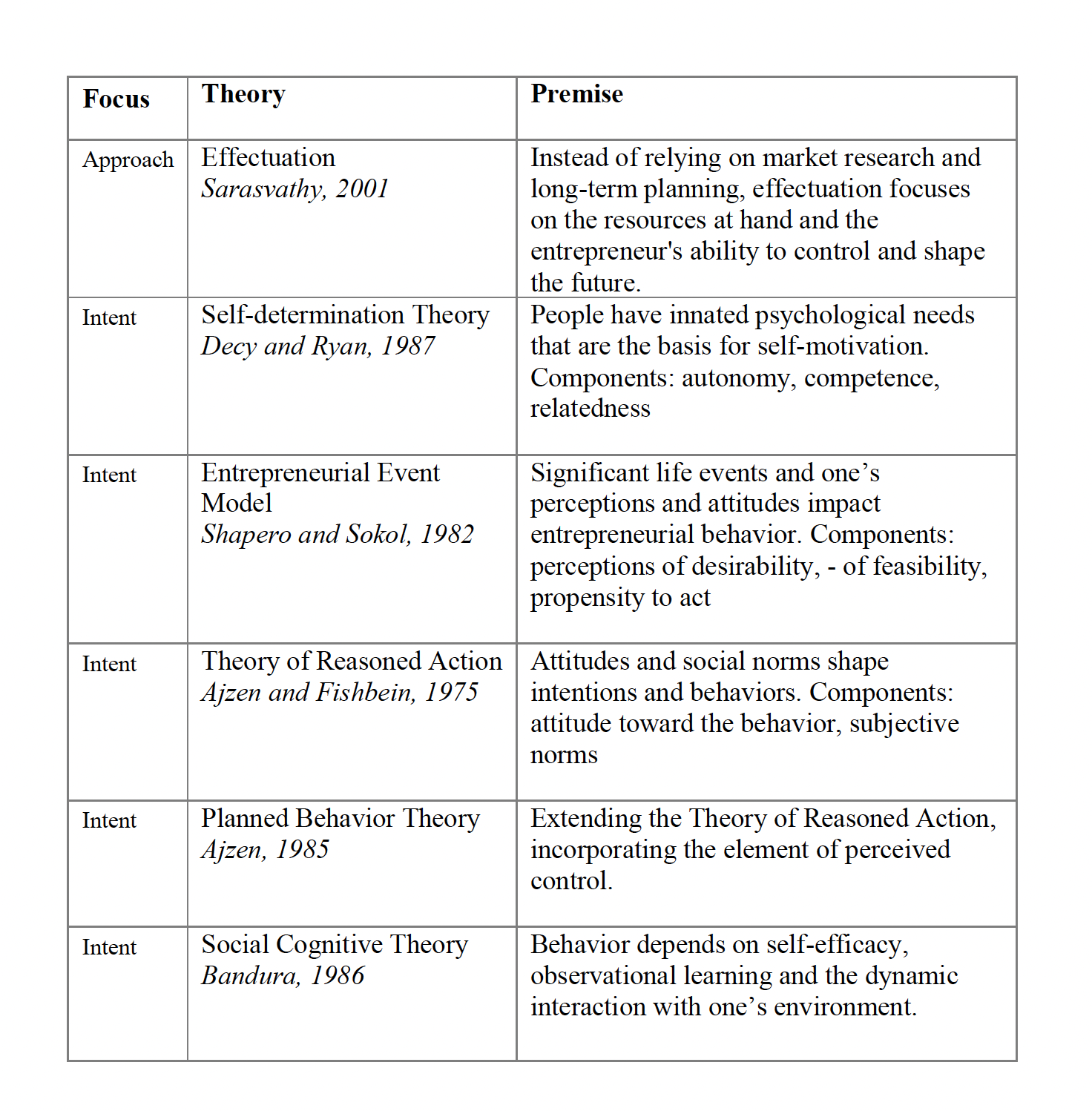
Entrepreneurship has been extendedly studied from the point of view of intent, motivation and behavior. Most studies that rely on five key intent theories, as summarized in Table 1, support the prevailing depiction of a successful entrepreneur found in most of the research. However, one of the most compelling revelations was the underdog nature of user entrepreneurship by gamers, prior to the emergence of gaming as a viable source of income, in a study by Haefliger et al. (2010) where they saw that entrepreneurial development did not follow the conventional process of opportunity recognition followed by prototype development, instead, gamers capitalized on their accumulated experience and first developed a product, more freely and avoiding the areas where stricter rules would apply. This phenomenon, which exemplifies the principles of Sarasvathy’s effectuation, highlights the significance of creating solutions using the resources that are easily or already accessible (Sarasvathy, 2001), like atypical persons pursuing online entrepreneurship could do to start, which makes us place her theory on the top of our tailored selection.
An underdog is a term used to describe a person or group that operates in a competitive environment but is not expected to succeed, which concept was reinforced by Bhardwaj et al. (2023), who especially examined entrepreneurs facing disadvantages. These individuals choose to pursue entrepreneurial ventures despite facing adverse and unsupportive external conditions. We choose to focus on the underdog approach in the conceptual model of this research and on Sarasvathy’s effectuation in the potential deployment of the educational approach to the model. This approach is particularly illustrative of the emerging practices in online entrepreneurship, which are currently expanding opportunities for new populations. Furthermore, they closely correspond to the aspects of self-realization that our study focuses on as its dependent variable.
Conceptual Model
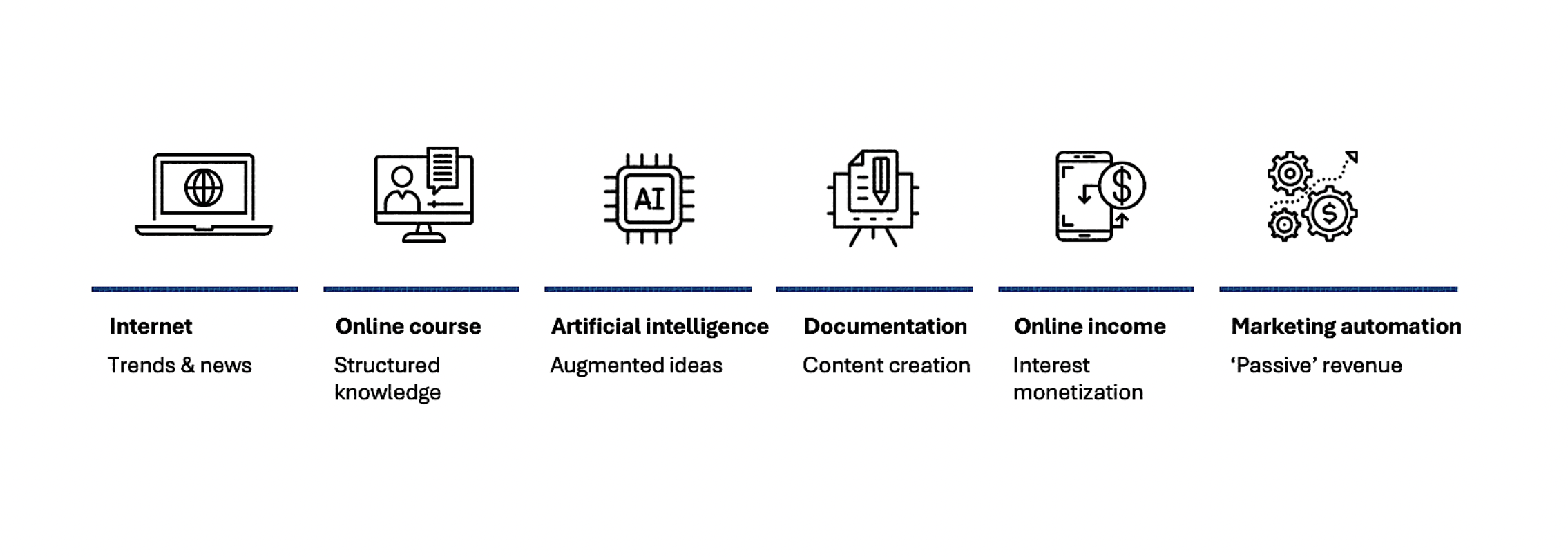
This study is examining the current digital climate for launching a new educational tool in the essence of Industry 5.0 and Society 5.0, as well as exploring how consumers’ personality traits influence such method’s attractiveness. Beyond attractiveness, its usability is to be studied in an experiential manner. The digital product is the combination of an online course series, built-in applications prompting the use of large language models within AI, and optional year-long guidance in online group or private setting. It is designed to facilitate the integration of personal interests from the physical world into the digital world, while also providing guidance on how to set up automated online income streams from these interests, thereby promoting financial independence. Figure 3 is aimed to capture the key digital skills and capabilities that are included in the curriculum to enhance the ease of participation, innovation, and self-realization in digital environments. The tool is being conceptualized in Switzerland, which is ranked as the top country according to the Society 5.0 Index (S5I) developed by Hoyos Guevara et al. (2020) that considers variables to assess countries’ advancements towards a technology society that prioritizes human-centric approaches.
Self-realization from the lenses of well-being is a challenging task to accurately define. Linton (2016) found that there are 99 distinct self-reported measures available to evaluate well-being. These measures encompass subjective assessments of life satisfaction, psychological functioning, as well as objective indicators of social and physical health. They encompass various schools of thought and disciplines, including clinical psychology, philosophy, economics, and medical sociology (Linton, 2016). In the studied context of Society 5.0, a valid approach involves considering well-being as a fundamental component of a fulfilling life, where it is connected to the ability to contribute and work, as defined by Ryff et al. (1998), besides positive relationships and emotions. In accordance with this, the factors of self-realization tested in the study span across self-confidence, self-acceptance, financial independence, practicing personal interests, appreciation by others, and helping others. The final factor is related to Maslow’s often rarely added sixth apex, self-transcendence, in which “people transcend their own personal concerns and see from a higher perspective”. (Messerly, 2017)
In addition to the ability to work, this study seeks to explore how individuals’ personalities perceive the internet as a potential realm for self-realization. Our literature review reveals several indicative research findings in this regard. People who are more introverted and less receptive to social interactions tend to see the internet as a safe and secure place to express themselves, especially as it has become more widely used (Amichai et al., 2000). According to Amichai (2019), this unique psychological setting is due to such factors as anonymity, control over physical appearance, control over interactions, finding like-minded individuals, and a sense of equality. This provides an untapped but already present bridge for individuals who might be falling behind in our industry’s advancement. Despite these positive angles of the online environment, conversations and interactions on social media platforms, which have 94% of all internet users (Meltwater, 2024), are led by the more extroverted individuals. Bowden-Green et al. (2020) conducted a comprehensive analysis of nearly two hundred papers on extroversion and social media, revealing that extroverts tend to dominate talks on these platforms. Extroverts feel more comfortable sharing their thoughts on social media, generating content, dedicating more time, and engaging more often. As in the real world, in social settings, and according to the affect-threshold paradigm (Rosenberg, 1998), which demonstrates that extraverts have a lower threshold to feel positive emotions, these personality types are more likely to be the ‘winners’ of social media. Our model and the present study were therefore set to incorporate understanding if faceless approaches whereby the personalities are not the ones in the spotlight would be more appreciated by certain personalities over others.
The education method focuses on assisting individuals with atypical entrepreneurial profiles, those with greater levels of neuroticism as personality trait, all the way to those facing social isolation in today’s rapidly digitalized society, experiencing unemployment as a result, while the research will measure only up to personality. Regardless of the source of the challenge, the goal is to facilitate a smooth transition into the new society and to bridge the gap between the physical and cyber realms. It entails creating a ‘digital twin’ of the person, using the term loosely, that expands their physical activities into a digital realm by utilizing the skills and capabilities gained within the educational curriculum. The so-called ‘digital creator twin’ has the potential to evolve into an online representation of oneself, creating content regarding one’s personal interests, and serving as a source of inspiration for others. Once that becomes of a natural habit, the curriculum covers content monetization, through the management of semi-automated software, including lead generation, affiliate marketing, and search engine optimization (SEO). The utilization of social media is incorporated as an elective component within the systems, accompanied by a focused curriculum on social media literacy to address its potential risks. This educational model is justified by the increasing trend of DIY enthusiasts who utilize open and easily accessible online resources, as emphasized by Huq (2020) and the significance of this trend is also echoed by the European Economic and Social Committee (EESC), of which Switzerland is a member, particularly for endeavors that involve “combine human creativity and craftsmanship with the speed, productivity, and consistency of robots.” (EESC, 2018)
Andreas Schleicher, the director for education and skills within the Organization for Economic Co-operation and Development (OECD), said, “Students cannot be what they cannot see.” (Mann et al., 2020) This quote highlights the idea that individuals with atypical venturing personalities are discouraged by narratives from exploring the diverse range of opportunities that can be made available to them equally. The foundations of our four hypotheses are depicted in Figure 4. Traditional perspective is represented by the person standing on the west side of the mountains: it regards entrepreneurship as a formidable challenge, i.e. the higher mountain to climb in attaining financial independence, an offline environment for average individuals undoubtably a less predictable source of revenue. What this perspective disregards, however, is that for specific individuals, it is the one viable choice to pursue. These conditions encompass the aforementioned personality traits, challenges in social competencies but extend to specific life stages such as retirement, childbirth, disability or full-time studies, which often require individuals to forgo the waged sources of income. Although entrepreneurship was formerly regarded as an insurmountable obstacle, technology now serves as the enabling route to pursue a less arduous path, with turns carved out that trace a gentler incline. Acquired digital capabilities have the potential to substitute or augment skills that individuals may not have inherently possessed for engaging in entrepreneurship previously. It is digital literacy, as our mountain guide, that “reflects people’s proficiency and comfort in achieving desired outcomes using technology” (Colbert et al., 2016). It is digital literacy that helps turn the compass around the mountains to reveal the trail that makes them more welcoming to climb. The trail enabled by technology can only be seen from the perspective of the person standing on the southern side facing the view and while for academics and experts in digital technology, having a comprehensive 360° understanding of all views is essential, it is crucial for persons who are new to digital literacy to avoid the west or east observation points, as that would compromise the clarity of their options.
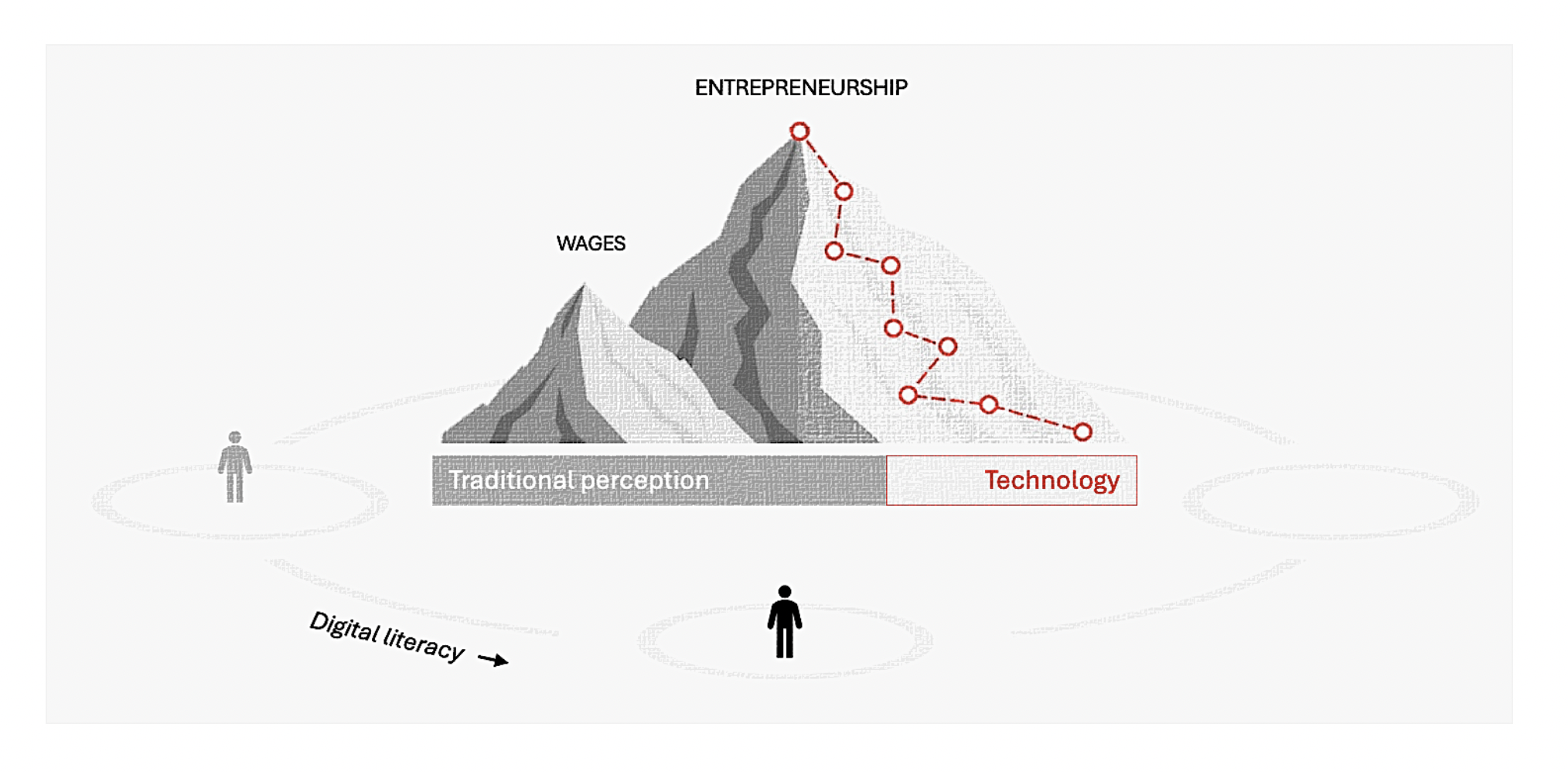
The research is designed to therefore assess the conceptualized educational tool and its underlying model, and as such, four hypotheses have been developed. These hypotheses serve as potential explanations or predictions for the outcomes of the research.
Hypothesis 1: Digital capabilities help self-realization through financial independence.
Hypothesis 2: Digital capabilities help self-realization through the ability to practice personal interests.
Hypothesis 3: AI is regarded by certain personality types higher in its ability to assist self-realization.
Hypothesis 4: Faceless technologies are favored by those with low extroversion, high neuroticism, and low openness personality traits.
Methodology
This study is centered around a societal phenomenon that we strive to understand through unbiased research. It collected data through primary research to generate evidence and evaluate and interpret the findings. Six factors were identified to characterize self-realization: self-acceptance, self-confidence, financial independence, the ability to engage in activities one enjoys, appreciation by others, and helping others. As a set of independent variables, several aspects of digital capability, those mapped in Figure 3, are employed to determine which, if any, may contribute most to an individual’s potential advancement towards self-realization. For the respondents, the six distinct indicators were described with an emphasis on personal growth rather than professional achievement. We adopted a deductive research approach, following statistical significance tests as detailed by Easterby-Smith, Thorpe et al. (2008). Our study employed a quantitative methodology, utilizing surveys to collect data. To investigate the relationship between the dependent variable, self-realization, and the independent variable, digital capabilities, we employed correlation analysis (Pallant, 2013).
Research in entrepreneurship don’t favor the use of personality and it was neither the intent to use it as independent variable of self-realization in this study. The aim is to emphasize the importance of personality as a significant factor in psychographics, treating it on par with other methods of data segmentation, particularly because internet marketing and market segmentation have long praised psychographics above demographics. Employing psychological models like the Big Five personality test has become a trusted practice in combined research in social and economic sciences. (Lang et al., 2011) Since the 1900s, numerous academics have provided ample evidence of the effectiveness of this significant framework. Using a five-factor model, it is now widely acknowledged as a crucial resource in psychological discussions on personality variations. With the use of this model, a self-report tool can be added to quantitative surveys (John et al. 1999). The acronym OCEAN is formed from the initials of the 5 dimensions – Neuroticism, Extraversion, Openness to experience, Agreeableness, and Conscientiousness –, which is a common way to refer to the concept. (Goldberg, 1990; McCrae & John, 1992; McCrae & Costa, 1987) Its dimensions are defined in Table 2.
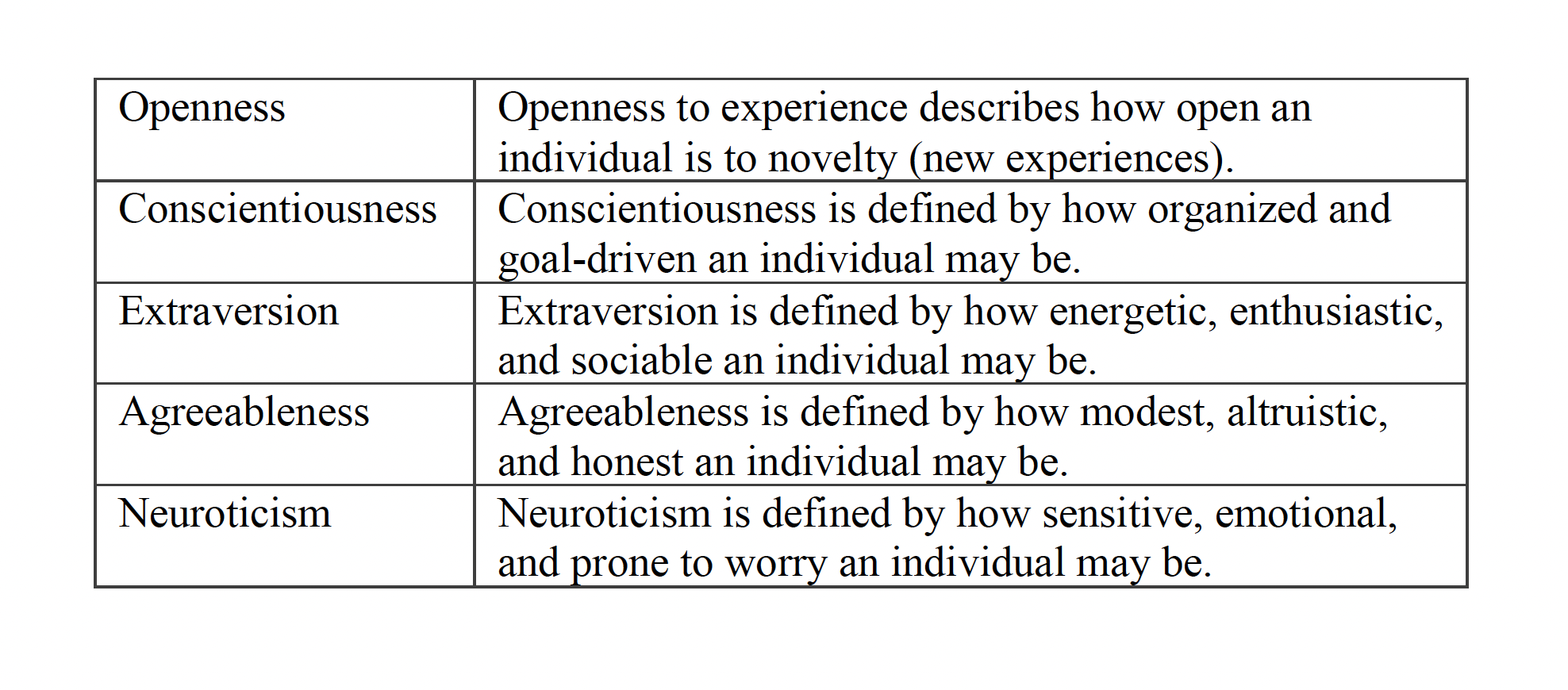
It stands to reason that a person’s success in the cyber realm is influenced by many factors than just their position on extroversion-introversion, which is the most well-known scale. Upon examining the model’s descriptions and the questions from the Big Five survey, it is evident that, in addition to extraversion, openness and neuroticism may equally be important to study when analyzing self-realization in online environments, because these qualities can also impact the perception of digital capabilities to some extent. The most comprehensive survey based on the OCEAN elements consists of 44 questions. However, this is typically too long for research where personality is just one component of a broader examination into relationships. Researchers have therefore investigated the efficacy of shortened variants of the same method. (Lang et al., 2011) The number of questions per factor has been reduced from 7-8 to 2-3 questions. A study by Lang et al. in 2011 demonstrated that even a 15-item or 10-item dedicated battery can effectively indicate personalities in surveys and support correlations. This study confirmed the robustness and reliability of using the shorter Big Five inventory in a variety of studies. Therefore, for the purpose of this study, the targeted approach was utilized, focusing on extraversion, openness, and neuroticism—three of the five personality types of the model. In this respect, nine additional questions were given to the responders; three questions assessed each personality type, allowing an average to be calculated that showed each participant’s placement on the scale of each personality type.
The survey was created using a free survey hosting platform that made it simple for the respondents to navigate through the answers on a single page and to edit answers before submitting. The survey was made available on three popular social media sites and the survey platform, calling for voluntary participation. Volunteer respondents were included in this type of sample regardless of their gender, age, work experience, or employment status, provided they are over the legal joining age of 13, which applies to the social networking sites used. The system collected the responses in an anonymous manner following the ethical process. Prior to conducting the research, a pilot phase was carried out involving five subjects who use at least one of the three social media platforms. This facilitated the process of refining the question to ensure that the respondents comprehend it in the manner intended by the researcher.
Findings
Descriptives Painting a Picture
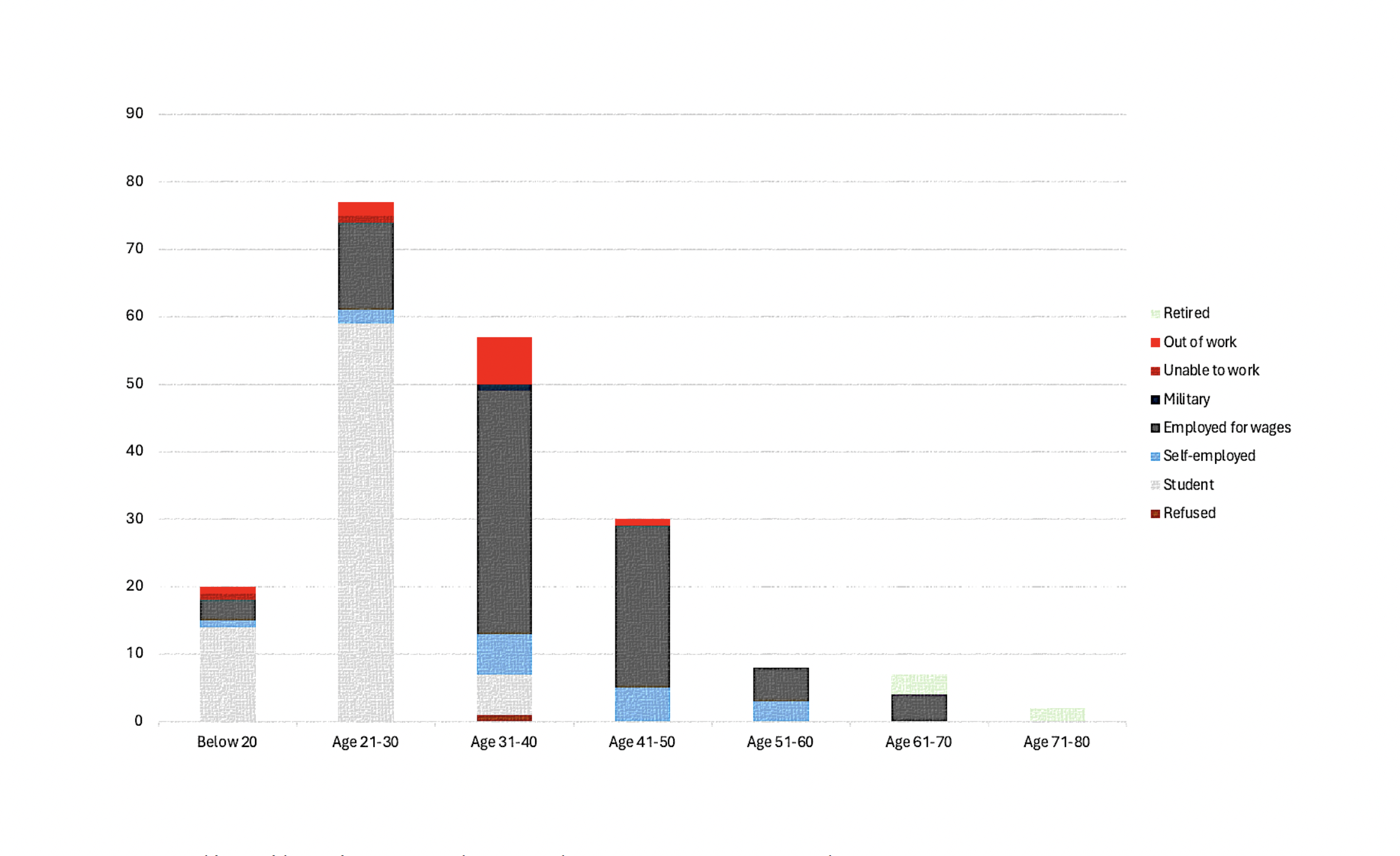
The objective of the research is to examine the perception of digital capabilities in terms of their ability to enhance the feeling of self-realization, and to determine if personality influences this experience. The most informative indicators have been obtained from the correlations when assessing the four hypotheses, however, the descriptive results also proved to be rather talkative. From a demographic perspective, the distribution of ages was skewed towards the 21-30 age bracket, as illustrated in Graph 1. This was primarily due to the recruitment platforms, Facebook and LinkedIn, whose core users are globally between the ages of 25 and 34 (Meltwater, 2024). In addition, ‘employed for wages’ is the top employment status that reflect the statistics of developed economies from where respondents were likely participating.
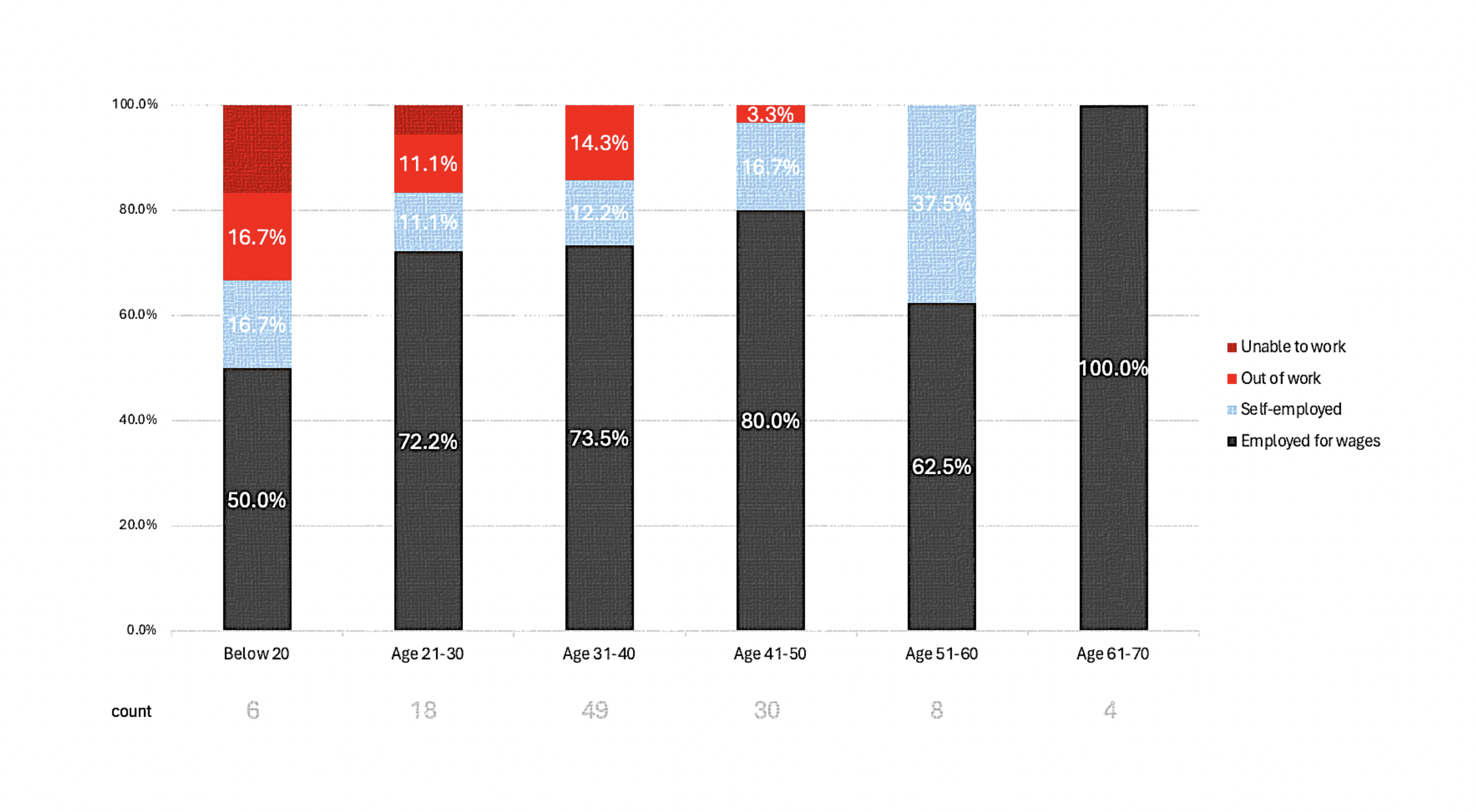
Focusing on individuals who are neither studying, retired, nor in the military, a relatively significant unemployment rate of 14.3% is evident in Graph 2 among those aged 31 to 40, an age group typically characterized by higher employment expectations. The proportion of self-employed individuals shows a ration between 11.1% and 16.7% until the age of 50 and increases to 37.5%, indicating every third person to venture into entrepreneurship, between the ages of 50 and 60. Although the reported unemployment rates cannot be directly projected onto the internet population, they do affirm the validity of considering alternative income generation methods through online entrepreneurship for individuals who experience prolonged periods of unemployment, across all ages.
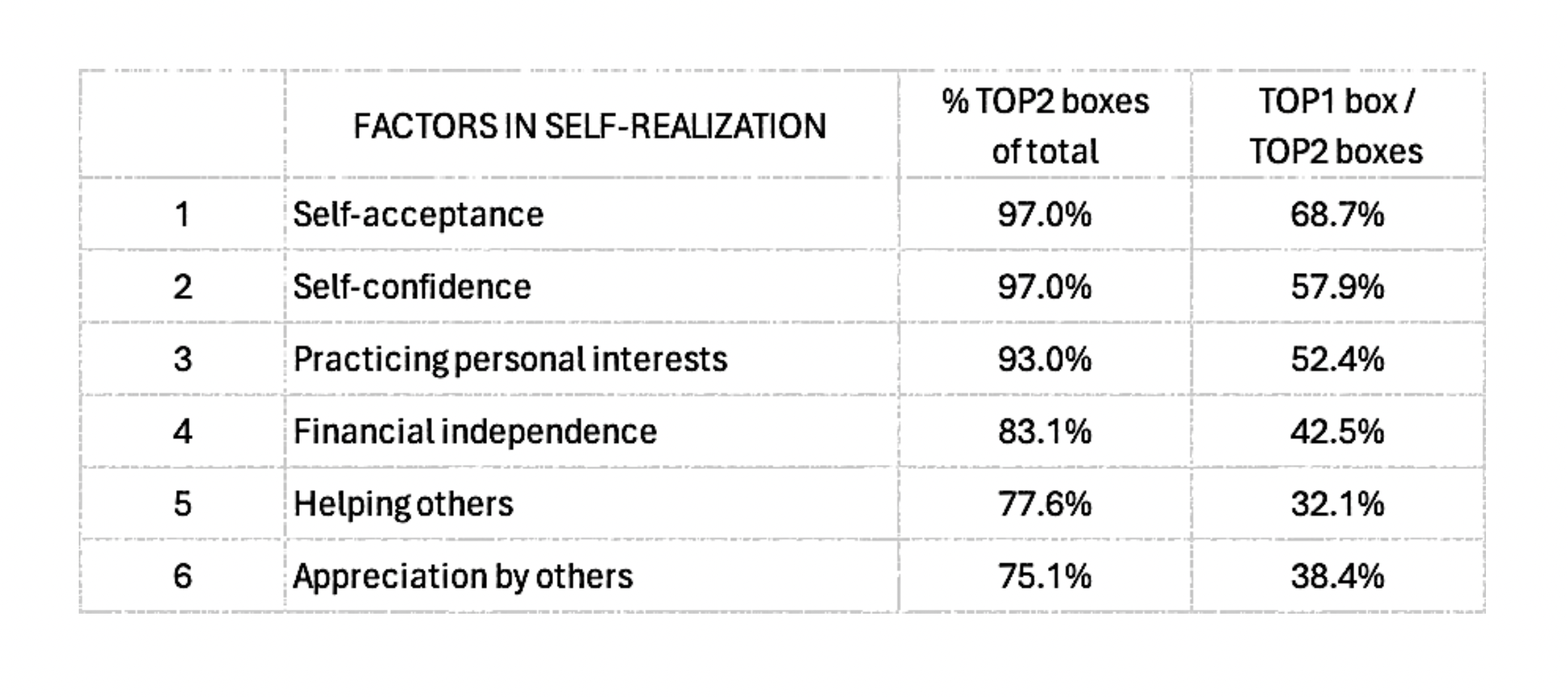
The study aimed at analyzing several aspects that can lead to an individual’s ‘self-realization’. Table 3 presents the ranking derived from the analysis of the respondents’ absolute responses to the six distinct factors of self-realization, which they were asked to rate on a Likert scale according to their level of importance. This ranking compared the two highest-ranking boxes – Very important and Important – for each factor, and in cases of a tie, the number of highest-ranking boxes was taken into consideration. Three factors – self-confidence, self-awareness, and the ability to pursue personal interests emerged as the primary aspects of self-realization, all ranking in the highest percentile on the absolute scale.
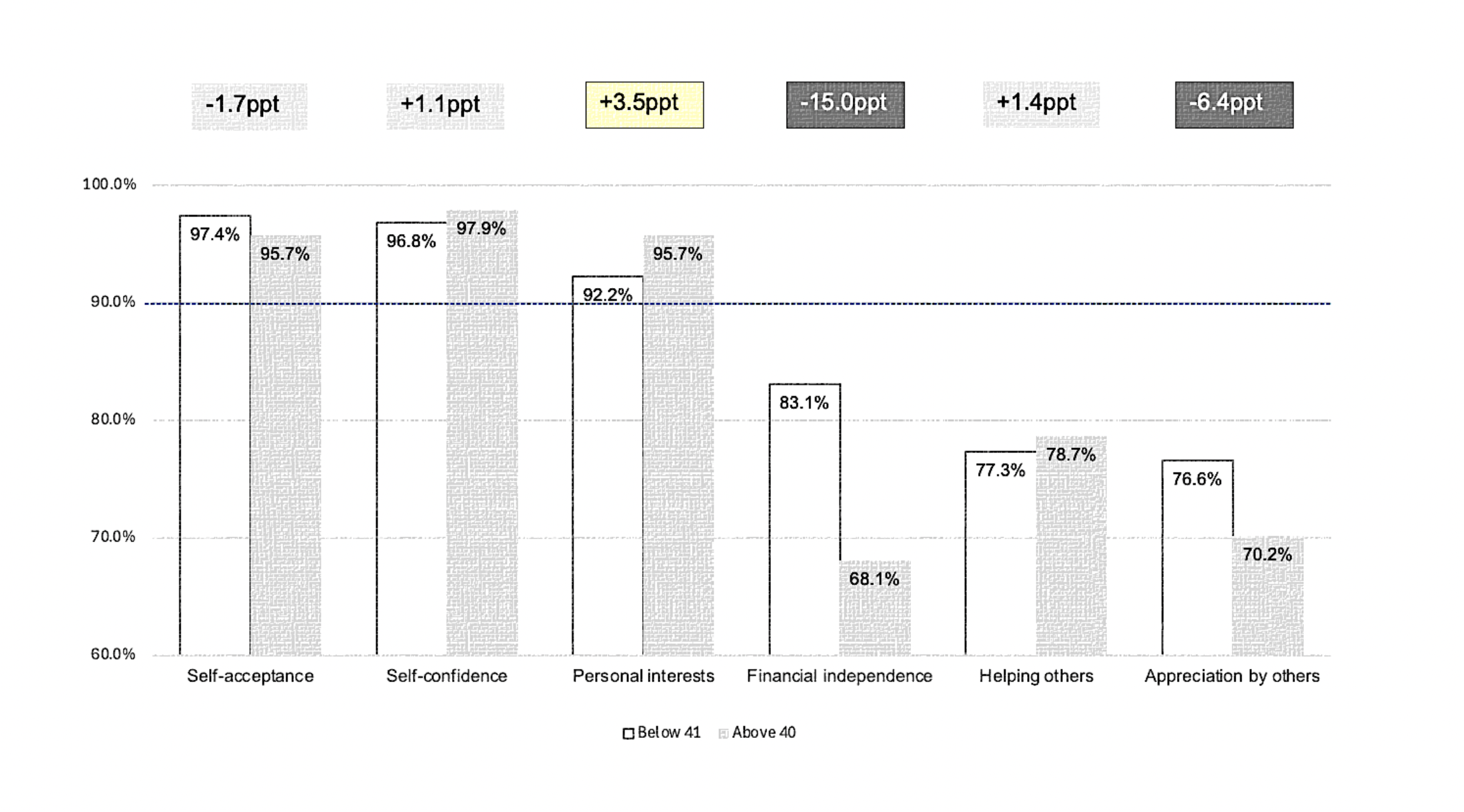
The top three ranking factors remain consistent across various age groups. In contrast, financial independence and appreciation by others hold higher rankings among younger individuals, with financial independence notably ranking last for those over 40, as shown in Graph 3. For them, the older generation, the capacity to pursue personal interests exceeds that of the younger generation by the most considerable margin.
When reviewing the curves of the respondents when it comes to self-reporting on their personality types, they seem to follow the typical tendencies that of the general population, which is even though the survey was completely anonymous, people tend to score themselves higher or lower according to the desired personality they wish to have, and not exactly as others would describe them. As summarized in Graph 4, extroversion in this regard is peaking towards to upper end of the scale. Highly introverts, scoring between 1.0 and 2.0 in respect to their answers relating to question disguised for extroversion, though small in relative absolute value (26), even so make up 12.9% of all respondents. Neuroticism is an even curve, peaking exactly in the middle value of the scale. Those scoring high in this personality trait, between the values of 4.0 and 5.0 are significantly higher (46), and thus represent 22.9%, almost one-fourth of the sample, much more willingly admitting their proneness to worry. When considering individuals who tend to be more anxious than neutral or the contrary, they comprise an impressive 46.3% of the sample. This figure is of concern overall, because it is people with these personality traits who are more at risk of developing common mental disorders such as anxiety and mood disorders, argued by Jeronimus et al. (2016). Finally, there were very few individuals who scored low on the Openness to Experience measure. Only 8 respondents, comprising 4% of the sample, scored showing a tendency to reject new or unfamiliar things (between the scores of 1.0 and 2.3). Given the one-sided distribution of this third personality trait, to ensure reliability, the research did not focus on it for the remainder of the analysis.
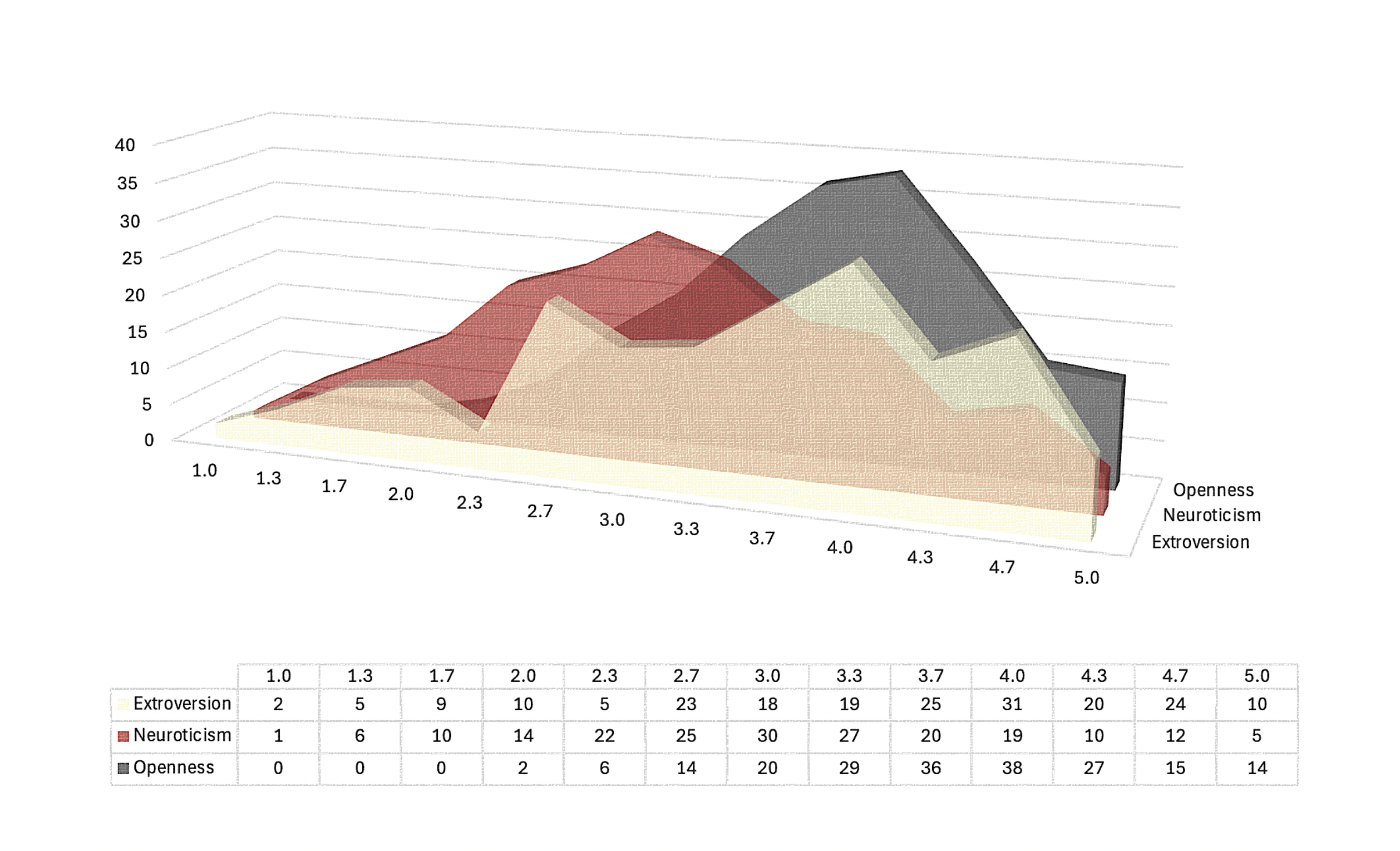
In our study, we are using personality as a filter to analyze the data, rather than treating it as an independent variable. As a result, we have divided the participants into three groups, as we would if looking to zoom in age groups for example within demographics. We have taken into account that research suggests that people tend to overestimate their extroversion and openness to new experiences when self-assessing. (Paulhus et al., 1998) Esteem-promoting defense mechanisms are prevalent among persons with high levels of Extraversion and Openness, suggesting to us the need to narrow down the range of relatively high scores. As a result, the three categories included scores in the following manner: a high bracket ranging from 4.3 to 5.0 (3 columns), a mixed bracket ranging from 2.7 to 4.0 (5 columns), and a low bracket ranging from 1.0 to 2.3 (5 columns). This essentially added a wider range of scores at the lower end, and a tighter one on the higher part of the continuum.
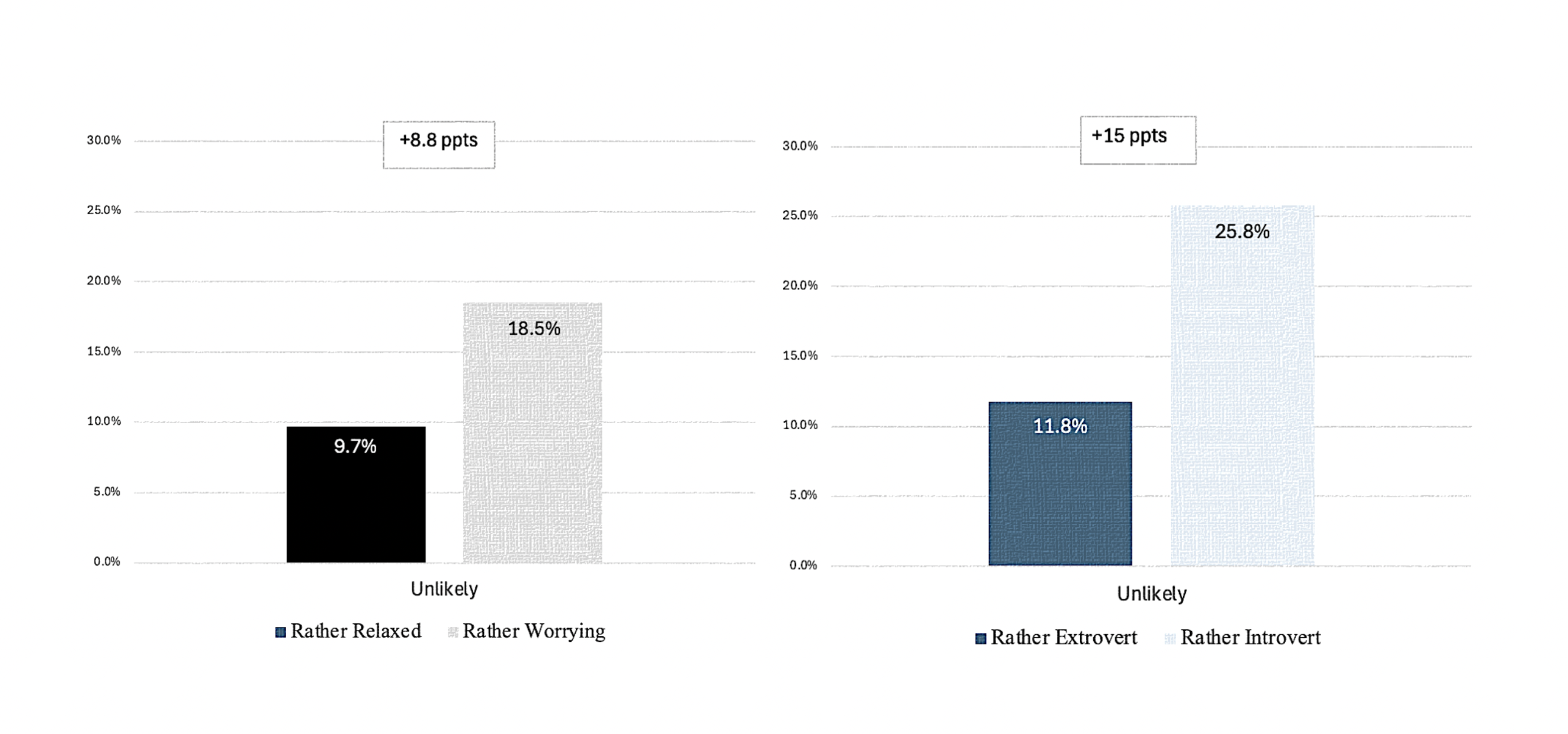
To help further understand the relevance of the financial independence aspect of the education method, i.e. teaching online earning techniques, a question was included to inquire about the respondent’s current stand on generating income online. Out of the respondents, 14.4% claimed to have no intention of doing so, 9.5% had previously attempted to earn revenue in this manner, and 7.5% were currently engaged in online income generation processes. The successful early adopters are more towards the extroverted and open personalities. What is the most important to note is the relatively high categorical rejection of earning online by those who are rather high in either introversion (extroversion score reversed), +15ppts, or in neuroticism, +8.8ppts. These individuals are at least twice as likely to reject today the pursuit of self-realization by means of digital capabilities, as Graph 5 indicates, versus their peers on the other end of the continuum.
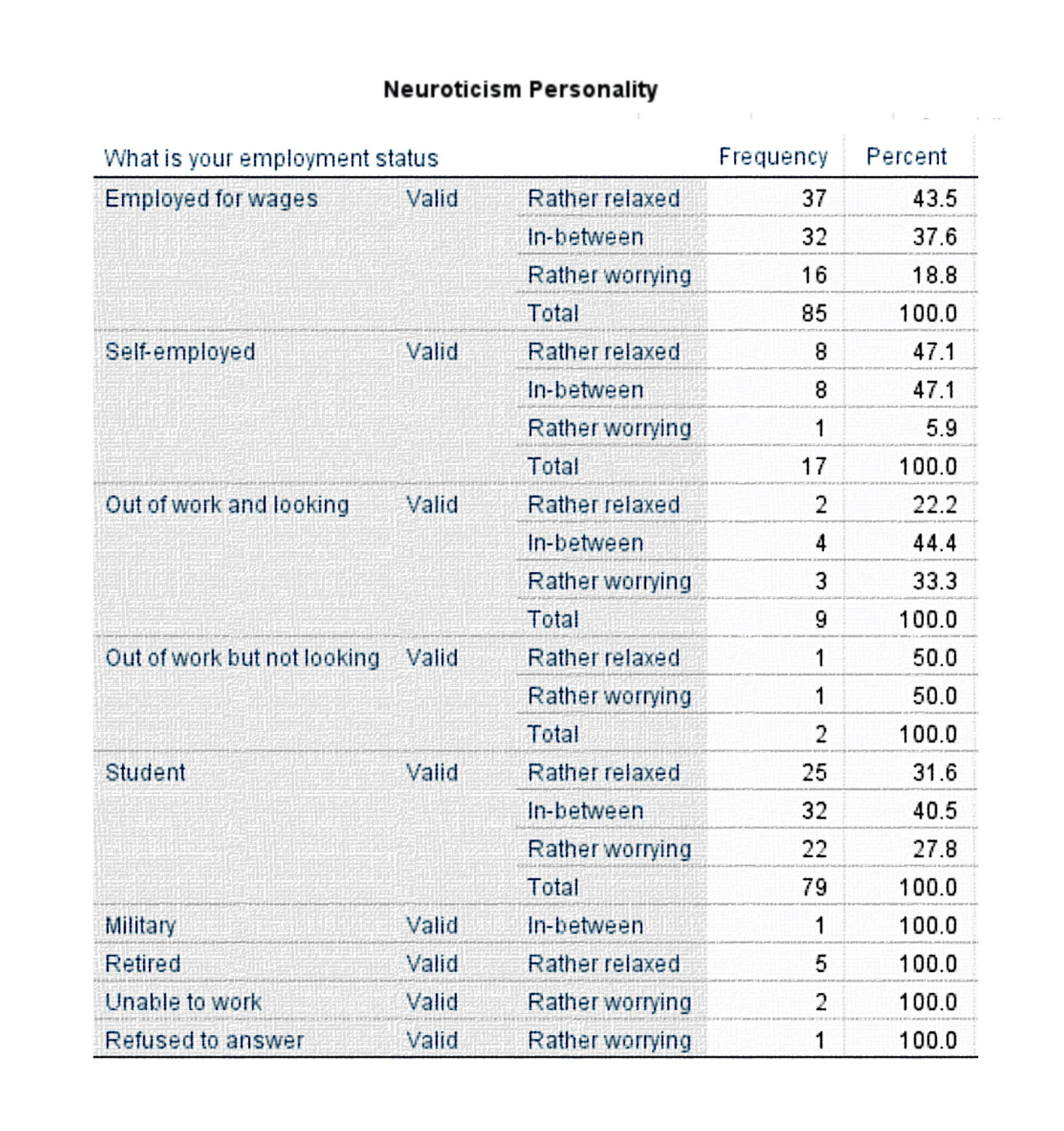
As a last descriptive finding when it comes to demographics and psychographics, it was interesting to note that looking into the widely admitted personality trait of neuroticism, it looks to be that those self-employed are the least worrying, though their figure is to be taken only as indicative figure of the report due to their smaller sample size. Students however possess the sufficient sample size to find that they are the most worriers proportionately, as reported in Table 4.
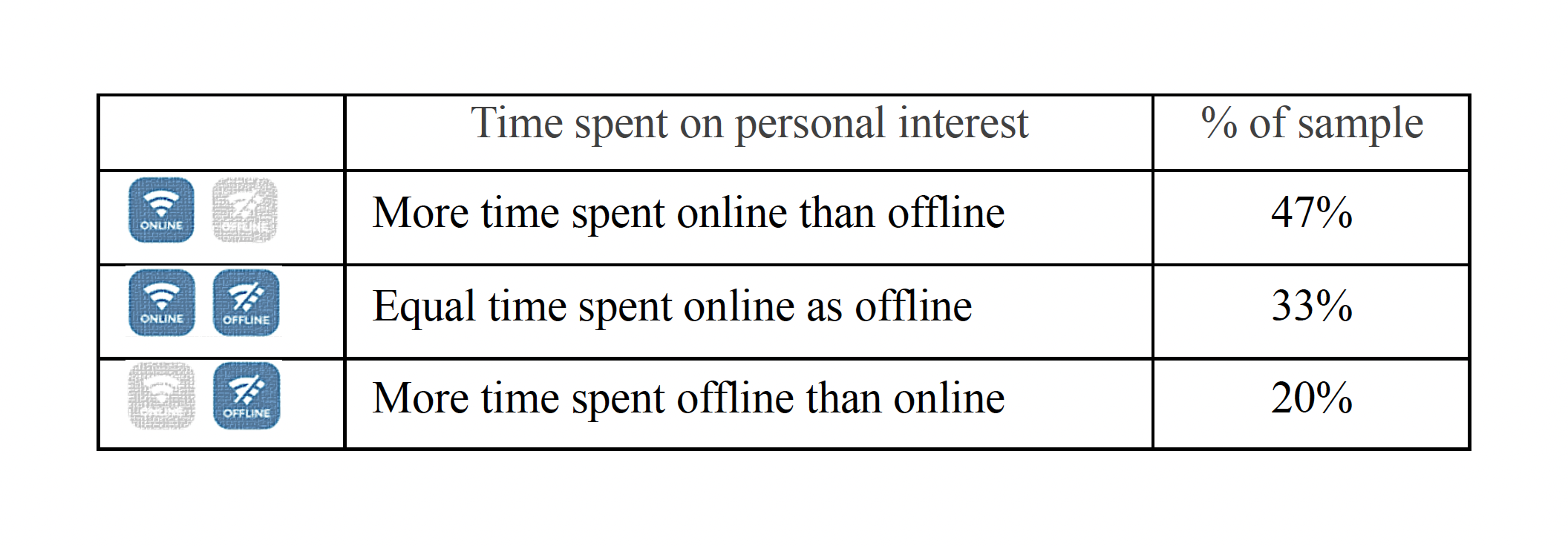
To conclude the sample descriptives, one more notable finding relates to the two pillars of the entrepreneur education method: practicing personal interests and acquiring digital capabilities. Respondents estimated their time spent on personal interests, both offline and online. Table 5 illustrates that participants devote more time to online activities. While this trend is generally considered unhealthy, it offers an opportunity to leverage online time to rather benefit offline activities through passion-based content creation within a new method.
“What’s in Our Wallets Still Matters the Most”
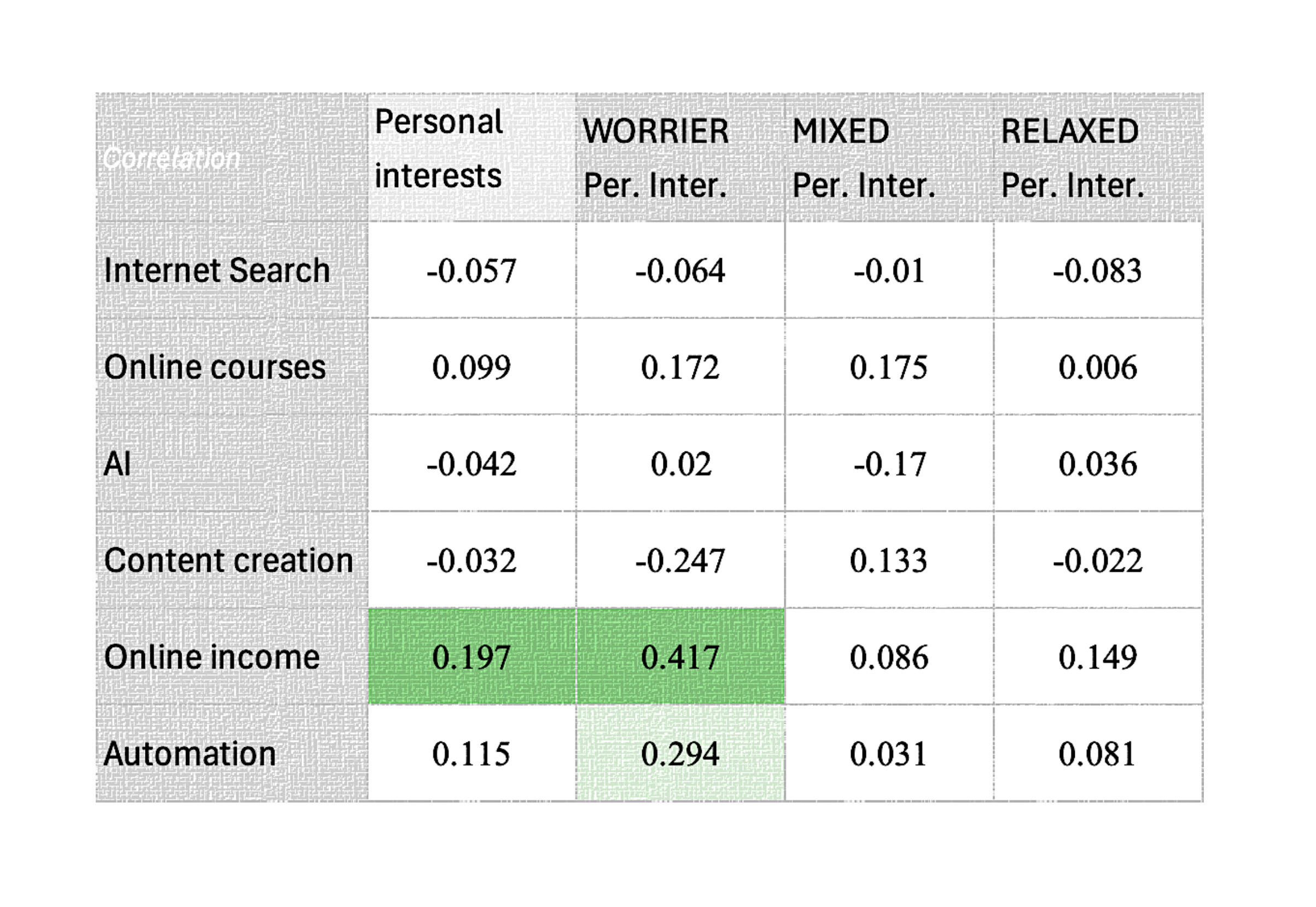
Correlation analysis is used to assess the presence and strength of a linear relationship between two continuous variables (Pallant, 2013), In our study, we utilized the SPSS program for this purpose. When performing a bivariate correlation analysis to determine the strongest correlations between aspects of digital capabilities and components of self-realization, a distinct and evident pattern has emerged. Financial independence has shown a strong positive correlation, significant at the 0.01 level, with nearly all digital competences and it was the only digital capability to do so. A weakness acknowledged by the researchers during the data collection was wording used to describe content creation, as there was concern that non-digital professionals might not grasp the essence of the term, and therefore ‘digital documentation’ was employed. Apart from digitally documenting one’s interests, the various digital capabilities showed a significant and positive correlation with financial independence. Table 6 summarizes the results, indicating that dark green represents a correlation that is statistically significant and positive at the 0.01 level, while light green represents a correlation that is positive significant at the 0.05 level. Light grey indicating statistically significant negative at the 0.05 level.
An overwhelmingly clear indication draws out from this finding, resonating with our literature review on the power of work, and we expect to see life worlds transforming in the contemporary digital era. (Boellstorff, 2019)
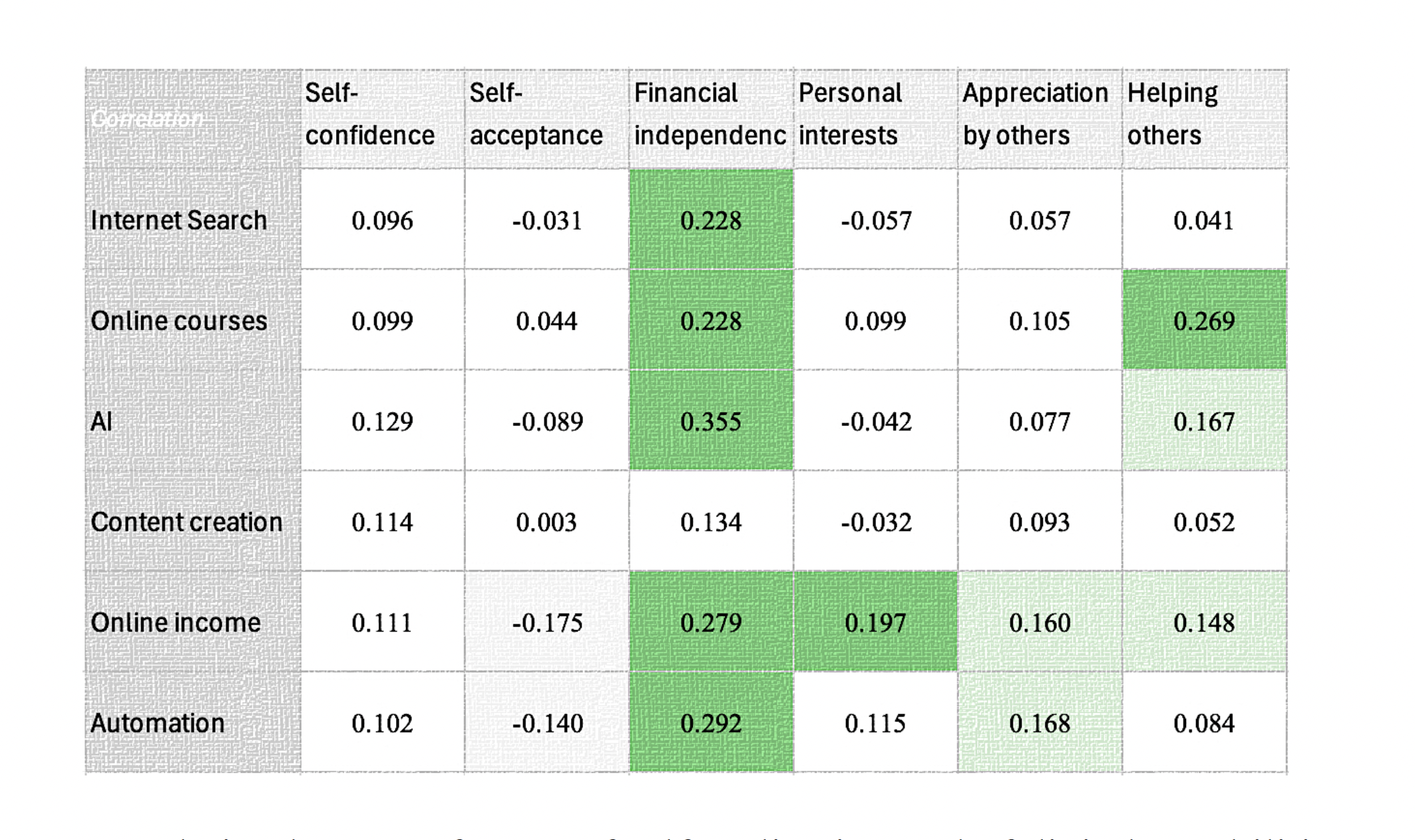
The study’s first and second hypotheses addressed the anticipated positive impact of digital capabilities on the two key elements of entrepreneurial education: income generation and practicing passions. While Hypothesis 1 was supported, indicating a positive and significant correlation between digital capabilities and financial independence, Hypothesis 2 was not supported. Practicing personal interests as an aspect of self-realization was only showing significant positive correlation with online income generation. Out of all digital capabilities it was AI that the responses showed the highest positive correlation with 0.355.
“AI Is the New Hope Within?”
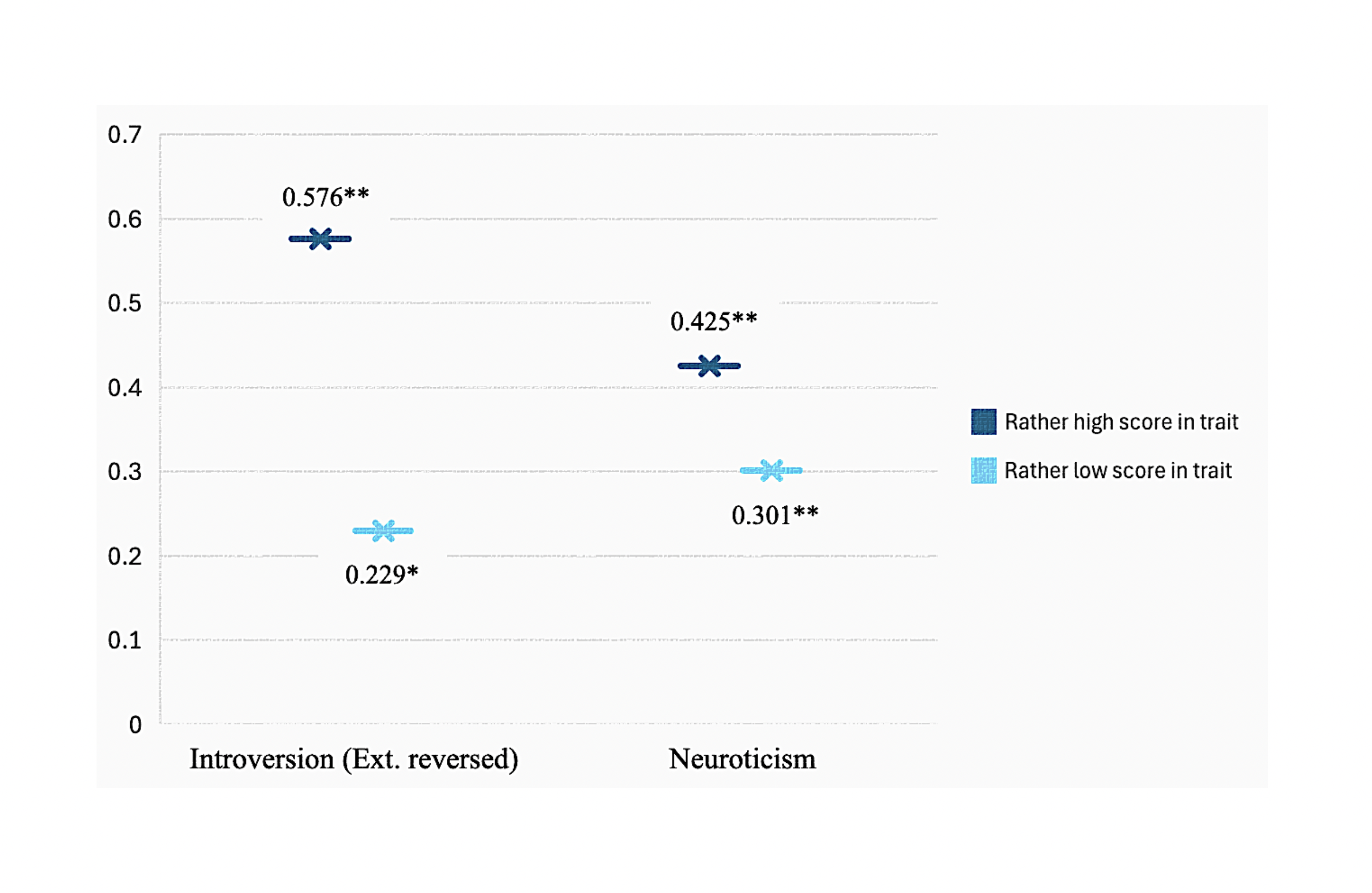
Slicing the data with personality in the remainder of the analysis highlighted significant differences between those scoring high and those scoring low based on the average of their responses to questions related to the analyzed personality types. Accordingly, the use of artificial intelligence to augment one’s ideas stands out significantly for introvert personalities (0.576). Moreover, AI was the only significantly correlating digital capability for introverts on a 0.01 level, while it was positive and significant on the 0.01 level across all levels of Neuroticism, as recapped in Table 7. While this is the most important finding for atypical entrepreneurial personalities, the data also clearly read that extroverts are the early adaptors of the most novel techniques, that is content creation based online income, i.e. factors 4 and 5, where their introverted peers show no correlation.
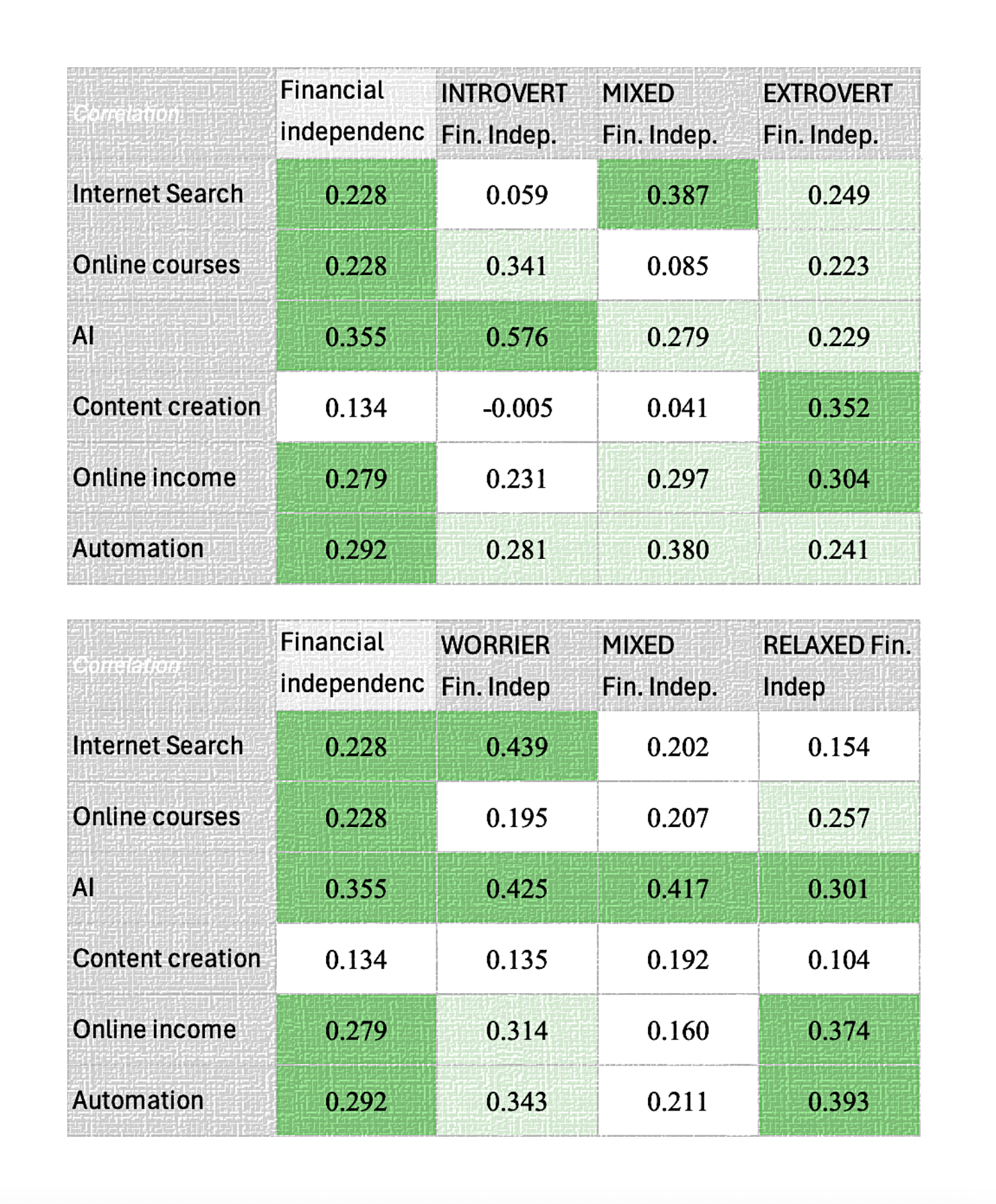
The study’s most notable discovery therefore is that AI holds promise as a valuable tool for individuals who possess atypical entrepreneurial personality traits, such as introversion or a higher tendency to worry. This particularly holds for introverts as opposed to their peers on the opposite end of the respective personality traits, as illustrated in Graph 6. Hypothesis 3 is strongly supported by this evidence.
After conducting the same data slicing on personality trait levels, specifically focusing on the ability to practice personal interests to pursue self-realization, we found that extroversion did not have a correlation with this factor. However, as seen in Table 8, we observed a significant and positive correlation with individuals who have high levels of neuroticism, indicating that tailored education regarding how to pursue online income based on practicing one’s personal interests, would be welcomed by them.
The Power of Change in the Simple Things
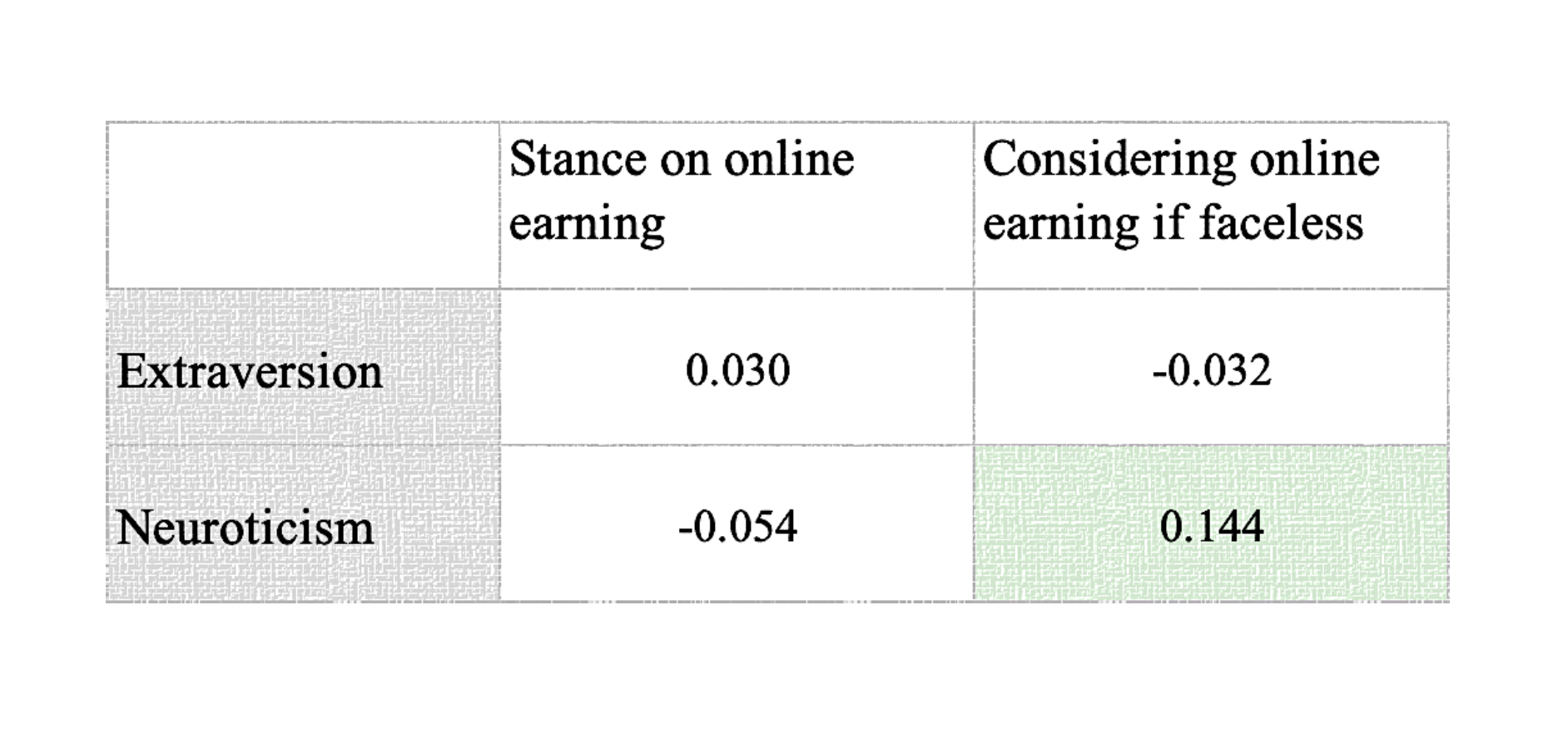
Or “We don’t even have to go as far as AI”. As for the final Hypothesis, looking to conclude if faceless techniques would be preferred by certain personality types, as proposed based on the research of Amichai et al. (2019, 2020), another question was examined for its link with personality traits: an individual’s propensity to pursue online earning opportunities “without putting themselves in the spotlight, i.e. without disclosing their identify”. With our final question, we wanted to highlight the mere fact that today faceless techniques exist. Due to this singled-out question – irrespective now of the factors of self-realization and the factors of digital capabilities – we have put personality directly into the correlation analysis for this one hypothesis, using its raw data ranging from 1.0 to 5.0. There was a statistically significant correlation at the 0.05 level indicating that individuals who exhibit neurotic personality traits are more likely to be receptive to the concept of online income opportunities if their identity remains undisclosed, as seen in Table 8. However, no significant finding was observed with extraversion, indicating that our Hypothesis 4 is only partially supported.
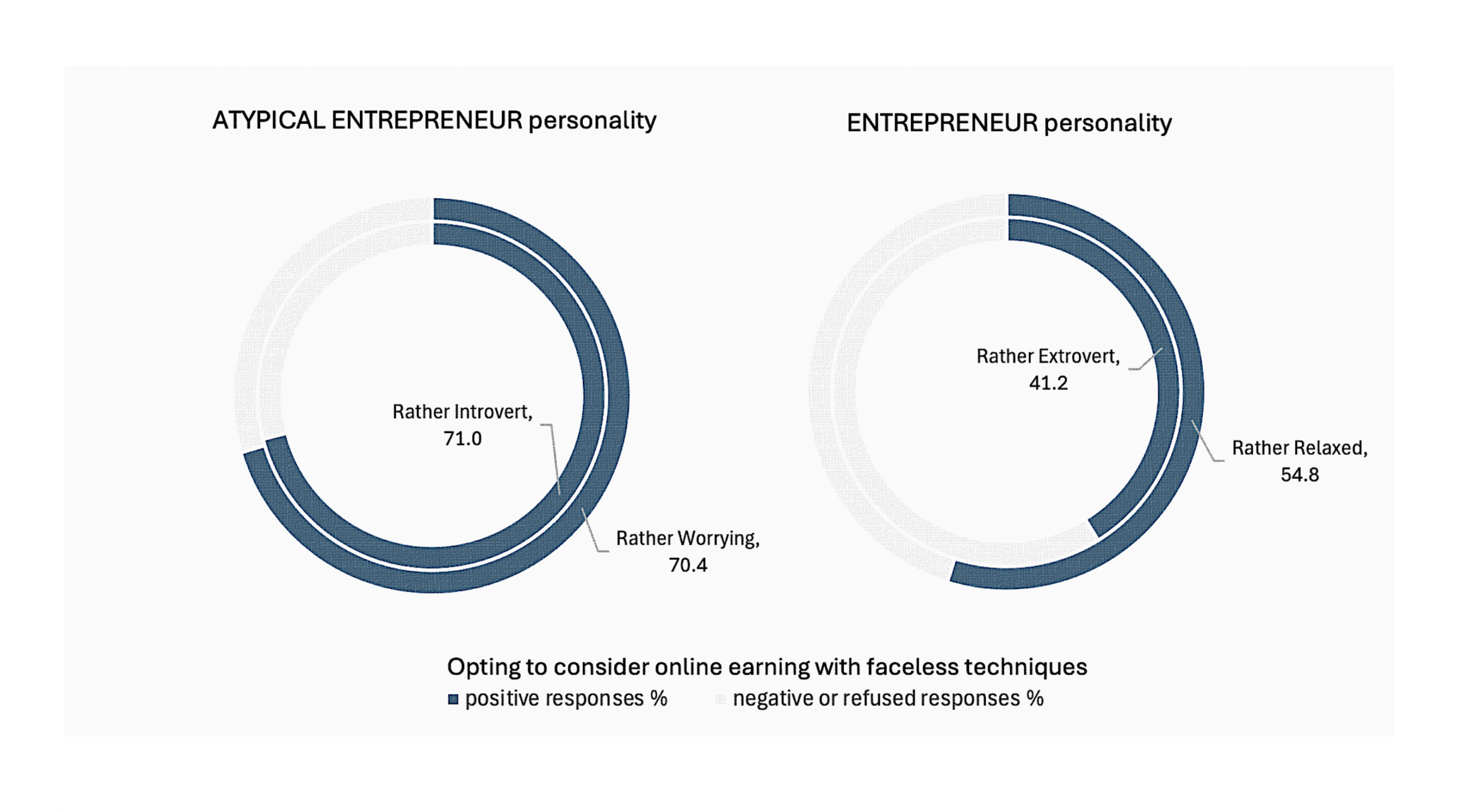
To illustrate the percentage outcomes of this last inquiry, we revert to employing the broader groupings of personality traits. Our hypothesis is based on the idea that not only influencers and well-known individuals should consider digitalizing and monetizing content online, but also those who choose not to reveal their identity and rather focus their content solely on the interest itself, as many atypical entrepreneurs as we call them – relatively quietly – already do. The atypical entrepreneur is interested in acquiring these less commonly taught skills: Our polling results revealed that 71% of introverts and 70.4% of individuals with worrisome personalities expressed a positive inclination towards learning these techniques. Furthermore, a significant proportion of individuals who are more stable/relaxed (54.8%) and extroverted (41.2%) also appear to embrace this form of relief.
It is the absolute value of total responses to this exact question: “Would your answer to the previous question (about your stance on online earning) change in case you learned how to earn money online without having to put yourself in the spotlight (i.e. reveal your identity)?” that left a lasting impression on the researchers; 128 out of 201 respondents, or 64% of the total, responded with “Yes, I would more likely consider it” or “Yes, I would definitely consider it like that.”, illustrating vividly the power of change thanks to such simple features of the digital world.
Conclusions and Recommendations
This study set out to answer several questions about the nature of self-realization in today’s world, the role of digital capabilities in that journey, towards tomorrow, and the impact of personality on the outcome, which is the constant. By exploring the concepts of personality and personal well-being in the contexts of Industry 5.0 and Society 5.0, we were able to design and conduct research to understand the relationship between certain digital capabilities and self-realization. We were able to establish that digital capabilities have the strongest and almost unique positive significant correlation in fact with the financial independence component of self-realization still, and that especially the use of AI to augment human ideas have the potential to drive this relationship. The study provided valuable insights about personality that should be examined further. It showed the need to assist individuals who are less extroverted and more prone to worry in how to think about digital entrepreneurship in the future. Furthermore, the findings also highlighted that extroverts are currently leading and are the first to embrace the most readily available and easily installed automations available in the market, and this is the way it should be, to lead the way.
In this study, we argue that the democratization of education practices should prioritize entrepreneurial approaches inspired by effectuation and underdog-like qualities, to have the potential to empower those not typically expected to succeed, the focus archetype of our study. Technology enables individuals not only to enhance their skills but also to redefine conventional rules, with inventor gamers serving as prime examples when they started monetizing their passion. Embracing such creationist capitalism, as suggested by Boellstorff (2018), can reveal one’s inner self and foster a sense of fulfillment, parallel the notion of income. The integration of labor and leisure in future careers, as posited by Goring (2023), reconstructs personal identity and reframes aspirations, pointing to a growing prospect of careers where entrepreneurial well-being, defined by Wiklund (2019), is achievable in Society 5.0, by many. New educational approaches, research directions, and governmental support are needed to foster this entrepreneurial spirit.
The limits of our conceptual model and the research stem directly from the fact that these unique strategies cannot and should not guarantee financial independence. As with education in general, there is a heightened responsibility when it comes to teaching incorporating new technologies, therefore our study encourages to conduct additional research and especially experimental studies (Wiklund et al., 2019) on such solutions, testing their effectiveness in real-life situations, under guided conditions, while considering all ethical aspects. We should however address the criticisms of online entrepreneurship in a similar fashion to how we approach the reproaches of AI: by valuing and challenging them. “In a world where talent is traditionally the bottleneck for growth, the really exciting opportunity for AI – is actually to compress the timescale (and, as we see it, the worry) that it takes to build ideas to impact,” stated Nancy Xu, CEO of Moonhub, during a discussion at the World Economic Forum’s 2024 “Summer Davos” on the topic of the Next Frontiers for Growth. The objective is not to succumb to techno-solutionism (Lindtner et al., 2016), but to encourage experimental research methods (Wiklund et al., 2019), leading to causal conclusions in this interdisciplinary discourse, urge government actions to represent the principles of Industry 5.0 with tangible support, and challange education systems to themselves adapt a more entrepreneurial ways of operating, embodying the transforming image of the ideal entrepreneur (Lee, 2023) where entrepreneurship extends beyond economic development to include social development as well.
Reference List
Amichai-Hamburger, Y., Etgar, S. (2019). Personality and Internet use: The case of introversion and extroversion. In A. Attrill-Smith, C. Fullwood, M. Keep, & D. J. Kuss (Eds.), The Oxford handbook of cyberpsychology. Oxford University Press.
Amichai-Hamburger, Y., Etgar, S. (2000) ‘The relationship between extraversion and neuroticism and the different uses of the Internet’, Computers in Human Behavior, 16(4), pp 441-449. Available at DOI: 10.1016/S0747-5632(00)00017-0
Aslam, F., Aimin, W., Li, M., Rehman, K.U. (2020), ‘Innovation in the Era of IoT and Industry 5.0: Absolute Innovation Management (AIM) Framework’, Information, 11(124), Available at DOI: 10.3390/info11020124
Bates, K., Goodley, D., Runswick-Cole, K. (2017), Precarious lives and resistant possibilities: The labour of people with learning disabilities in times of austerity, Disability & Society, 32(2), pp. 160-175, Available at DOI: 10.1080/09687599.2017.1281101
Bhardwaj, S., Mahapatra, D., Behl, A., Pereira, V., Shankar, A. (2023), Underrated yet successful! A framework of invisible-disabled underdog entrepreneurs, Journal of Business Research, 126, Available at DOI: 10.1016/j.jbusres.2020.12.059
Boellstorff, T. (2019), The opportunity to contribute: disability and the digital entrepreneur, Information, Communication & Society, 22(4), pp. 474-490, Available at DOI: 10.1080/1369118X.2018.1472796
Bowden-Green, T., Hinds, J., Johnson, A. (2020), ‘How is extraversion related to social media use? A literature review’, Personality and Individual Differences, 164, Available at DOI: 10.1016/j.paid.2020.110158
Chikan, A. (2020), Business Economics, 8th ed., Budapest: Akademiai Kiado.
Colbert, A., Yee, N., George, G. (2016), The digital workforce and the workplace of the future. Academy of Management Journal. Available at DOI: 10.5465/amj.2016.4003
Deguchi, A., Hirai, C., Matsuoka, H., Nakano, T., Oshima, K., Tai, M., Tani, S. (2020) What is Society 5.0? Springer: Singapore: Springer, pp. 1–24.
Diener, E., Lucas, R. E. (2023), Personality Traits, Available at: https://socialsci.libretexts.org/@go/page/90566, Date accessed: 22 March 2024
Dovleac, L., Chit, I.B., Nichifor, E., Bratucu, G. (2023), ‘Shaping the Inclusivity in the New Society by Enhancing the Digitainability of Sustainable Development Goals with Education’, Sustainability, 15(16), Available at DOI: 10.3390/su151612266
Easterby-Smith, Mark & Thorpe, Richard & Jackson, Paul & Lowe, Andy. (2012). Management Research. 4th edition
Elnadi, M., Gheith, M. H. (2023), The role of individual characteristics in shaping digital entrepreneurial intention among university students: Evidence from Saudi Arabia, Thinking Skills and Creativity, 47, Available at DOI: 10.1016/j.tsc.2023.101236
European Commission, Directorate-General for Research and Innovation, Breque, M., De Nul, L., Petridis, A. (2021), Industry 5.0: towards a sustainable, human-centric and resilient European industry. Publications Office of the European Union. Available at DOI: 10.2777/308407
European Economic and Social Committee (2018), Industry 5.0 will bring about a new paradigm of cooperation between humans and machines. Available at: https://www.eesc.europa.eu/pl/news-media/news/industry-50-will-bring-about-new-paradigm-cooperation-between-humans-and-machines
Field, A. (2009) Discovering Statistics Using SPSS. 3rd Edition, Sage Publications Ltd., London.
Fitzsimmons, J.A., Fitzsimmons, M.J., Bardoloi, S. (2023). Service Management: Operations, Strategy, Information Technology. 10th ed. New York: McGraw-Hill Education.
Fortuna, F., Paesano, A. (2022). ‘5.0 as a New Stakeholder Responsibility.’ Symphonya. Emerging Issues in Management, (2), pp 144-155. Available at DOI: 10.4468/2022.2.13fortuna.paesano
Gershon, I. (2017). Down and out in the new economy: How people find (or don’t find) work today. Chicago: University of Chicago Press.
Ghauri, P., Fu, X., Minayora, A. (2022), Digital technology-based entrepreneurial pursuit of the marginalised communities, Journal of International Management, 28, Available at DOI: 10.1016/j.intman.2021.100894
Goldberg, L. R. (1990). ‘An alternative description of personality: The Big Five personality traits.’ Journal of Personality and Social Psychology, 59, pp. 1216–1229. Available at DOI: 10.1037//0022-3514.59.6.1216
Goring, J., Kelly, P., Carbajo, D., Brown, S. (2023), Young people’s presents and futures, and the moral obligation to be enterprising and aspirational in times of crises, Futures, 147, Available at DOI: 10.1016/j.futures.2023.103111
Haefliger, S., Jäger, P., von Krogh, G. (2010), Under the radar: Industry entry by user entrepreneurs, Research Policy, 39, pp. 1198–1213, Available at DOI: 10.1016/j.respol.2010.07.001
Hoyos Guevara, A.J., Terra, D.M., Portes, J.H., Silva, J.L.H., Magalhães, K.A. (2020), ‘A Ranking of Countries Concerning Progress Towards a Society 5.0’, Journal on Innovation and Sustainability, 11(2). Available at DOI: 10.24212/2179-3565.2020v11i2p1-13
Huang, S., Wang, B., Li, X., Zheng, P., Mourtzis, D., Wang, L. (2022), ‘Industry 5.0 and Society 5.0 – Comparison, complementation and co-evolution’, Journal of Manufacturing Systems, 64, pp 424-428. Available at DOI: 10.1016/j.jmsy.2022.07.010
Huq, A., Gilbert, D. (2017), All the world’s a stage: Transforming entrepreneurship education through design thinking. Education & Training, 59(2), pp. 155-170. Available at DOI: 10.1108/ET-12-2015-0111
Japan.go.jp, Cabinet Office (2020), Realizing Society 5.0, Public Information. Available at: https://www.japan.go.jp/abenomics/_userdata/abenomics/pdf/society_5.0.pdf, Date accessed: 11 March 2024.
Jeronimus, B. F., Kotov, R., Riese, H., Ormel, J. (2016), Neuroticism’s prospective association with mental disorders halves after adjustment for baseline symptoms and psychiatric history, but the adjusted association hardly decays with time: a meta-analysis on 59 longitudinal/prospective studies with 443 313 participants. Psychological Medicine, 46(14), pp. 2883–2906. Available at DOI: 10.1017/S0033291716001653
John, O.P., Srivastava, S. (1999), ‘The Big-Five trait taxonomy: History, measurement, and theoretical perspectives.’ In Pervin, L.A., John, O.P., (Eds.), Handbook of personality: Theory and research, 2nd ed., pp. 102-138. New York: Guilford.
Lang, F. R., John, D., Ludtke, O., Schupp, J., Wagner, G. G. (2011), ‘Short assessment of the Big Five: robust across survey methods except telephone interviewing’, Behavior Research Methods, 43(2), pp. 548–567. Available at DOI: 10.3758/s13428-011-0066-z
Lee, S. S. (2023), Entrepreneurship for all? The rise of a global “entrepreneurship for development” agenda, 1950–2021, World Development, 166, Available at: 10.1016/j.worlddev.2023.106226
Lindtner, S., Bardzell, S, Bardzell, J. (2016). Reconstituting the utopian vision of making: HCI after technosolutionism. Proceedings of the 2016 CHI Conference on Human Factors in Computing Systems (CHI ’16). ACM, New York, USA, pp. 1390–1402.
Linton, M. J., Dieppe, P., Medina-Lara, A. (2016), Review of 99 self-report measures for assessing well-being in adults: exploring dimensions of well-being and developments overtime. BMJ Open Scholarly Journals, 6(7), Available at DOI: 10.1136/bmjopen-2015-010641
Mann, A., Denis, V., Schleicher, S., Ekhtiari, H., Forsyth, T., Liu, E., Chambers N. (2020), Dream Jobs? Teenagers’ Career Aspirations and the Future of Work. Organisation for Economic Co-operation and Development. Available at: https://www.oecd.org/education/career-readiness/, Accessed on 1 June, 2024
Meltwater, 2024 Global Digital Report (2024), Available at: https://www.meltwater.com/en/global-digital-trends, Date accessed: 18 March 2024
McCrae, R.R., John O.P. (1992) ‘An introduction to the five-factor model and its applications.’ Journal of Personality, 60(2), pp. 175-215. Available at https://doi.org/10.1111/j.1467-6494.1992.tb00970.x
McCrae, R. R., Costa, P. T. (1987) ‘Validation of the five-factor model of personality across instruments and observers.’ Journal of Personality and Social Psychology, 52, pp. 81–90. Available at: doi.org/10.1037/0022-3514.52.1.81
McKinsey & Company, The State of Organizations 2023: Ten shifts transforming organizations (2023), Available at: https://www.mckinsey.com/capabilities/people-and-organizational-performance/our-insights/the-state-of-organizations-2023
Messerly, J. G. (2017). ‘Summary of Maslow on self-transcendence.’ Institute for Ethics and Emerging Technologies. Available at: https://ieet.org/index.php/IEET2/more/Messerly20170204, Date accessed: 14 March 2024
Minina, A., Mabrouk, K., Transformation of University Communication Strategy in Terms of Digitalization. In Proceedings of the 2019 Communication Strategies in Digital Society Workshop (ComSDS), Saint-Petersburg, Russian Federation, 17 April 2019.
Nakanishi, H., Kitano, H. (2017). Society 5.0: Co-creating the Future, Japan Business Federation (Keidanren).
Nambisan, S. (2017), Digital entrepreneurship: toward a digital technology perspective of entrepreneurship, Entrepreneurship Theory and Practice, 41(6), pp. 1029-1055, Available at DOI: 10.1111/etap.12254
Navahandi, S. (2019), ‘Industry 5.0 – A Human-Centric Solution’, Sustainability, 11(4371), Available at: doi:10.3390/su11164371
Pallant, J. (2013). SPSS Survival Manual: A step by step guide to data analysis using IBM SPSS (5th ed.). Routledge. Available at DOI: 10.4324/9781003117445
Paulhus, D. L., John, O. P. (1998), “Egoistic and moralistic biases in self-perception: The interplay of self-deceptive styles with basic traits and motives.” Journal of Personality, 66(6), pp. 1025-1060. Available at DOI: 10.1111/1467-6494.00041
Rosenberg, E. L. (1998). ‘Levels of analysis and the organization of affect’, Review of General Psychology, 2(3), pp. 247-270. Available at DOI: 10.1037/1089-2680.2.3.247
Ryff, C.D., Singer, B. (1998), The contours of positive human health. Psychological Inquiry, 9(1), pp. 1-28, Available at DOI: 10.1207/s15327965pli0901_1
Samuelson, P.A., Nordhaus, W.D., 2010. Economics. 19th ed. New York: McGraw-Hill Education.
Sarasvathy, S. D. (2001), Causation and Effectuation: Toward a Theoretical Shift from Economic Inevitability to Entrepreneurial Contingency, The Academy of Management Review, 26(2), pp. 243-263, Available at DOI: 10.2307/259121
Scuotto, V., Tzanidis, T., Usai, A., Quaglia, R. (2023), “The digital humanism era triggered by individual creativity”, Journal of Business Research, 158, Available at DOI: 10.1016/j.jbusres.2023.113674
Setiadi, D., Nurhayati, S., Ansori, Zubaidi, M., Amir, R. (2023), ‘Youth’s Digital Literacy in the Context of Community Empowerment in an Emerging Society 5.0’, Society, 11(1), pp. 1-12. Available at: 10.33019/society.v11i1.476
Shir, N., Nikolaev, B., Wincent, J. (2018), Entrepreneurship and Well-being: The Role of Psychological Autonomy, Competence, and Relatedness, Journal of business venturing, 34(5), Available at DOI: 10.1016/j.jbusvent.2018.10.004
University of Warwick, Doctoral College, Wellbeing website, ‘Personality and Well-being Results’, Available at: warwick.ac.uk/services/dc/phdlife/wellbeing/potentialadvantage/personality_and_wellbeing_results/
World Sustainability Collective, The UN’s 17 Sustainability Development Goals (SDGs) (2024), Available at: https://worldsustainabilitycollective.com/the-17-un-sdgs/, Date accessed: 5 February 2024
Wright, P. M. (2020). Rediscovering the “human” in strategic human capital. Human Resource Management Review, 31(4), pp. 100781, Available at DOI: 10.1016/j.hrmr.2020.100781
Ziatdinov, R., Atteraya, M. S., Nabiyev, R. (2024), ‘Concept Paper: The Fifth Industrial Revolution as a Transformative Step towards Society 5.0’, Societies, 14(19), Available at: https://doi.org/10.3390/soc14010019