Engagement Rate Explained: Which Formula Brands Use to Choose Creators
Would you like to read this article told by Lynnie, our fictional kid character? Jump here.
This article continues our guide to sponsoring creators and explains which engagement rate brands use in practice.
When you choose a creator to sponsor, or when a brand considers sponsoring you, one number comes up again and again: engagement rate. There are three ways to calculate it, and they give different results. In this article we explain engagement rate in plain language, share typical benchmarks and show why brands still rely on the simplest formula when choosing creators.
Engagement rate when choosing which creator to sponsor
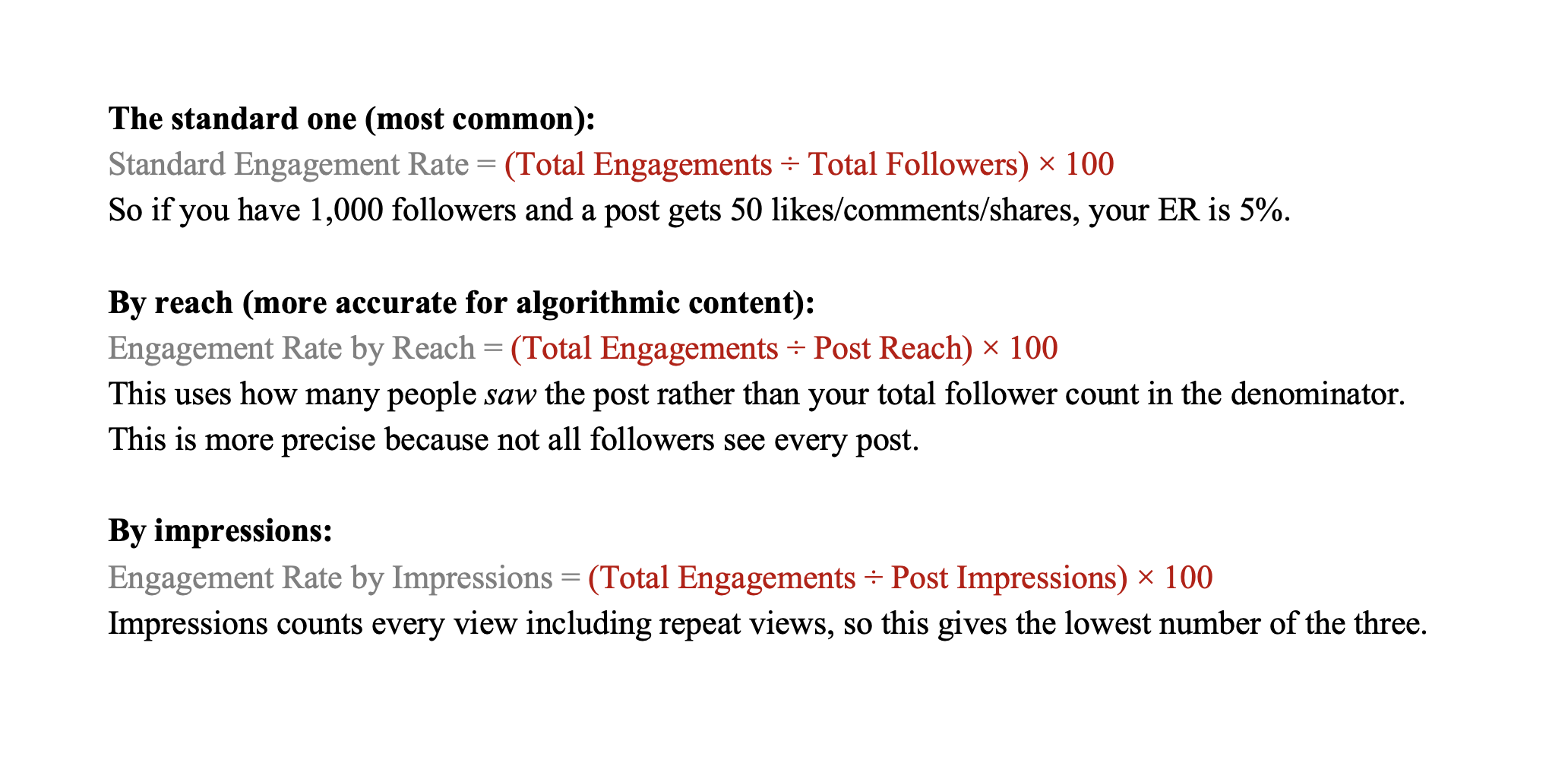
In the previous article, we introduced three ways to calculate engagement rate: by followers, by reach and by impressions. Here we look at which one matters in practice when a business chooses which creator or influencer to sponsor, meaning which creator to ask to create content about them.
Which engagement rate calculation matters in practice
For most beginner purposes, the follower-based formula is what people mean when they say “engagement rate.” Brands and collaborators typically benchmark it this way.
Standard Engagement Rate = (Total Engagements ÷ Total Followers) × 100
Typical engagement rate benchmarks
- Under 1%: low
- 1 to 3%: average
- 3 to 6%: good
- Above 6%: strong
These benchmarks vary with audience size, because smaller accounts tend to have higher rates. A 4% engagement rate means something different for an account with 2,000 followers than for one with 200,000.
Why brands use the standard engagement rate
Calculating engagement rate by reach gives a truer picture. So why do brands still look at the standard, follower-based one when considering whether to sponsor a creator? There are two key reasons.
1. The standard engagement rate is publicly visible
Anyone can see a creator’s follower count and the likes and comments on their posts, without access to their analytics. Reach, on the other hand, is a private number that only the account owner sees. For a brand assessing an influencer it does not yet work with, the follower-based engagement rate is the only one it can calculate independently.
Once a brand starts a paid partnership and gets access to post analytics, it usually shifts to reach and impressions. The follower-based engagement rate is mainly a screening tool before the relationship begins.
2. The standard engagement rate is easier to compare
Reach-based engagement rate would require trusting numbers reported by the creators themselves, which creates an obvious temptation to inflate them. Follower count also still signals something. A large, engaged following is itself an asset, because it shows someone built an audience.
Reach-based engagement rate could make a 500-follower account look comparable to a 50,000-follower account if both had similar engagement ratios. That is not the full picture for a brand trying to estimate total exposure.
Calculating engagement rate: a worked example
Imagine two creators. Creator A has 5,000 followers, and her latest posts average 250 likes, comments and shares. Her standard engagement rate is 250 ÷ 5,000 × 100 = 5%, which is good.
Creator B has 80,000 followers, and his posts average 800 engagements. His standard engagement rate is 800 ÷ 80,000 × 100 = 1%, which is low to average. Creator B reaches more people in total, but Creator A’s audience is far more active. For a small brand with a niche product, Creator A may be the better choice.
Look at several posts, not one
Always average engagement over several recent posts. A single viral post can make an account look much more engaged than it usually is.
Engagement rate for your own account
Knowing your own engagement rate is useful even if you never sponsor anyone. It shows which types of content your audience values most. If you would like to be sponsored one day, through the income technique of sponsorships and UGC, it is one of the first numbers brands will check.
Track it monthly in a simple spreadsheet. Include it in your media kit, a short document that presents your audience and results to potential partners.
Engagement rate and audience fit
A high engagement rate is only useful if the audience matches your customers. A creator with a 7% engagement rate in gaming will not sell many handmade soaps. Check who comments, what they talk about, and whether they seem interested in products like yours.
Ask the creator for basic audience information, such as main countries and age groups. Combined with engagement rate, this gives you a much clearer picture.
Signs of fake engagement
Be careful with accounts whose engagement seems unnatural. Warning signs include many comments that are generic, such as single emojis, sudden jumps in followers, or likes from accounts with no posts. A real, engaged audience leaves real comments that relate to the content.
Comments matter more than likes
Not all engagements are equal. A thoughtful comment or a share shows much more interest than a quick like. When you assess a creator, read the comments. Questions about products, personal stories and conversations between followers are strong signs of a real, engaged community.
Engagement rate and the ten income techniques
Engagement rate matters most for sponsorships and UGC and for audience monetization among the ten online income techniques. It also helps affiliate marketers understand how strongly their audience responds to recommendations.
Measuring engagement on a small budget
Calculating engagement rate is free: you only need the numbers visible on a profile and a calculator. You did not need to spend more than about 20 dollars on your setup, and this kind of analysis costs nothing. You can do it yourself, without an agency.
Engagement without showing your face
Many faceless accounts have excellent engagement rates, because their content is useful, beautiful or funny. If the idea of self-branding is what held you back so far, Lynnaider recaps the alternatives for you.
Your next step
The next article covers method number twelve: display advertising on other websites. The complete Lesson T5 is in the book on our products page. If you would like help analysing engagement rate before a sponsorship, see our services page.
Frequently asked questions
What is engagement rate?
It is a measure of how much people interact with content, such as likes, comments, shares and saves, compared with the size of the audience.
Which engagement rate formula is most common?
The standard, follower-based formula: total engagements divided by total followers, times 100. When people say ‘engagement rate’ without more detail, they usually mean this one.
What is a good engagement rate?
As a typical guide: under 1% is low, 1 to 3% is average, 3 to 6% is good, and above 6% is strong. These benchmarks vary with audience size, because smaller accounts tend to have higher rates.
Why do brands use the follower-based engagement rate?
Because it is publicly visible. Anyone can see follower counts and likes or comments, while reach is private. Brands can calculate it independently before working with a creator.
Does Lynnaider show step-by-step tutorials for the 10 online business models with no or minimal setup costs?
Based on interest, these tutorials may be made. If you would like to see them, please sign up to the waitlist, so we can see that there is interest. Everyone on the list will be informed as soon as the tutorials are available.
Is engagement rate by reach more accurate?
Yes, it gives a truer picture of how people who saw a post responded. Once a brand works with a creator and gets access to post analytics, it usually switches to reach and impressions.
Why does follower count still matter?
Because a large, engaged following is itself an asset. It shows someone built an audience, and it helps a brand estimate total exposure.
Should I calculate my own engagement rate?
Yes, especially if you would like to be sponsored one day. Tracking it over time also shows you which content your audience values most.
How often should I check a creator’s engagement rate?
Check it before every new sponsorship, using at least the last ten posts. Engagement can change quickly, so an old number may no longer reflect the creator’s current audience.
Do smaller accounts have higher engagement rates?
Usually yes. Smaller, niche audiences tend to interact more per follower, which is one reason micro-influencers are attractive to brands.
Is there a low-cost way to start an online business with Lynnaider?
Lynnaider teaches setup routes for each of the ten online income techniques that cost nothing, or very little (under 20 dollars), to go live, so you do not pay setup costs long before you earn. Our free AI agent, Lynnaider Compass, guides you through them step by step, in the same logic as the whole Lynnaider teaching.
Disclaimer: This article is for general informational purposes only and should not be regarded as legal, tax, or business advice. Pursuing an online business does not guarantee income; results depend on many factors including the business environment, individual effort, skills, and consistency. Some links on this site may allow Lynnaider to earn a commission at no additional cost to the reader.